

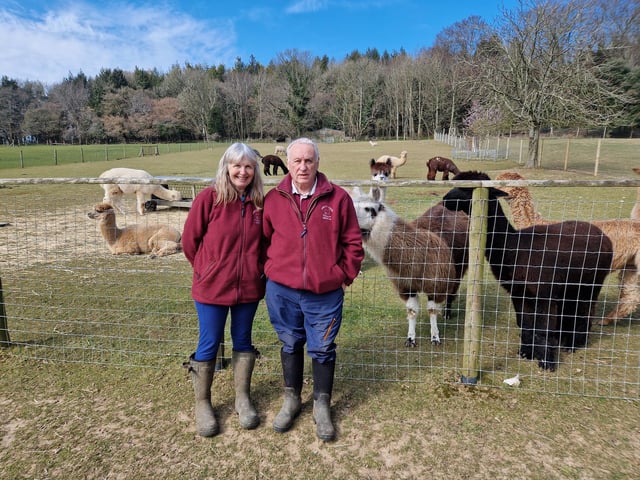
Having both been made redundant from their jobs as senior nurses in 2006, they used their redundancy money to buy two pregnant female alpacas in a bid to make a living from land they owned in Funtington, near Chichester.
They started Dunreyth Alpacas at Adsdean Park – despite never having been farmers before – after Peta had a lightbulb moment when reading an article about how the UK needed 20,000 more alpacas to meet the needs of the fashion industry.
They started selling the fleece of their herd to fashion designers, and sold roughly half the babies born to other breeders. But they soon created their alpaca walking business after seeing a programme on TV about llama walking and Peta thought that could translate to walking alpacas.
Bruce said: "We got some friends up here, gave it a go and it was such a laugh. Then we made it available to the public, and it was so popular. Then we realised we were on to something.”
The couple believe they were the first people in the world to offer alpaca walking to the public, and they are credited with having started the practice by the British Alpaca Society.
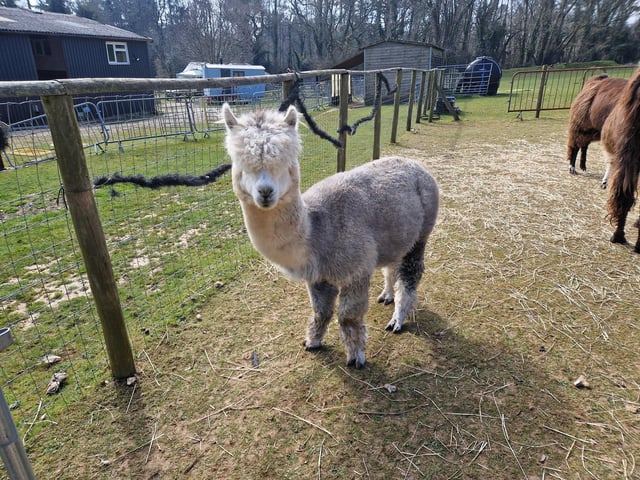
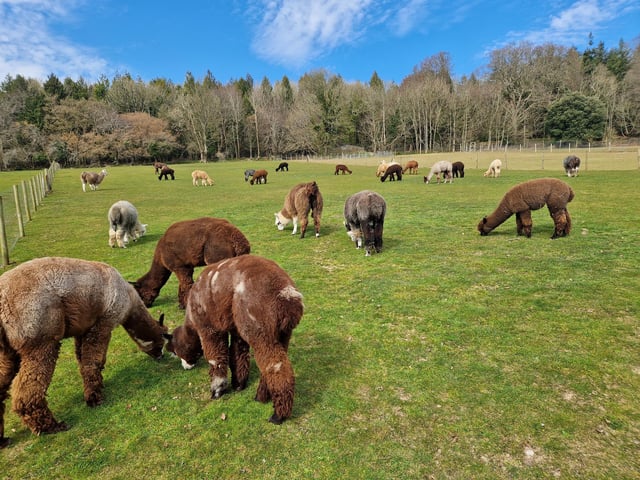
There are 40 alpacas and three llamas at Dunreyth, the oldest of which is 20-year-old alpaca Baron. Only boys go on the walks, so most of the herd is male. Alfie was the first alpaca that Bruce and Peta bred, and he was so popular he had his own Facebook page. He even used to come into the couple’s house on site, but sadly died two years ago.
A mix of people from across the UK come on walks, 90 per cent of whom are adults but children as young as six can take part.
Bruce added: “Everybody goes away loving it. Alpacas have such a lovely temperament, and of course they look nice.”
Unlike some other breeders, Bruce and Peta have a lot of ‘fancies’, which is alpacas with different colour markings. Bruce said: “For what we do, the prettier they are the better as people like them to look nice.”
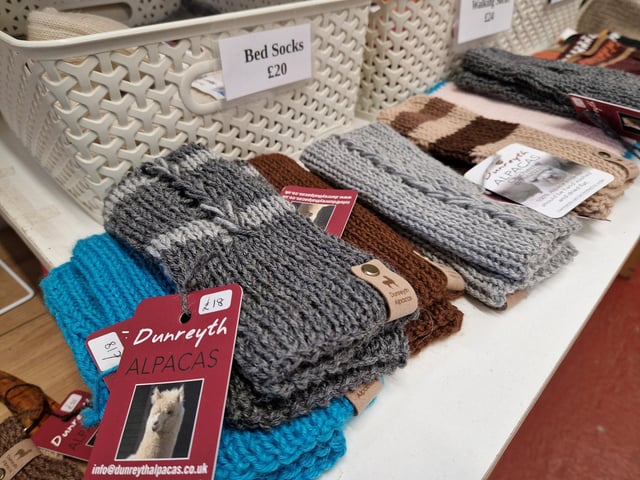
The on-site shop started after Peta started knitting a hat out of alpaca wool for everyone who adopted an alpaca under a scheme they used to run. More and more people started asking Peta for one, so she decided to start selling them along with socks, clothing and more. She now knits items and daughter Amy, who is the farm manager, does crochet using wool from their alpacas that has been sent away to be milled.
Bruce said: "None of this was intended, it’s all evolved naturally. We didn’t have a plan, but we’ve learned as we’ve gone along.”
The couple did animal husbandry courses to learn the skills they needed to keep alpacas. Peta has also always had horses so was comfortable with larger animals, and they use their nursing skills for giving injections and helping with birthing.
Gestation for alpacas is 11-13 months and the Adsdean Park alpacas are typically born in May and June, with three more due this summer. The alpacas take part in shows, as well as being popular visitors at care homes, schools, corporate events, charities and weddings. Animals as therapy has become much more popular in recent years, so the Dunreyth alpacas are in high demand.
Peta said: “Everybody says it’s so lovely and people feel so calm after visiting us, which makes us very happy. And it’s lovely to see people stroking them and feeling relaxed when we take them out to places.
“Losing our jobs was the best thing that ever happened. It’s a lovely life, there’s no commute and we’re in this beautiful location. I can’t think of a better way to live.”
But while it has been a fantastic career change, both Bruce and Peta agreed the daily ‘poo-picking’ of the fields is the only niggle.
Bruce and Peta let their alpacas ‘free-roam’ around the park, and will only put a collar on them for a walking trip if the alpaca wants to.
"If they don’t want to, they lie down and we would never push them to go out. You can’t. It’s totally up to them.”
Bruce and Peta match walkers to an alpaca. They look at their age, size and mannerisms to help them judge which alpaca would be most suitable.
I experienced an alpaca walk a few weeks ago, having bought it as a present for my daughter for her birthday. She was paired with a gorgeous alpaca called Pluto, and she spent a chilled-out hour walking him as part of a group trek up to a viewpoint where she was able to feed him a treat and take pictures, before walking him back down to Adsdean Park.
We had both wondered if the alpaca would be nervous or jumpy around her, but she stuck to Bruce’s guidance for petting and leading Pluto and he was absolutely gorgeous. My daughter loved having the freedom to lead her own alpaca, and getting to see such a beautiful creature up close.
It was the most calming hour and relaxing hour, out in nature with the animals. At £25 per hour for each walker, I thought it was a great value way to destress. My daughter already has plans for us to return, and that’s just fine with me!
– Alpaca walks at Dunreyth Alpacas run Wednesdays to Sundays at 10am. Pre-booking is essential. For more information, to book a space or to find out how an alpaca can visit your business or event, visit https://www.dunreythalpacas.co.uk/
1. Dunreyth Alpacas
Peta and Bruce Ives believe they were the first people in the world to offer alpaca walking to the public Photo: Katherine HM
2. Dunreyth Alpacas
Peta and Bruce Ives believe they were the first people in the world to offer alpaca walking to the public Photo: Katherine HM
3. Dunreyth Alpacas
Peta and Bruce Ives believe they were the first people in the world to offer alpaca walking to the public Photo: Katherine HM
4. Dunreyth Alpacas
Peta and Bruce Ives believe they were the first people in the world to offer alpaca walking to the public Photo: Katherine HM