
Playing Arthur Conan Doyle on the Chichester stage
As David Haig says, his play Magic asks a crucial question: “Whose magic is it? The magic of faith or the magic of deception? Or is it both? That's one of the central issues.”
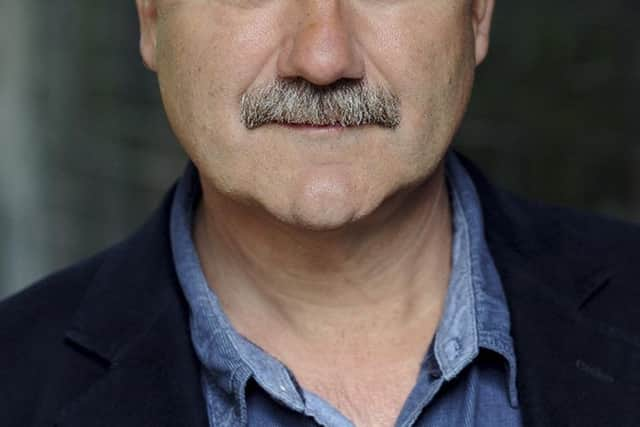
The play enjoys its world premiere on the Chichester Festival Theatre stage from Friday, April 24-Saturday, May 16 – a piece in which David himself plays Arthur Conan Doyle, creator of literature’s most brilliant detective, in his encounter with Harry Houdini (played by Hadley Fraser), the greatest illusionist the world has ever known.
Discovering a shared obsession with spiritualism, they enjoy a mutual admiration which becomes a profound friendship. But crucially it is spiritualism which divides them.
Conan Doyle believes fervently in the psychic world and the promise of reunion with his dead son; Houdini, however, is determined to demonstrate that it’s a cruel fraud.

It’s a tale based on extraordinary historical events, asking what we’re prepared to believe and why.
“I mundanely googled interesting relationships,” David said, “and at the top of the list were Arthur Conan Doyle and Harry Houdini, the great writer and the great illusionist and they were superficially so different. Houdini was a Hungarian Jewish immigrant living in New York and Arthur Conan Doyle was upper-middle-class Anglo-Scottish but when they met there was an immediate bond. One of them went to see the other, and I hope I've got it the right way round in the play! Conan Doyle goes to see one of Houdini's shows and goes backstage.
“They were the two of the most celebrated men on the planet. Houdini was earning more money for his stage performances than any other person at the time. They were two huge celebrities and also each other's greatest admirers but there was also great conflict.
“After World War One Conan Doyle gave up fiction to become the spokesman for spiritualism. He believed passionately in the ability to communicate with the spirits of the dead. Houdini had been to hundreds of seances. He had the biggest collection of spiritualist literature and he longed for it to be true. But he was the ultimate illusionist and he saw through all the mediums’ tricks.
“Houdini developed a visceral loathing for spiritualism, and because they were so famous the rupture in their friendship was very public. It ultimately destroyed their friendship but the context was that it was a time when so many people were seeking solace after the First World War. There were more than 3,000 spiritualist churches in the UK. There was a disillusion with conventional religion at the time. Conan Doyle tried to legitimise spiritualism scientifically, and at the same time the world needed some sort of spiritual solace. It was hardly surprising that people were looking for tangible comfort.”
And it is into Sir Arthur Conan Doyle's shoes that David steps on stage: “I seriously didn't do this for self-aggrandisement! But it gives me an opportunity as a writer to stay longer with the story that I've been involved in for years.”
Which was, of course, also the case a dozen years ago when David was in the Minerva Theatre in Chichester in his own play Pressure, the true story of Scottish meteorologist Group Captain James Stagg, who advised General Eisenhower on the crucial weather forecast for the D-Day landings. Magic now comes in the year that we will see the film of Pressure.
“I'm really proud of Pressure. It has had such a long and productive journey. That was in 2014 and I remember doing the show in Chichester on the anniversary of the landings. It was an extraordinarily resonant experience and then to revive the play four years later and then tour it again and then take it to Canada as well. And all this evolved from this very specific lateral hero, a meteorologist persuading the mighty Eisenhower to change the time of the landings.”
And now there is the film. It opens in America on May 29 and then in Europe in September starring Andrew Scott as James Stagg in a cast also featuring Brendan Fraser, Kerry Condon and Damian Lewis.
“I'm not in it. They asked if I would like to play one of the smaller roles and I don't mean this to sound in any way self-important but I just thought that having played Stagg 300 times I would rather just watch and enjoy the film!”