
Poundland enters administration: shoppers face uncertainty but Crawley stores remain open

Poundland has entered administration after failing to secure a buyer, putting thousands of jobs and the future of hundreds of stores in doubt, while customers face changes to refunds and returns.
The discount chain, which operates around 600 stores across the UK and Ireland, appointed administrators from global consulting firm AlixPartners on Wednesday, November 25, after a prolonged sale process failed to find a viable buyer for the business as a whole.
Clare Kennedy, Daniel Imison and Kevin Wall were appointed as joint administrators, to Poundland Limited and Poundland Elgin Limited, following an insolvency filing at the High Court.
The development comes after weeks of uncertainty about the retailer's future, with a previous notice of intention to appoint administrators filed on October 29.
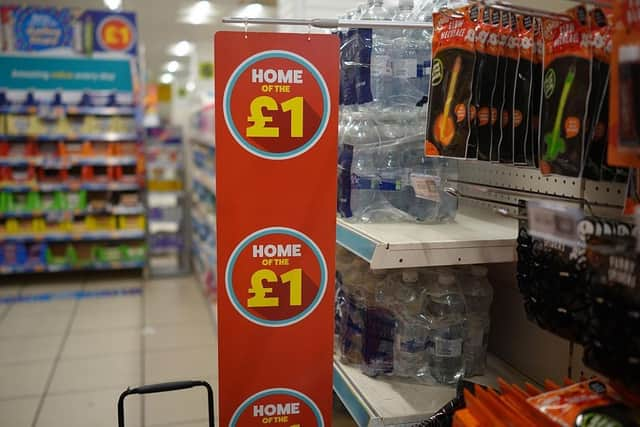

Despite entering administration, Poundland will continue trading while administrators explore options for the business and its assets, including a potential sale in whole or in part.
All stores and distribution centres were confirmed as remaining open at the time of the administrators' announcement.
This includes Poundland's two Crawley branches in Queens Square and Broadfield Barton, where concerns had previously been raised about the retailer's future and the impact on the town centre.
In a Facebook post on October 30, Reform UK Crawley said it had received concerns from shop owners about the decline of the town centre.
The group said: “After seeing signs of trouble at Poundland, we contacted them in September and were assured there were no plans to close their Crawley stores.
“We’ve since contacted them again for further information about any potential closures or job losses.”
There has been no announcement confirming the closure of either Crawley branch.
Poundland shoppers face changes to refunds and returns
One of the immediate concerns for customers is what happens to their money if they need to return an item or are waiting for a refund.
Poundland has confirmed changes to its returns policy following the administration, with new rules coming into force on Thursday, November 26.
The retailer will no longer offer in-store refunds or exchanges for purchases made from that date where customers have simply changed their minds.
It has also stopped automatically honouring its previous 28-day returns policy for items bought before administration.
Customers can still submit claims under the previous policy, but these will be treated as unsecured claims in the administration rather than being paid automatically.
This means shoppers could be left out of pocket, with no guarantee they will recover the money owed to them.
Molly Monks F.I.P.A, personal finance and insolvency expert and founder of insolvency specialists Parker Walsh, said customers needed to understand the financial risks.
She said: “When a retailer enters administration, customers can find themselves in a very different position from the one they expected when they handed over their money. A refund that would previously have been handled at the till may now become a claim against a company in administration.
“The important thing for shoppers to understand is that being owed money does not necessarily mean they will get it back. An unsecured creditor is effectively joining a queue of people and businesses owed money, and there is no guarantee there will be enough funds available to repay everyone in full.”
However, shoppers should not assume they have lost all their consumer rights.
Under the Consumer Rights Act 2015, customers retain statutory protections if goods are faulty, not as described or fail to meet the required standards.
Depending on the circumstances, they may be entitled to a refund, repair or replacement.
Molly said: “There is a difference between changing your mind about a purchase and discovering that something is faulty. Shops are not generally legally obliged to accept change-of-mind returns, whereas consumers do have statutory protection when goods are faulty or not as described.
“Those rights do not simply disappear because a business enters administration. But the practical reality is that exercising them can become much harder when the retailer is insolvent.”
She advised customers to keep receipts and relevant correspondence and check the retailer's official guidance before assuming a refund will be processed.
Customers with gift cards or outstanding store credit should also check the administrators' latest guidance rather than assume these will automatically be honoured.
Thousands of Poundland workers face uncertainty
The administration is also a worrying development for thousands of Poundland employees, particularly with Christmas approaching.
Although administration does not automatically mean immediate redundancies, the future of jobs will depend on whether the business or individual parts of it can be sold and which stores remain commercially viable.
Molly said: “Today’s news will be devastating for thousands of Poundland employees, particularly with Christmas just weeks away. For many, this is not simply the loss of a job; it is the sudden uncertainty of how they will pay their bills and support their families at one of the most expensive times of the year.
“Administration does not automatically mean every employee is made redundant immediately. The administrators will initially assess the business, its finances and whether any parts can be sold or rescued.
"Some employees may continue working while that process takes place, but there is inevitably a very real risk of redundancies if stores close or parts of the business cannot be sold.”
In their announcement, AlixPartners said they would work with stakeholders, including government representatives and trade union USDAW, to identify the best possible way forward.
A spokesperson for the administrators said: “We appreciate this is a deeply concerning time for all involved - customers, suppliers and, in particular, Poundland colleagues.
“Our priority now is to work with all stakeholders, including representatives from government and USDAW, as we identify the best possible route forward.
“We would encourage anybody interested in acquiring the business in part or as a whole, as well as UK retail operators with open employment opportunities, to contact The Administrators.”
Could another retailer buy Poundland?
The appointment of administrators does not necessarily mean the end of the Poundland brand.
AlixPartners will now take responsibility for merger and acquisition activity, exploring potential sales of the business and its assets either in whole or in part.
A buyer could potentially acquire the entire retailer, while another operator might be interested in selected stores, distribution operations or other assets.
However, Molly warned that a buyer may only want the most commercially attractive parts of the business.
She said: “Administration doesn’t necessarily mean the end of the Poundland brand. A buyer could emerge interested in acquiring the entire business, or another retailer could purchase selected stores, distribution operations or other valuable assets.
“However, there is a significant difference between rescuing the entire company and buying the parts that are commercially attractive. A purchaser may want the best-performing locations without taking on the less profitable stores, existing liabilities or the wider financial problems.
“That could mean a much smaller Poundland emerging from the process.”
The future of individual branches will depend on factors including profitability, location, leases and whether other retailers are interested in taking them over.
Why has Poundland collapsed?
Poundland's administration follows a prolonged period of financial difficulties and restructuring.
The retailer's owner, Gordon Brothers, had been involved in efforts to secure a sale, with the process continuing over an extended period of moratorium.
However, administrators confirmed that the process failed to identify a viable solvent solution for the business as a whole.
Molly said the situation highlighted how even popular discount retailers could struggle when the costs of running a business outweigh the money it generates.
She said: “Poundland’s collapse is a reminder that even a hugely recognisable retailer with hundreds of stores and a loyal customer base is not immune to financial distress.
“What makes this particularly interesting is that the problems appear to have gone beyond simply whether customers were still shopping there. Reports in recent days have pointed to serious funding difficulties, restrictions on access to working capital and an inability to place orders with suppliers.
“A retailer can have customers walking through its doors, but if it cannot finance the stock it needs to sell, pay suppliers or meet its day-to-day obligations, it can quickly find itself in serious trouble.”
The administration comes despite Poundland reporting an improvement in sales in its latest trading update.
The retailer reported unadjusted like-for-like sales growth of 3.3 per cent for the quarter ending September 27, 2026. This rose to 6.4 per cent on an adjusted basis, accounting for restructuring changes including the removal of categories such as frozen food.
Unadjusted like-for-like sales increased by 6.7 per cent in September and 9.8 per cent in the first week of the retailer's new financial year.
Managing director Barry Williams previously said: “We ended Q4 with significant momentum, returning to positive like-for-like growth and that momentum has only strengthened in the first week of the new financial year.
“Our recovery plan is working, thanks to our investment in simple low pricing and new ranges, powered by our new in-house teams.”
However, Molly said improving customer demand was not necessarily enough to protect a retailer facing serious financial pressures.
Sussex high streets face further uncertainty
Poundland's administration is another significant blow for British high streets, with the retailer having been a familiar presence in towns across the country for decades.
Several branches have already closed across Sussex since August 2025, including stores in Horsham, Hailsham, Worthing and Brighton's Western Road.
Further closures were also reported in Bexhill, Chichester, Haywards Heath and Langney in Eastbourne.
The latest development raises further questions about the future of the retailer's remaining stores and the communities that rely on them for affordable everyday essentials.
Molly said: “Poundland has been a fixture on British high streets for decades, and its collapse is another significant warning about the pressures facing traditional retail.
“Discount retailers are supposed to benefit when household budgets are stretched, because consumers look for cheaper alternatives. But being a value retailer does not automatically make a business financially resilient. Margins can be tight, operating costs remain high and competition from supermarkets, online retailers and other discount chains is intense.
“The loss of a retailer of this size would leave a noticeable gap in many communities, particularly where Poundland provides one of the few affordable places to buy everyday essentials.”
With administrators now examining the options for Poundland, the coming weeks will be crucial in determining whether the retailer can be rescued, sold in parts or significantly reduced in size.
For now, its stores remain open, but the future of its employees, suppliers, customers and high street branches remains uncertain.