
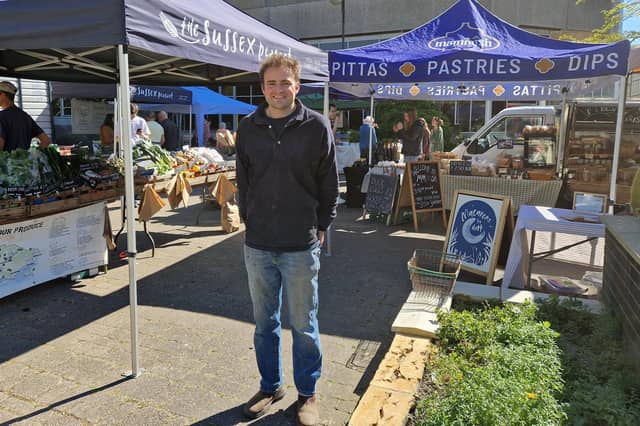


As I strolled around one of The Sussex Peasant’s spring food markets, I could see the tomatoes had come from a farm in Nutbourne 14 miles away, and the radishes were from 17 miles away in Tablehurst.
That’s the philosophy of food business the Sussex Peasant: to create a simple food chain connecting farmers with the local community.
Working under the motto of ‘local food, farmed well’, the business was founded by Ed Johnstone, who believes good food shouldn’t have to travel far.
Ed’s business creates a direct line from Sussex farms to the people who live here, through a fleet of mobile farm shops travelling across the county. The Sussex Peasant also runs a series of larger Sussex food markets where customers can meet the producers – like the market I attended at Hove Town Hall recently.
Ed said: “These events are a great chance for our customers to see the people behind the produce. That’s why I set the business up, to connect people back to the local farming network. We know where everything is from, we know all the producers behind the products. It’s that transparency in the food system that I’m really passionate about.”
At the market, Ed and his team sold produce including meat, vegetables, bread, eggs, dairy and more from farms across East and West Sussex. Producers also sold other food products, including micro-greens, olive oil, Indian cuisine, sauces and much more.
“The producers are great people to grow the food and we realised the opportunity is there to have great and inspiring people to sell it for them,” said Ed. “Then the farmers can be great at farming and we can be great at the selling side of it.
“Having the producers here at these bigger events really elevates the experience.”
As well as the series of larger spring meet the producers events, Ed and the team run 20 markets each week, selling produce out of their mobile vans. Sites include Brighton, Hove, Ditchling, Cuckfield, Danehill, Lewes, and Haywards Heath, with plans for sites in Arundel, Storrington, Balcombe and more to hopefully come later this year.
Ed grew up in Plumpton, East Sussex. While his parents weren’t farmers, he was always around food, saw it growing, and said communal dining was important to his family. He started the Sussex Peasant eight years ago, having previously worked in pubs and restaurants.
He said a statistic he read about how only one per cent of food grown in the Home Counties stayed there to be sold sparked the idea for a more sustainably focused business, and he soon found himself with a wheelbarrow, collecting food from local farms and driving it around in his wife’s Fiat 500.
Initially, Ed struggled to get farmers on board and leaned on his farmer brother-in-law to help him get five working with him. He now has 14 members of staff and works with 72 producers and counting.
Ed added: “As we got going I realised that people did want to know where their food was coming from and were more conscious about their health. I really wanted to support the local farmers, but to do so you need to make it accessible to people and that is where we come in.
“Food-miles are so important to us and so is really getting to know the producers. We know they grow really consciously and produce delicious and nutritiously dense food. We also know they have an eye on nature and make sure they are restoring ecosystems.
What started with just selling meat and veg – which is still 60 per cent of the business’s sales – has grown into offering whole meal solutions. It means Ed and the team added things like milk, eggs, bread and jams so they could showcase everything that Sussex is making and producing – and make shopping as convenient as possible.
“I’m desperate for people to enjoy a shopping experience again,” Ed said. “Let’s not soullessly drag a trolley round somewhere, let’s see it as a chance to be sociable, to bring children along, to take a sample and try the produce. Let’s get people inspired by shopping for real food. That’s what we do differently. We create theatre and energy from the food to get people enjoying it.”
In terms of pricing, Ed said the fresh produce they sell is pretty much on a par with anywhere else, cost-wise. He said for processed products like jam, the price-point might be higher due to economies of scale, but customers were getting a far-superior product.
In the future, Ed hopes to do more education work with schools and community groups, but for now, he is passionate about the work he is doing to support local farmers.
He said: “I naturally have a lot of energy and I’m ambitious and I sensed there was a problem I wanted to contribute a solution to. I wanted to grow and as things have gone on I’m more hungry to keep going. I think that’s why we’re at where we’re at – but I always have a constant thirst to do more.
“It’s really important we get the most for these Sussex producers. We want people to buy Sussex asparagus, Sussex strawberries, Sussex everything they can. It tastes better and the price point is the same. You’re supporting a local family and you’re supporting a local farm.”
For more information about the Sussex Peasant, and details of all its upcoming events and markets, see thesussexpeasant.co.uk
People can also sign up to a newsletter, which includes recipe suggestions and more information on the producers.
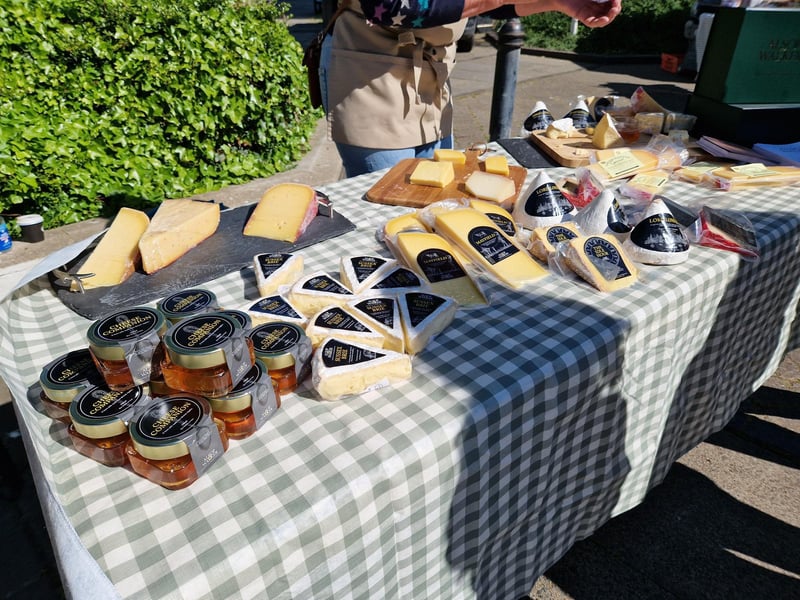
21. The Sussex Peasant
The Sussex Peasant aims to create a simple food chain connecting farmers with the local community Photo: Katherine HM
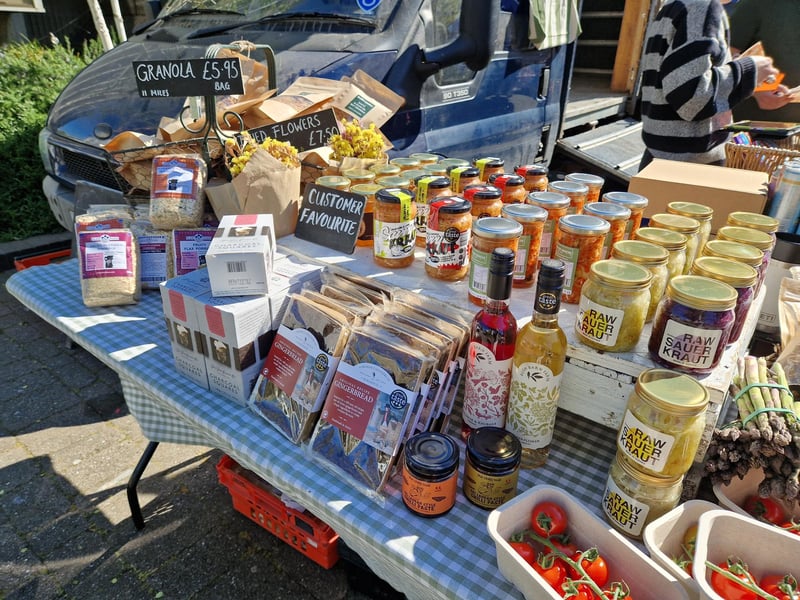
22. The Sussex Peasant
The Sussex Peasant aims to create a simple food chain connecting farmers with the local community Photo: Katherine HM
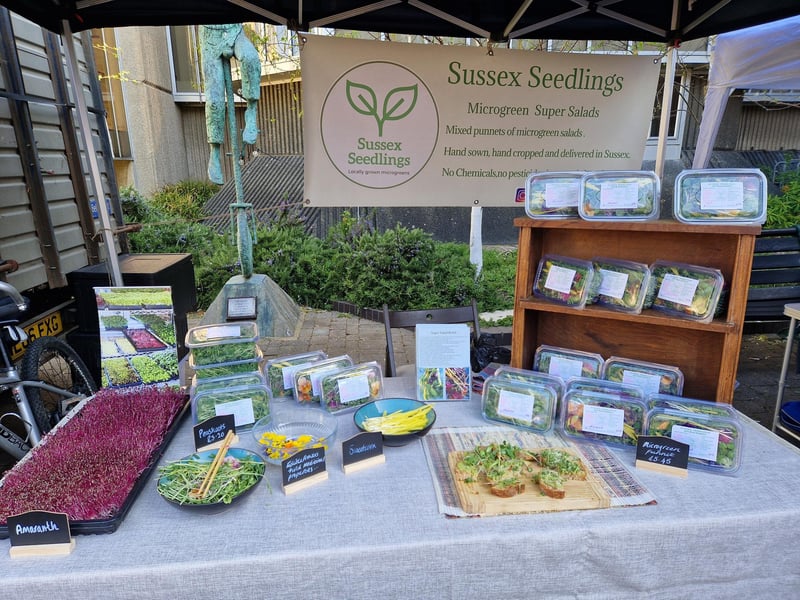
23. The Sussex Peasant
The Sussex Peasant aims to create a simple food chain connecting farmers with the local community Photo: Katherine HM
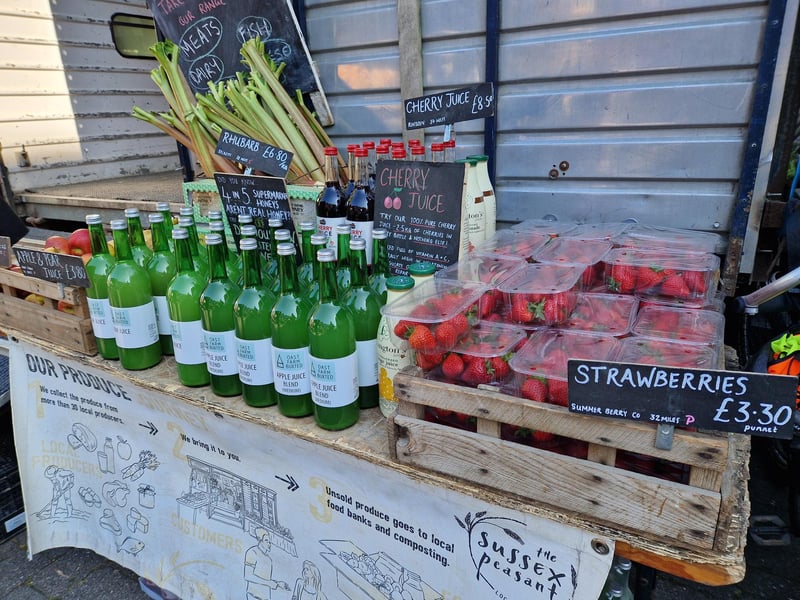
24. The Sussex Peasant
The Sussex Peasant aims to create a simple food chain connecting farmers with the local community Photo: Katherine HM