
Why Gabriel Byrne is making his Chichester Festival Theatre debut
Gabriel Byrne has lived in the States for many years. It seemed like quite a haul when the opportunity came up to make his Chichester debut in the world premiere of 45 Years in the Minerva.
“But I read it, and I was intrigued… and so far I think I have made the right decision!”
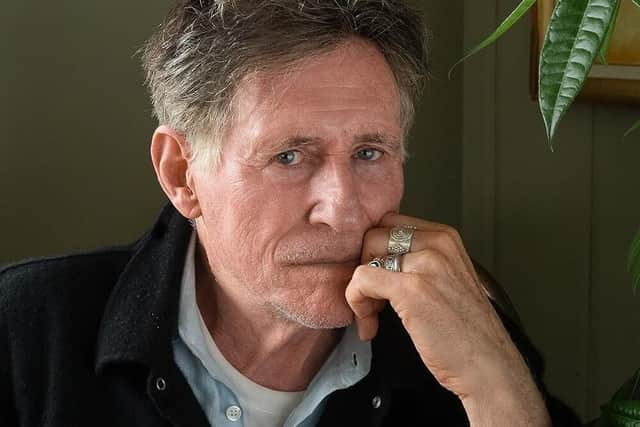

The play runs until Saturday, July 11.
“I just found the piece so compelling and so moving that I just thought yes. But also Chichester has this incredible reputation around the world as a centre for quality drama. I just thought I am going to do this and now I love being here. I had never been to Chichester before. I knew it from school days in history as a Roman town and I had heard of the cathedral but beyond that nothing except the reputation.”
As for the play: “It's a play that keeps revealing its depths. You can read it as a very compelling story and then it will reveal even more emotional depth, and I think an audience will come away from the piece thinking about their own lives. For me, that is the success of a play when people leave thinking about their lives and about their decisions and about their relationships and about their marriages and about the things that they have got wrong. Everybody gets things wrong. At some point people will make decisions that are going to have life-long consequences. This is a play about secrets. It is the theatrical equivalent of a page-turner.”
Buried for decades, the body of a young woman is found in the melting ice. A thousand miles and 45 years away... a crack forms in the crystal of a marriage.
It’s the week leading up to Kate and Geoff’s wedding anniversary and preparations for the party are in full swing. As they choose the music for their first dance, a letter from Switzerland quietly shatters their world.
Gabriel is playing Geoff: “He is a retired middle-management guy who has had a reasonably happy career who has now been replaced by streamline corporate policy. He's been retired for a while and he has a pretty contented undemanding life until something happens. And then everything that she has accepted and everything that he has accepted shatters very quickly at the beginning of the play.
“I think we all like to believe that the world is an ordered place. We all impose all kinds of things on our existence to make it look ordered, whether it's religion or the law or even marriage but underlying that illusion of order is chaos and that chaos can come out at any time when nobody's expecting it. I suppose if you believe in chaos theory, it will not come as a surprise, but it may be tragic.”
Gabriel is delighted to be back on the stage in the UK: “I did a one-man show in the West End about four years ago based on my book that I adapted for the stage but before that it was a long time. I started my career at The National in England way back in the 1980s and I also did the Royal Court around about that time.
“I have lived in the States for a long time. I got married over there. I have children over there but I've never seen myself as an American. I don't have an American passport. I still have my Irish-European passport.
“Everywhere is troubled at the moment but I think for the ordinary people in the States there is a huge uncertainty about the economic future of the country. Basic necessities in life have gone up in the last four to five months but they were going up before that because of the tariffs. I think people are worried about the economic situation. There is a fear which is an unspoken fear to a great extent but it is there and even in a really lovely place you can still feel that anxiety.”
Which certainly makes the arts even more important.
“The umbrella of the arts is not just good for us but necessary for the soul. I know that there is a preoccupation with AI and people feel that maybe that is the end of the theatre but I feel really optimistic about the future of theatre. Theatre is a direct communication between people. There is nothing quite like it. I do think there is going to be a hunger and a yearning for live entertainment. I saw the Morris dancers in the rain in Chichester on Saturday and it struck me how wonderful it was that there was that tradition that people were still doing it and people were still watching and people were still partaking in it. I think people are going to crave that ritual and that history, that lovely connection between the past and the present. So I'm really optimistic about theatre.”
Especially in Chichester: “I think the thing that really strikes me is the strength of the connection in Chichester between the theatre and the community. People have a sense of pride about the things that happen at the theatre and then in seeing them take off and go elsewhere. That integration between theatre and community is so lovely to see.”
Plus of course, theatre is a profoundly different experience to film for the people watching: “Unconsciously you know that when you're watching a film that nothing is going to go wrong, but theatre is live. You don't know what is going to happen. You're watching something live in the present that you're witnessing in that moment on that particular night and that you won't be able to see again on a video. And I think that's powerful, and I think that's something that people really want.”