
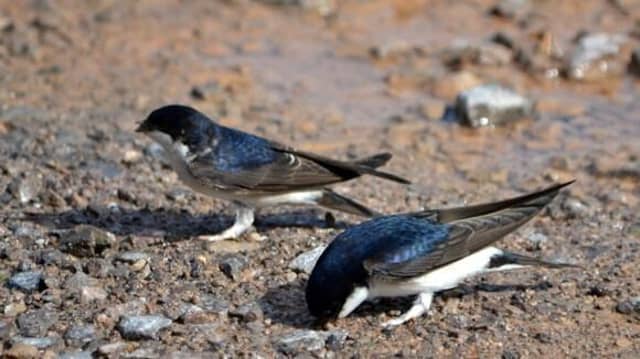

Both species are regular visitors to the reservoirs, arriving in Spring after a 3,000 mile migration from sub-Saharan Africa and staying to breed over the the spring and summer months.
The House Martin towers installed at both reservoirs have 24 artificial nest cups designed to appeal to the birds who like to breed in loose colonies. There is also space for them to build natural mud nests. The Sand Martin banks are designed to mimic their natural habitat using long tubes packed with sands as well as using acoustic lures to encourage them to nest.
SE Water's Environmental Performance Officer, Patrick Austin said: "This is a key element of our commitment to local biodiversity and habitat enrichment and addresses the need for sustainable, safe breeding locations for the local migratory House and Sand Martin populations.
"The reservoirs are an excellent location as the surrounding meadows, pastures and reservoirs provide excellent foraging habitat for these species. House Martin numbers are in decline, in part due to a decrease in insect rich habitats along with drier summer meaning finding soft mud to build their nests is becoming difficult.
"Unlike House Martins the population of Sand Martins is currently fairly stable in the South East. However it is still important to provide robust nesting options for these birds now and in the years to come."
The work in Sussex is part of a wider drive by South East Water to increase breeding success of Martins, Swifts and Swallows which includes funding 125 House Martin nest cups to homeowners in Hampshire as well as artificial nests for House Martins and Swifts in and around Canterbury.