
CDC wins crucial planning appeal arguing future flood risk and loss of agricultural land
An Appeal by Barratt to build 280 new homes on the outskirts of the Sussex coastal village of East Wittering has been dismissed by the Planning Inspectorate.
Planning Inspector Andy Harwood upheld Chichester District Council’s original decision to refuse the planning application on the grounds of future flood risk and loss of best and most versatile agricultural land.
“I am delighted to announce that the Appeal at Stubcroft Farm by Barratt has been dismissed on Flood Risk and Most Versatile Agricultural arguments by CDC,” said Iain Ballantyne, CDC Councillor for the Witterings ward.
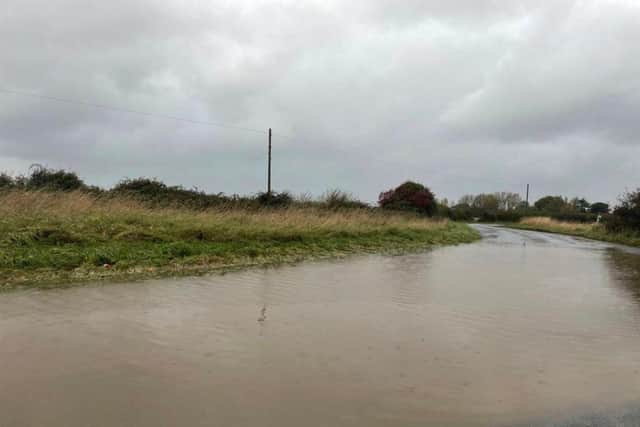
Evidence by residents and local councillors played an important part in the Appeal Hearing, including photographs of the sea overtopping shingle banks and blocked outfalls cited by the Inspector in his ruling.

“This is an excellent result which vindicates the comments made by the public as well as by the local authorities,” said West Sussex County Councillor, Pieter Montyn.
“I am delighted by the Inspector’s decision to dismiss these appeals, which reflects the strength of the community’s long-standing concerns about flooding, agricultural land use, wildlife and traffic impacts” said Bracklesham resident Izabela Mayne, who is standing as a candidate in May’s WSCC Elections.
“The careful consideration given to the flood risks and agricultural arguments reinforces the robustness of the ruling, making it a significant victory for sustainable planning. This outcome is a testament to the tireless efforts and dedication of everyone involved over the past seven years, an inspiring example of what can be achieved when a community comes together to protect its future,” said Izabela.
“This really is a victory for local knowledge over questionable flood modelling by developers who do not know or understand the local geography and history as well as residents and it is a victory for commonsense,” said East Wittering resident Antonia Doggart.
“In this decision the Inspector clarifies the importance attached in the National Planning Policy Framework to keeping new homes away from areas that may be subject to flood risk in the future due to climate change and to protecting the country’s best agricultural land. I commend CDC and councillors for standing up to their principles of ensuring that new homes are only built in sustainable locations,” said Dr Carolyn Cobbold.
“Finally, the planning system has demonstrated that it can consider future flood risk. While the Environment Agency is only able to object to developments in Flood Zone 3 as currently mapped, this ruling demonstrates that local planning authorities can, and should, ensure sequential testing is applied to all sites including those in future flood risk areas,” she explained, pointing out that “government must now reassess housing numbers allocated to low lying coastal areas at future flood risk, especially local authorities which also have a high proportion of top quality agricultural land such as Chichester District,” said Dr Cobbold.
During the appeal process, Barratt had tried to argue that the future tidal risk modelling prepared by leading flood risk consultancy firm JBA for CDC’s Strategic Flood Risk Assessment and which was signed off by the Environment Agency was too conservative.
The developer had employed three separate flood risk consultancy firms, two King’s Counsel barristers, and had forced an adjournment to the Appeal Hearing in its efforts to cast doubt on CDC’s SFRA. Despite such a concerted effort, the Planning Inspector ruled that the developer was unable to prove that the site would not be at risk of tidal flooding during the lifetime of the development.
The Inspector also ruled that the proposed housing on 16.9 hectares of Grade 2 agricultural land “would have an adverse effect on the supply of the best and most versatile agricultural land.”
“At least some good news. We have battled for seven years to save the Stubcroft fields and the Hale Farm Rife, which is such a unique habitat for water voles and other rare creatures. Our dark bellied geese can continue to use the Stubcroft fields as their feeding grounds. I could not feel more relieved. This is an amazing achievement and hopefully we have now prevented our last coastal fields from development,” said resident Trish Mackinnon.
“Well done to everyone for keeping at it and I’m so pleased for Stubcroft and everyone in East Wittering,” said Earnley resident Melissa Smith.
“The loss of BMV land is becoming a stronger argument as this year’s UK harvest was the second worst on record, 22% down on the previous year and global events are seriously affecting food security around the world,” said Simon Green, who runs the multi-award winning sustainable Stubcroft Farm campsite located close to the proposed development.