
Although they could see he wasn’t his normal self, the thought of cancer never entered their heads.
However, after numerous inconclusive trips to the GP, mum Sam Googled his symptoms and realised he was showing some of the signs of leukaemia.
Weeks later, after hospital tests, they were told their eldest son had Acute Lymphoblastic Leukaemia.
Harry started chemotherapy straight away and thankfully, now more than half-way through his treatment, he is doing well, is back at school - and he’s back on the football pitch.
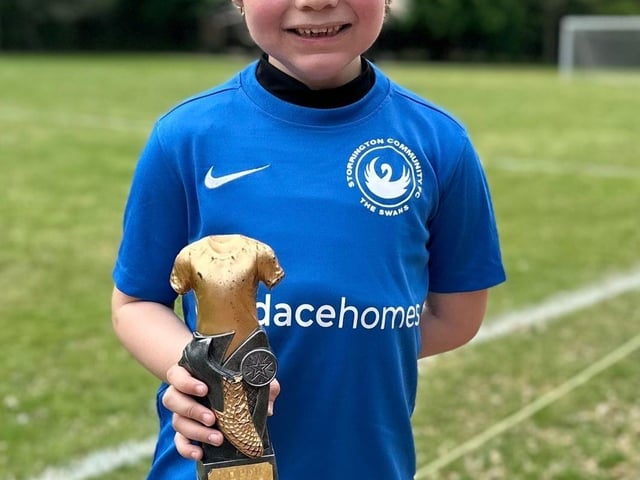
Sam, from Storrington, West Sussex, said: “Harry plays number 2 for the Storrington Swans and when he couldn’t play, they held his number for him.
“Thankfully, he has responded well to treatment and is now back at school and back playing with his team.”
September is Childhood Cancer Awareness Month and Harry, now eight, his mum, dad Jack, and his brothers, Daniel, six and Zach, two, are backing a campaign to help more youngsters like him survive the disease.
They are sharing his journey in support of Cancer Research UK for Children & Young People.
The first signs of Harry’s illness appeared just before Christmas 2023.
Sam, a part-time teacher, said: “We could see he was flagging and he seemed really flat – normally he is full of energy and he just wasn’t his normal, upbeat self.
“We’d take him to the park to play football, but after 15 minutes, he’d stop and literally lie down on me. His teachers had noticed he wasn’t right too.
“But when he developed a rash on his legs and back, I began to get really worried.”
Finally, Harry was referred to Worthing Hospital where blood tests confirmed he had ALL.
“Even though I’d been Googling, it was still a shock to be told your child had cancer,” said Sam. “You tell yourself that this won’t happen to your family.”
Harry started treatment in February 2024 and thankfully responded well. In the early days he struggled with his mobility – even taking a few steps was challenging - had temperature spikes that meant he had to be admitted to hospital for 48 hours at a time, and he lost most of his hair.
“But on the whole, we were lucky that he has coped with the treatment very well. He missed months of school so has fallen behind and of course he missed seeing his friends. He also struggled with the monthly steroid treatment and gets ‘hangry’ when he needs feeding!
“But, he’s healthy and well, and enjoying being back at school – he’s enjoying learning about the Romans. His hair has grown back and it’s long – he won’t let me cut it. And he’s back in the football team.
“They are small steps, but they really matter. We have to keep reminding ourselves he’s still in treatment. We’re incredibly proud of him.”
Earlier this year Harry was given a bravery award – a Cancer Research UK for Children and Young People Star Award.
Sam and Jack, a pig farmer, understand all too well the importance of advancing life-saving research and breakthroughs. They want to help raise vital awareness and funds.
Sam said: “We’re sharing our story to help give hope to other families. Thanks to improvements in research and better treatments, we’ve been able to enjoy many more precious moments with Harry that were difficult to even think about when he was first diagnosed.
“That’s all down to research and why raising money for Cancer Research UK for Children & Young People is so vital.”
Cancer Research UK played a role in the development of two of the drugs Harry was treated with – Cyclophosphamide and Methotrexate.
Grateful for the treatment Harry has, Sam is urging people to help drive more progress by donating or picking up a gold ribbon badge – the symbol of childhood cancer awareness – available from Cancer Research UK shops.
She added: “With around 490 new cancer cases in children and young people like Harry in the South East every year,* I’d love people to do what they can to show their support.”
Cancer Research UK has helped to more than double children’s cancer survival in the UK since the 1970s. Today, more than 8 in 10 children and young people diagnosed with cancer survive for at least 10 years, but there’s still much further to go.**
The charity has funded pioneering research into understanding different types of childhood leukaemia which has made treatment better for children today, meaning more survive.
CRUK scientists also led an important clinical trial testing a treatment (mitoxantrone) for children with acute lymphoblastic leukaemia that had come back. This became the UK standard of care for these children and is still used as part of treatment today. Thanks to this trial, many more children with this disease can now expect to survive.
Across the UK, around 18,000 children and young people have taken part in Cancer Research UK clinical trials since 2002.
Cancer Research UK spokesperson for Sussex, Lynn Daly, said: “Cancer is different in children and young people - from the types of cancer that affect this age group, to the long-term effects of treatment such as hearing loss and infertility. So, it needs a different and dedicated approach that we’re grateful to our supporters for helping to make possible.
“Thanks to their generosity, our scientists are unlocking discoveries about these cancers and translating them into new and better ways to diagnose and treat them. But, despite huge advances, too many young lives are still lost to this devastating disease – more than one each day in the UK.***
“That’s why we need people to get behind our mission to ensure more children and young people like Harry live longer, better lives free from the fear of cancer.”
Pick up a gold ribbon badge in Cancer Research UK shops or donate at cruk.org/childrenandyoungpeople
INFO BOX:
Childhood cancer is rare.
Acute lymphoblastic leukaemia (ALL) is a type of blood cancer. Chemotherapy is the main treatment.
Many symptoms of ALL are vague and non-specific. They are similar to the symptoms of many more minor childhood illness.
Symptoms of childhood ALL can include:
- looking pale
- feeling very tired
- bruising or bleeding easily or for no reason
- having a high temperature (fever) or sweats
- picking up infections easily and often
- swollen lymph nodes
- bone pain
- loss of appetite
- swollen tummy (abdomen)
- swelling of one or both testicles
Not every child with ALL has all of these symptoms before they are diagnosed.
At the beginning these symptoms might come and go. A child might be exhausted one day, but brighter the next.
Most of these symptoms are due to the leukaemia cells having spread inside the bone marrow and there not being as many normal blood cells as usual.
Most children with one or more of these symptoms won’t have leukaemia. But it's important to get a GP to check any of the symptoms out.
1. Contributed
Harry is back on the pitch after cancer treatment Photo: Submitted
2. Contributed
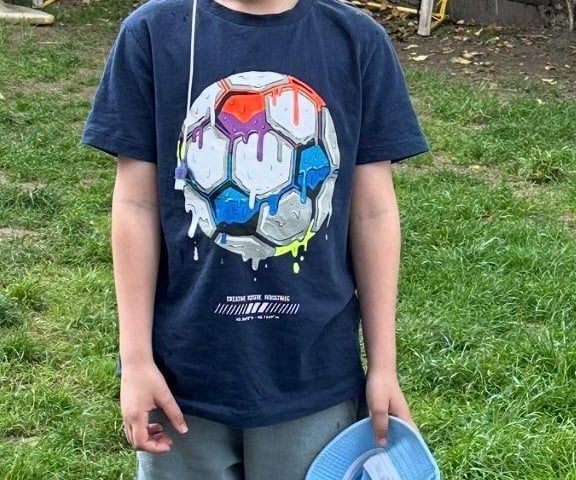
Harry getting in some practice Photo: Submitted
3. Contributed
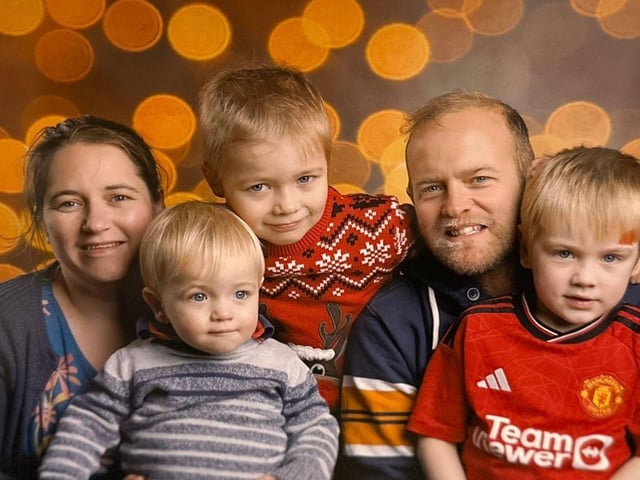
L-R Sam, Zach, Harry, Jack, Daniel are supporting Cancer Research UK for Children & Young People Photo: Submitted
4. Contributed
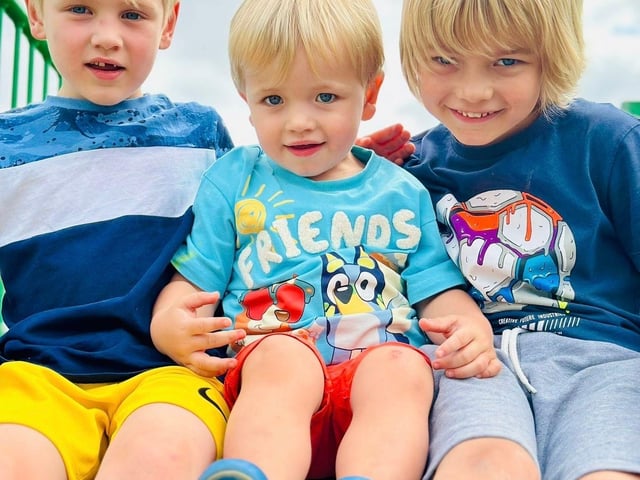
L-R, Daniel, Zach, Harry Photo: Submitted