
Southern supports recovery of vital Sussex kelp forest
Southern is supporting the recovery of one of Britain’s most biodiverse habitats – a kelp forest off the Sussex coast.
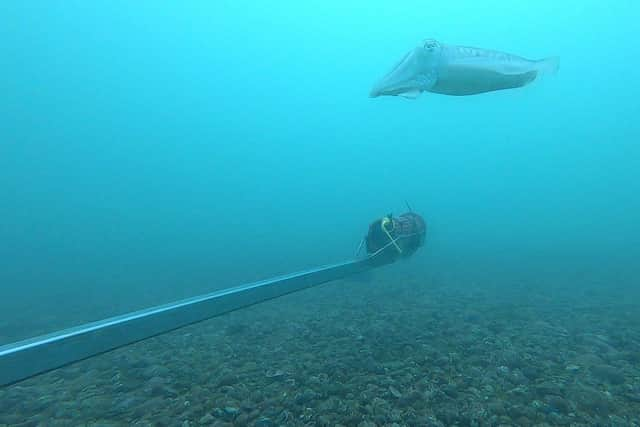
The railway firm, whose trains run parallel to the forest, is funding baited remote underwater video cameras out at sea as part of a study by the University of Sussex and Blue Marine Foundation into its return to life after decades of trawler fishing.
Some of the sites are spread throughout the Sussex Nearshore Trawling Byelaw exclusion zone, which extends up to 4 kilometres from the coast. Sites are also surveyed outside the trawler exclusion zone as a comparison.
The data collected will not only monitor the recovery and growing levels of biodiversity at the four sites but also provide information to help manage kelp forests around the UK.

The historic kelp forest, between Selsey and Shoreham-by-Sea, was an essential part of the Sussex ecosystem:
- Dubbed ‘the rainforest of the sea’, kelp forests support a vast range of marine life, including sting rays, eels, cuttlefish (see picture below), and even sharks;
- They have a big positive economic impact, supporting important commercial fish species such as bass, black seabream, and lobster;
- They dampen waves and the erosion of our coastline;
- Kelp forests sequester CO2 from the environment and help transfer it to deeper sediments in the ocean floor below.
In 1987 a severe storm damaged the Sussex kelp forest, and its recovery was prevented by the continued presence of heavy commercial fishing nearly wiping out the forest. Thankfully, the implementation of a recent trawling ban enacted in 2021 has allowed it to start growing back and bringing native schools of fish, sharks, crustaceans, and more marine life with it.
Jason Brooker, Environment Specialist at Govia Thameslink Railway which operates Southern trains, said: “We're proud to be sponsoring vital research into the recovery of this important resource. Kelp forests are the ocean's rainforests and one of Britain's most biodiverse habitats.

“Our West Coastway trains serve the coastal communities along its entire stretch. With our commitment to biodiversity and promotion of train travel as the most sustainable form of public transport, funding this project was a perfect fit.”
Xanthe Caldecott, Managing Director and Co-Founder at GreenTheUK said: “We’re thrilled to see Southern taking such a proactive role in supporting the recovery of this vital habitat. Kelp forests play a critical role in maintaining a healthy marine ecosystem and are a key part of the fight against climate change.
“This collaboration highlights how businesses can play an important part in protecting and restoring nature. We’re proud to work with Govia Thameslink Railway and for their commitment to local wildlife and supporting the brilliant work by Blue Marine and the University of Sussex”.