
This is how High Sheriff's ground-breaking mental health conferences across West Sussex can help transform - and save - lives

A ground-breaking series of conferences looking at mental health are being held across West Sussex. They have been spearheaded and organised by the county’s High Sheriff Dr Tim Fooks who is bringing together community groups, individuals, charities, and statutory agencies, as well as the emergency services, in each of the seven neighbourhood areas of the county, to raise the profile of mental health burden and seek ‘joined up’ solutions. Editor In Chief Gary Shipton attended the conference at The Assembly Room in Chichester - and here are his personal takeaways from the discussions.
The Covid pandemic may be over but it has been replaced by a mental ill-health one. 1 in 6 adults in West Sussex report experiencing a significant mental ill-health disorder but many others, especially men and those from certain cultural groups, suffer their distress in silence and without support.
Of course, the term ‘mental ill-health’ covers a very broad range - everything from addiction and anxiety to post-traumatic stress disorder and psychosis - and manifests itself in as many ways: worklessness, homelessness, fractured relationships, eating disorders, self-harm, and even suicide.
The impact on the individual, on society and even the economy, is simply catastrophic. The loss of a life to suicide is reckoned to impact almost 150 people whereas some estimates suggest that the whole economic cost to West Sussex of the mental-ill health crisis is in the order of £1-2 billion a year.

There are many potential triggers which are often cited; poverty, inequality, adverse childhood experiences, emotional and sexual abuse, a lack of purpose and self-worth, drug and alcohol abuse, isolation, lockdown, and social media, are all contributing factors.
The superb Goodwood Health Summits have also highlighted growing links between poor diet, ultra processed foods, and gut health and the microbiome as having a significant impact on mental wellbeing.
For the individual and their families at the epicentre of the crisis, finding the right help can be difficult. There are a range of charities, community groups, and statutory agencies - not least the NHS - which can provide solutions. But navigating your way through them to find the right individual solution, within a safe time-frame, has often seemed exhausting.
For all these reasons, these conferences organised by the High Sheriff of West Sussex Dr Tim Fooks are unique. I do, most
whole-heartedly, commend him for them.
As he explained at the opening of the Chichester session, the role of the High Sheriff is largely ceremonial. It is also entirely funded by the office-holder - not a penny of taxpayers’ money goes to support it. But in bringing key players together, in initiating debate and conversations that might otherwise not happen, in proving a catalyst for change and action, and being strictly non-political, the position of High Sheriff is an extraordinary force for good.
Dr Fooks - a retired Pulborough GP - knows first-hand the challenges of helping people with their mental health. That is why he has made it a key focus of his year in office.
The conferences run until mid-January and have been organised in seven neighbourhood locations across the county - Bognor Regis, Shoreham, Crawley, Chichester, Worthing, Horsham, and Mid Sussex.
Working with the support and practical help of local civic leaders alongside specialists in the councils, Sussex Police, West Sussex Fire & Rescue service, NHS, charities, and individuals, the dialogue has explored different aspects on each occasion.
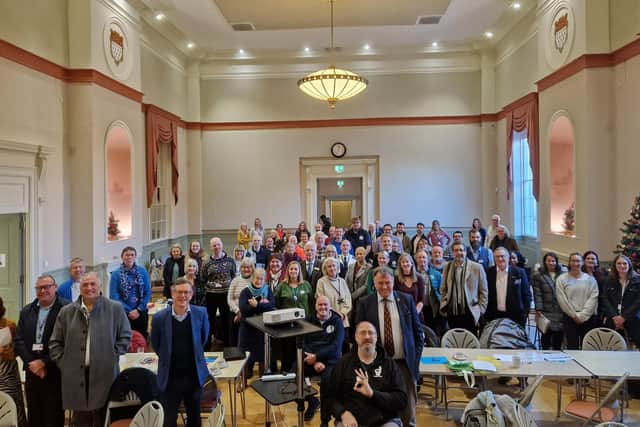
In Chichester, for example, after five keynote speeches, not least from a man called Simon who spoke with extraordinary courage about his own mental health journey, the 100 or so delegates examined a range of issues. These included homelessness, men’s suicide prevention, eating disorders, the loss of identity and purpose at retirement, the importance of the natural environment, the LGBTQIA+ community, and the challenges facing travellers.
Dr Fooks will bring all the suggested actions together from all the conferences for possibly the most comprehensive and diverse report ever assembled in the county and, with the support of West Sussex Public Health, will dovetail it into the objectives of West Sussex MIND whose mission will endure beyond his year in office.
With perfect timing, the conferences are also coinciding with both the formal roll-out of the new NHS Neighbourhood Mental Health Integrated Care Teams (NMHT) and the formation of a new mental health support service - Pathfinder West Sussex.
Commissioned by NHS Sussex, Pathfinder West Sussex launches on December 1. The service replaces the previous Pathfinder Alliance and brings on board new partners from the homelessness sector to provide comprehensive, co-produced community mental health support across West Sussex.
In combination with the NMHT, who will support those with more serious conditions, the services are built around a “no wrong door” approach — meaning wherever you reach out, you’ll be guided to the right support without having to restart the journey if the first option does not suit you. As the team from the NHS and Pathfinder said, “whether it’s advice, community help, or clinical care you need, we’re here for you”.
Speaking at the end of the Chichester conference, Dr Fooks said: "What we have seen here today is an amazing community of people who are committed to supporting those experiencing difficulties with their mental health. It is a tremendously important task and whether we are working in the voluntary sector or the NHS, we know that we each bring something uniquely important to the table. However, what we have also learnt from our discussions is that there is still much we can do to work more effectively together so that we can reach even more of those who need our help before their lives become crises. My challenge to you, therefore, is to keep these conversations alive and turn them into action.”
My own takeaways from the day were clear. The co-ordinated approach where sufferers find it easy to navigate to the right help for them is essential; the whole community joining forces is central to this.
But the changes we can all make are not so very difficult either. Encouraging each other, helping the people around us to discover their special gifts and sense of purpose, eating healthily, finding peace in walks and woodlands, listening without always offering solutions or judgment ... these were some of the ideas frequently discussed.
[] Gary Shipton is the Editor In Chief of Sussex World, and its sister newspaper and websites. He will be the next High Sheriff of West Sussex in March 2026.