
Tuppenny Barn's organic oasis unveils major plans which will include a cafe and shop - this is how you can help ... and it is very easy!

Twenty-one years ago, Maggie Haynes bought a one-hectare green pasture field in Southbourne with the aim of creating a small beacon of sustainability locally, teaching children about growing organically and healthy eating. Now Tuppenny Barn has unveiled a transformation plan for a new sustainable building providing additional learning and training space for vulnerable adults and young people, alongside a purpose-built organic shop and community café. The High Sheriff of West Sussex Gary Shipton, who is also the Editor At Large of Sussex World and its weekly newspapers, visited this organic oasis to learn about its mission and its vision.
This was TV's The Good Life made real.

Without any prior knowledge of how to grow fruit and vegetables, but with bags of ambition, positivity and grit, Maggie oversaw the growth of the charity and Tuppenny Barn now comprises a team of some 100 staff and volunteers and more delivering inspirational education, gardening therapies and community support.
Maggie is still very involved in the great outdoors that comprises this wonderful mission, but following her formal retirement this summer a new CEO Andrew Gueterbock was appointed. He is now taking forward the great vision based on the promotion of sustainable living in all its forms.
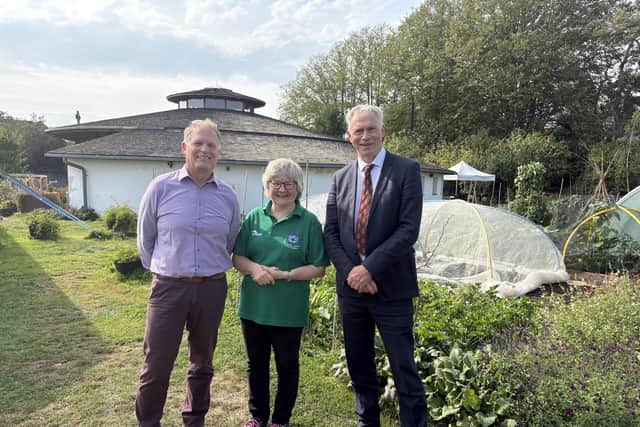
With access to an outdoor classroom and eco-build Education Centre, they teach children about growing food and healthy eating, in order to foster physical and emotional wellbeing. Children also learn about all aspects of sustainability.
They also deliver Social and Therapeutic Horticulture (STH) projects by qualified horticultural therapists to people of all ages to improve mental health and wellbeing. They are committed to their local community in offering opportunities to participate in organised activities. They collaborate with many local organisations and help the community when the need arises.
Their shop, packed with locally produced organic produce is a joy. It is open every Thursday.
So what was the inspiration for Tuppenny Barn?
Maggie said the inspiration was first and foremost her children. As their mother, she wanted to make a difference within the local community by bringing locally grown organic fruit and vegetables to Southbourne. “This was coupled with a strong desire to teach children about the environment, particularly where their food comes from. Sustainability needed to be front and foremost in all its activities.
"After three years looking for land, a hectare became available in late 2004, situated with good communication routes and a building. The concept was to grow organic food for the local community as a Soil Association producer and to initiate school visits.”
In 2005, Maggie spent 12 months creating what was needed for an organic smallholding, with the first crops established in 2006. There was no business plan or written strategy, just a determination to get things done literally ‘from the ground up’.
Between 2005 and 2008, Maggie regularly attended five different farmers' markets and started a weekly vegetable bag scheme.
" After creating more than 40 growing beds, two polytunnels, four beehives, a wildlife pond and an orchard with 122 fruit trees, Tuppenny Barn became a charity in 2017.”
I asked Andrew what are the main features of its work and vision today - and how does it reach out to the community?
He said: “What started as an organic smallholding and a way of teaching children where their food comes from has grown into something much broader. Today, Tuppenny Barn brings people together with nature, organic growing and gardening.
"We provide food education for vulnerable children, helping them understand where food comes from and how to grow and cook healthy food. We also run Social and Therapeutic Horticulture programmes for vulnerable adults, using gardening and nature to support wellbeing, confidence and skills.
"Our one-hectare site also provides opportunities for volunteering, community activities, events and learning, while our shop sells our organic produce every Thursday.
"We want Tuppenny Barn to be a place where people, nature and community flourish together. We see this in practice when a child who first visits with their school later brings their parents to the shop, or when an adult beneficiary moves on to volunteering or employment in horticulture.”
He quoted a Sunflower Group participant: “It makes me feel more calm and safe.”
And what are our plans for the future - and what will it take to make them a reality? “The next chapter is about building on what has been created over the past 21 years. We want to reach more people who could benefit from our programmes and create more opportunities for learning, volunteering, training and community involvement.
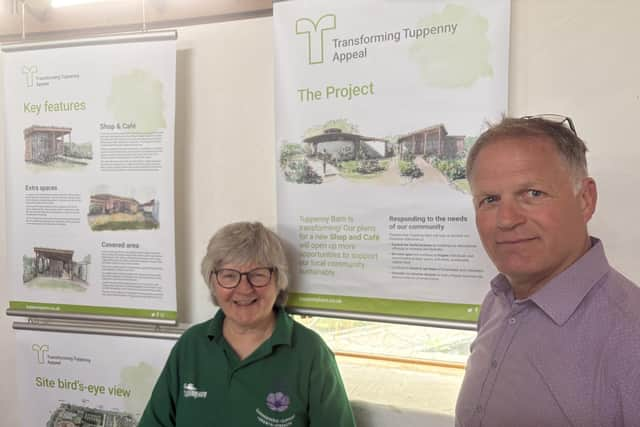
"A key part of this is Transforming Tuppenny, our plan for a new sustainable building providing additional learning and training space for vulnerable adults and young people, alongside a purpose-built organic shop and community café. It would allow us to make better use of the site throughout the year and expand our education and wellbeing programmes.
"Making this happen will take support from funders, local businesses, community organisations and individuals, alongside the continued commitment of our trustees, staff and volunteers.”
How can the community best support you? “Perhaps the most important thing is simply to know that we are here. Despite being part of the local community for so long, there are still many local people who have never visited Tuppenny Barn or don't know what happens here.
"People can support us by visiting our shop and events, volunteering, taking part in activities, fundraising or making a donation. Local businesses and organisations can also work with us through volunteering, sponsorship and partnerships. Income from our shop, events and other activities goes directly towards funding our charitable programmes. Every new connection helps us reach more people who could benefit from what we do.”
In ten years' time, what might Tuppenny Barn look like in terms of its facilities, projects and service?
"We want Tuppenny Barn to remain recognisably Tuppenny Barn, but with the ability to reach many more people, holding true to our vision of being a beacon of sustainability for the community we serve.
"We see a thriving, sustainable community hub with education, therapeutic horticulture and organic growing still at its heart: more children discovering where their food comes from, more vulnerable people benefiting from nature and gardening, and more opportunities for people to learn, volunteer and develop skills.
"Most importantly, we want Tuppenny Barn to remain a place where people, nature and community flourish together, and where the work started by Maggie two decades ago continues to make a tangible difference to people's lives,” Andrew said.