
Chichester exhibition explores all aspects of the artist William Nicholson
Chichester’s Pallant House Gallery offers the first major exhibition of the artist William Nicholson (1872-1949) in more than 20 years – an exhibition which almost suggested itself.
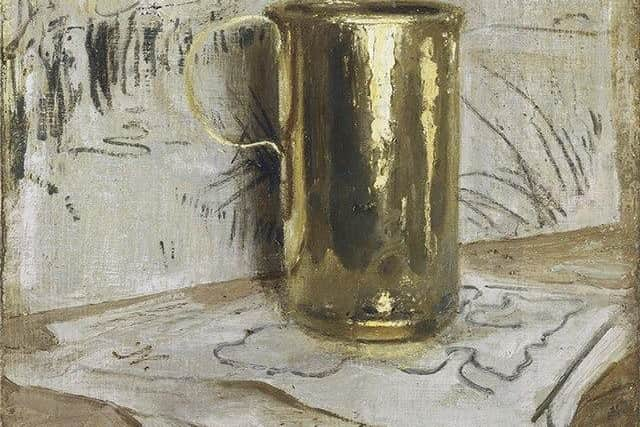
The exhibition, which includes The Gold Jug (1937), lent by King Charles, runs from November 22-May 10.
As gallery director Simon Martin says: “The last major exhibition of his work was in 2004 at the Royal Academy and that was most people's opportunity to have seen his work in large number in a substantial presentation but over the last few years we have featured his work. In 2022 we had the exhibition Sussex Landscape which had several William Nicholsons in it. He lived for a number of years at Rottingdean but also early in the 20th century he was at Littlehampton, and there are a number of paintings that he did of the South Downs both East Sussex and West Sussex and also the coastal area. We were able to show three in the Sussex Landscape exhibition and they were very popular. And also last year we had the still life exhibition. One of the key images was his and again that was very popular and it felt like an indicator that an exhibition of William Nicholson was due.
“He is probably best known as the father of Ben Nicholson, the abstract artist but he was also the father of a whole generation of artists. There is a whole dynasty that comes from William, and he was also married to the artist Mabel Pryde.

“But I think for us part of the interest is that he was an artist that spans the Victorian age right the way through until the late 1940s, and you can see in his work the tremendous changes in society.”
Among the pieces on display is The Gold Jug (1937), on loan from King Charles: “A few years ago Queen Camilla said that it was her favourite painting. It comes from Charles's private collection. You have to give them at least a year's notice. We worked with the director of the Royal Collection and we submitted a rationale for why this was so significant. And it really is the most beautiful painting. The thing that people love about William Nicholson's work is his ability to render reflection on a lustrous surface. All the way through his work he has a great understanding of light and dark.”
He was also known for painting Queen Victoria “which really made him a well-known artist at that point in time.
“Around 1900 to 1901 he stopped making prints, and went into portraiture initially commissioned but often he would do portraits of his children, and these are one of the really lovely aspects of the exhibition. There is a tenderness to these which is quite different to the commissioned portraits of the aristocracy that he did.
“I think people will often know just one aspect of his work, his still life or his landscapes or his portraiture but what we are doing is trying to show the whole range of his work. There is a playfulness about his work that I think people can really relate to. But there are other aspects in this show and one is how it touches on modern history. We have a painting which has not been seen for about 70 years called A Soldier Of The 1914-18 War which is particularly poignant as his son Tony died in World War One. Works such as this one obviously capture a particular moment.”