
Sussex universities respond to news that tuition fees will rise with inflation every year from 2026

The president of a university in Sussex said a ‘modest uplift’ will ‘not solve the funding crisis facing universities’.
The statement from the University of Sussex’s vice chancellor and president, Professor Sasha Roseneil, comes after the news that tuition fees in England will rise every year, in line with inflation, from 2026 onwards.
Meanwhile, the University of Chichester stated: "We do realise this news may be unsettling for students, and want to reassure them that any rise in tuition fees will be considered carefully, and we will aim to provide support for students from low-income households.”
The UK Government said it has ‘bold plans to break down barriers to opportunity’, hold universities ‘to account’, and put the post-16 education system on a ‘firmer financial footing’. This is part of the government’s ‘plan for national renewal’.
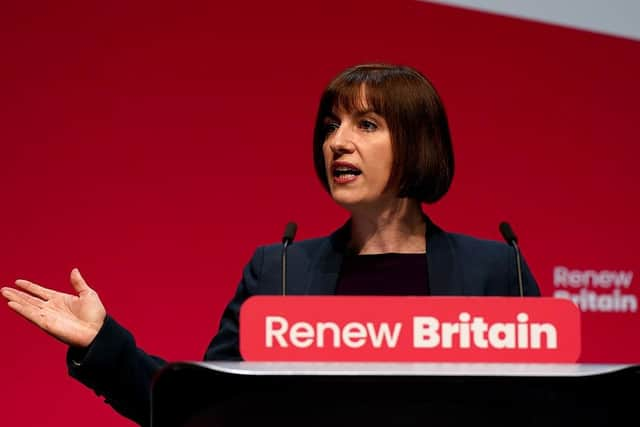

A spokesperson added: “Higher education reforms in the landmark Post-16 education and skills white paper will ensure disadvantaged students are no longer priced out of university. Maintenance loans will automatically increase each year, with the biggest cash increases going to those from the lowest-income households, after the Education Secretary recently announced targeted maintenance grants will also be reintroduced.
"The announcement follows data showing the gap in university entrance rates between disadvantaged pupils and their better off peers had grown to its widest since records began in 2005.
“Last year tuition fees were increased in line with inflation for the first time since 2017. The Office for Students is forecasting 43 per cent of institutions will be in deficit without further action to shore up their finances.
“To support universities in continuing to deliver world-class teaching and research, tuition fees will rise in line with forecast inflation for the next two academic years.
"Legislation will then be brought forward, when parliamentary time allows, to enable automatic increases to fee caps in future years in line with inflation but only for institutions that meet tough new quality thresholds set by the Office for Students.”
This means universities will need to ‘earn the right to access future fee uplifts’, by delivering ‘strong outcomes for students’ and meeting the Office for Students’ ‘tough new standards’.
Professor Roseneil said: “The government’s recognition of the financial challenges facing both students and universities is welcome, as is the security of future inflationary rises.
“However, this modest uplift will not solve the funding crisis facing universities. With home fees frozen for eight years against a backdrop of high inflation, the majority of universities will be in deficit this year.
"Higher education has also been hit by changes to visa rules which have led to a major loss in international students, who pay higher fees and subsidise the education of our home students and support our research. A further blow is the government’s announcement of a new tax on international students.
“The global excellence of UK universities rests on decades, and in some cases, centuries, of public investment in knowledge creation and learning for the public good.
"We urgently need government intervention and action to support our universities to continue conducting the world-leading research, catalysing the growth-producing innovation, and providing the transformative education and advanced skills that we are capable of doing – before quality and student choice are seriously harmed."
In response to the government announcement, a spokesperson for the University of Chichester said the educational institution ‘believes everyone deserves an equal opportunity to pursue higher education, regardless of their background’.
They added: "We are aware of reports that the government will allow universities to increase annual tuition fees from 2026. Universities have seen a real term decrease in the value of our tuition fee income due to rising costs.
"We do realise this news may be unsettling for students, and want to reassure them that any rise in tuition fees will be considered carefully, and we will aim to provide support for students from low-income households.
“As part of the University's Access and Participation Plan, we already provide a £1,000 bursary for students who have been eligible for free school meals during their studies. We also offer a Care Leavers’ Bursary for £300 a year in addition to any other grants."
Education Secretary Bridget Phillipson said young people, from all backgrounds, ‘feel they have been let down by a system’, that ‘talks about opportunity but too often fails to deliver it’.
She added: “This government and this white paper will change that – restoring the prestige of higher and further education so every person, in every part of our country, has the chance to get on.
“Universities charge significant fees for their courses. If they are going to charge the maximum, it is right that they deliver the world-class education students expect.
“These reforms will ensure value for money, higher standards across our universities and colleges and a renewed focus on the skills our economy needs.”
‘Where standards fall short’, the government said the Office for Students ‘will act quickly’ to stop the expansion of low-quality courses and hold providers to account.
A spokesperson for the government added: “Universities that underperform could face financial and regulatory consequences, ensuring public money is spent only on courses that deliver for students and the economy.
“The government will also tighten controls on franchising arrangements to protect public money and take action against the abuse of the system by recruitment agents.”
The new measures – unveiled on Monday, October 20 – follow earlier announcements from the Prime Minister, including a new target for two-thirds of young people to participate in higher-level learning– academic, technical, or apprenticeships – by the age 25, up from 50 per cent.
The government said a sub-target will ensure at least ten per cent of young people pursue higher technical education or apprenticeships by age 25 by 2040, a near doubling of today’s figure.