
What Ofsted inspectors said about Horsham's Millais School

Following the news that Millais School in Horsham has been placed in special measures, a full Ofsted inspection report has provided a more detailed picture of what inspectors found during their visit in September.
Millais School is a co-educational community secondary school for pupils aged 11 to 16, on Depot Road. It was previously a girls’ only school but began accepting boys from September 2026.
The school's governing board has resigned and been replaced by a newly appointed Interim Executive Board (IEB), which has been tasked with overseeing urgent improvements.
In an official statement, sent to this newspaper, Mr Pope said: “Everyone at the school is disappointed with the outcome, but accepts Ofsted’s findings. We are fully committed to making the necessary changes to ensure that every student receives the high standard of education and support they deserve.
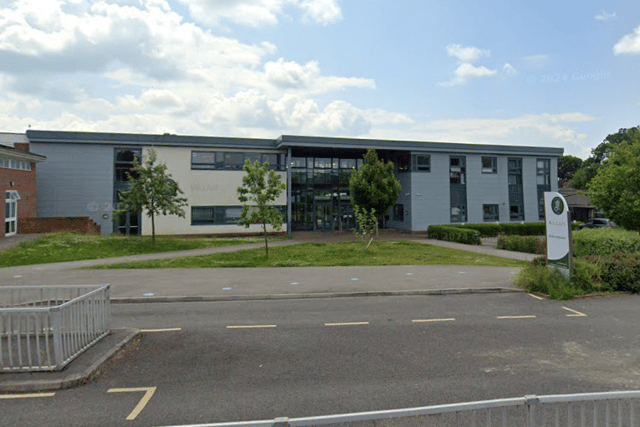

“Our pupils remain at the core of everything we do. We will work closely with Ofsted, West Sussex County Council and our partners to build on what we do well and address the areas where we need to improve.
“We will keep our school community informed as we move forward with this important work.”
Inspectors praised the school's personal development programme and pupils' respectful attitude towards each other, but raised serious concerns about safeguarding, leadership and the quality of education.
The report, following an inspection on September 22 and 23, highlights serious failings in safeguarding and leadership, alongside concerns about declining educational standards.
Safeguarding was the most serious issue, with inspectors concluding that the school had not established an open and positive culture capable of adequately protecting pupils from harm.
The report states: "Leaders and those responsible for governance do not ensure that sufficient action is taken following a failure of safeguarding. Leaders do not learn from issues or incidents."
Inspectors found there was no monitoring to reassure leaders that all staff were alert to safeguarding concerns and making appropriate referrals.
They also identified inconsistent communication between staff and external agencies, which had resulted in gaps in the support and safety planning provided to some pupils.
Although the majority of pupils told inspectors they felt safe, the report warned that weaknesses in safeguarding arrangements meant they were not being proactively kept safe and could be placed at additional risk.
Concerns about leadership and governance
Inspectors described leadership and governance as requiring urgent improvement, saying the quality of education had declined since the previous inspection.
They found that leaders were aware of the problems but had not taken effective or timely action to address falling standards.
The report states: "Leaders do not always agree on the priorities for improvement. Where actions have begun, these often lack clarity or careful planning."
Governance was also criticised, with inspectors saying governors did not challenge school leaders effectively or monitor educational standards carefully.
The report also highlighted differing views among staff.
While some members of staff enjoyed working at the school and valued professional development opportunities, a significant number lacked faith in its leadership.
They raised concerns about an unclear vision, poor communication, low expectations and high workloads.
Inspectors concluded that a lack of strategic direction and urgency meant leaders and governors did not have the capacity to address the school's safeguarding concerns and other areas requiring attention.
Teaching and achievement under scrutiny
The quality of teaching was judged to need attention, with inspectors finding significant inconsistencies between classrooms.
Where teaching was effective, staff modelled their expectations clearly and adapted lessons to meet pupils' needs.
However, inspectors found that teachers sometimes failed to check pupils' understanding effectively or provide enough opportunities for independent learning.
The report said this often resulted in pupils becoming disengaged.
Inspectors also raised concerns about literacy and numeracy, saying leaders had not made the development of basic skills a priority across the whole curriculum.
Reading support was another concern. Although pupils had previously benefited from effective help, this was no longer in place.
As a result, Ofsted said: "Gaps in pupils' reading skills are increasing over time."
Pupils with special educational needs and disabilities were also not progressing as well as they could from their starting points.
Although pupils generally achieved well in national examinations, inspectors noted that Year 11 outcomes had been falling over time and leaders had not acted swiftly enough.
Vulnerable pupils and attendance
The report also highlights concerns about the experiences of the school's most vulnerable pupils.
While overall attendance was generally in line with the national average, it was not improving.
Many pupils with special educational needs and disabilities, as well as disadvantaged pupils, had high levels of absence.
Inspectors said leaders had recently started taking action but did not fully understand the barriers preventing some pupils from attending regularly.
Support for disadvantaged pupils was also found to be inconsistent, while recent staff changes had resulted in gaps in communication with external agencies.
The report said this meant support for pupils known to social care was not currently secure and consistently effective.
Inspectors recognise positive aspects of school life
Despite the criticisms, Ofsted also identified areas where Millais School was performing well.
Personal development and wellbeing were judged to meet the expected standard.
Inspectors praised an engaging programme which prepares pupils for life beyond school, including lessons on healthy relationships, online safety and recognising inappropriate behaviour.
Recent topics had included water safety and the dangers of drug use.
Pupils were also praised for their attitudes towards each other and their community.
The report states: "Pupils are respectful of differences in their community and are usually kind to each other."
Inspectors said pupils were proud of the school's respectful and tolerant culture, with faith club and pride club particularly popular.
A range of clubs, trips and sporting opportunities also helped enrich pupils' experiences, with cricket among the sporting successes pupils were particularly proud of.
Careers support was another strength, with the vast majority of pupils progressing to suitable destinations in education, employment or training after Year 11.
Inspectors also noted that many parents were positive about the school, particularly the transition from primary school into Year 7.
The introduction of boys in September 2026 was also described positively, with the first cohort settling in well.
What inspectors want to see change
The report sets out a series of priorities for improvement, with establishing an effective safeguarding culture at the top of the list.
Leaders have been told to ensure safeguarding concerns are reported and acted upon swiftly, that recruitment procedures are properly overseen and that staff receive appropriate training.
Governors must also strengthen their oversight of the school and provide effective support and challenge to ensure improvements are delivered.
Other priorities include addressing declining standards, improving attendance among vulnerable pupils, strengthening support for pupils with additional needs and ensuring teaching is consistently effective.
Ofsted also said leaders must improve the way teachers use assessment to identify gaps in pupils' knowledge and address misunderstandings, particularly in reading, writing and mathematics.
The inspection concluded that Millais School requires special measures because it is failing to provide an acceptable standard of education and those responsible for leading, managing and governing it are not demonstrating the capacity to secure the necessary improvement.
A West Sussex County Council spokesperson said: "We recognise that this is a disappointing outcome for the school community.
"The council is working with the school as it seeks to address challenges and improve outcomes for pupils. While responsibility for the day-to-day leadership of the school rests with school leaders and governors, West Sussex County Council remains committed to overseeing high standards across all maintained schools.
"We will continue to work closely with the school and its governing body following the inspection to support the improvements needed and to ensure that pupils receive the education and opportunities they deserve."