
Eastbourne hospital visited by chair of NHS England

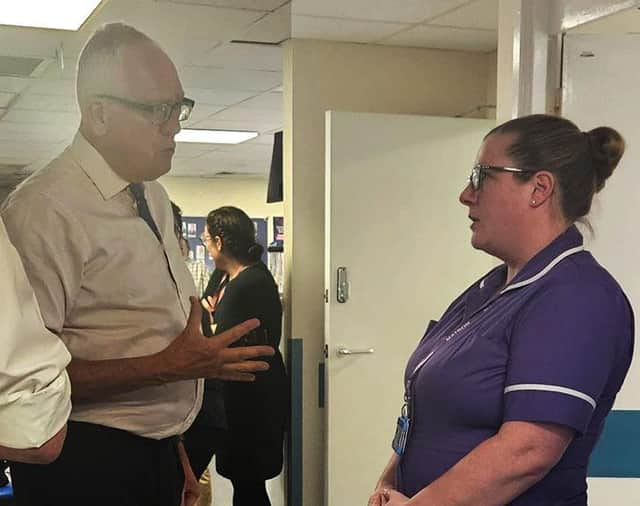
Richard Meddings, the Chair of NHS England, visited Eastbourne District General Hospital to find out more about the care of frail older people in the NHS and the trust’s work on delivering care.
Led by the Clinical Lead for Frailty, Dr Henry Alexander, Mr Meddings was walked through the care pathway a frail patient would typically experience after arriving at the hospital’s Emergency Department, meeting staff in the ED, AMU, SDEC and on Seaford Ward.
He had lunch with staff from the hospital and community services, where they discussed the work the trust was doing to support frail patients avoid hospital – including the role of frailty expertise in the Unscheduled Care Hub model being led by South East Coast Ambulance Service – and care for them in their own homes and in care homes.
He also visited the hospital’s soon-to-be-completed Sussex Surgical Centre to see the progress of the build, and caught up with acting chief executive Steve Aumayer to discuss the impact of the recent new hospital programme announcement and the work underway to address the challenges this has presented.

Mr Aumayer said: “It was a great opportunity and it says a lot that, of all the trusts that he could have visited, he came to us to specifically hear about our work on frailty.
“Integrated trusts – which provide both acute hospital and community services – are unusual in England, and we were able to provide a perspective on the care of elderly frail people that is far beyond most NHS organisations. With the exception of the GP element, we have hands-on experience of providing care across every other aspect of the NHS frailty pathway – from hospital avoidance, to frailty and frailty-informed care in hospital as well as post-discharge care and rehabilitation.
“Coupled with our patient cohort from our community which skew markedly older than the national average, we live and breathe frailty care in a way that few other NHS organisations do.
“The feedback from Richard at the visit was very positive, and I’d like to add my personal thanks to his, to all of our colleagues – from our hospital and community teams – who made the event such a success. Thank you all.”