
Life-changing diagnosis left Worthing woman unable to stand or walk independently

A couple from Worthing have shared their experience of a life-changing diagnosis to help raise awareness.
John Arnold, from Goring, has been caring for his wife Rita since 2021 after an unexplained fall that left her unable to stand or walk independently.
She has been diagnosed with a neurodegenerative condition called corticobasal degeneration (CBD). Sometimes referred to as corticobasal syndrome (CBS), CBD is a rare neurodegenerative disorder that primarily affects the cerebral cortex and basal ganglia, leading to movement and cognitive difficulties.
Despite Rita experiencing ‘some common symptoms’, the condition wasn’t on the family’s healthcare providers’ radar for several years.
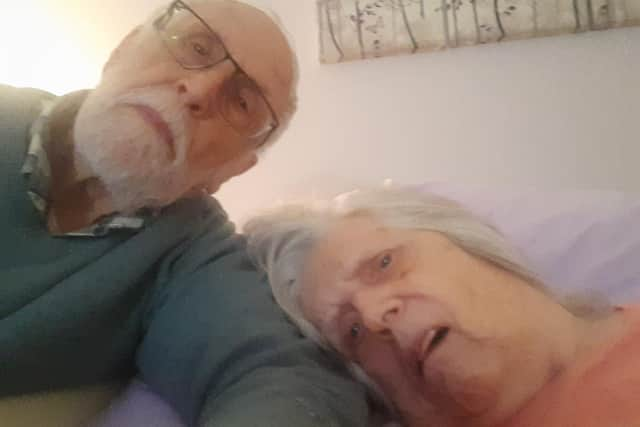

John explained: “Looking back now, it is possible Rita was developing corticobasal degeneration as far back as 2017. Around that time Rita was becoming forgetful, sometimes slurring her speech and she was unsteady on her feet. At the time she was we just put it down to the ageing process.”
The condition affects approximately 5,000 people in the UK. The condition often causes progressive problems with skilled movements, speech difficulties and cognitive changes.
John added: “It wasn’t until Rita started having physiotherapy following knee replacement surgery in 2019 that the physio picked up some changes in her
movement and reaction times and wrote to our GP recommending a neurology referral. Unfortunately, this happened just as COVID-19 began to kick off, so the request wasn’t followed up.
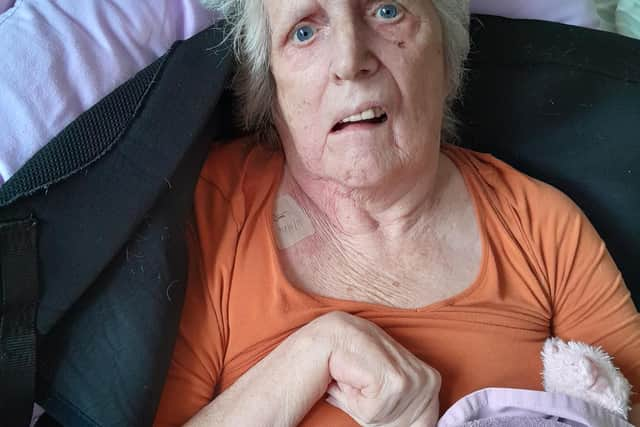
“We continued Rita’s physio sessions, privately, after she was discharged, and again her movement was flagged, and a neurology referral was requested. Again, nothing happened.
“Rita’s movement issues weren’t really investigated until she broke a small bone in her pelvis, after taking an unexpected tumble from a chair in 2021. That fall unfortunately saw the end of Rita’s mobility and saw her move into a care home to meet her increasing needs. Whilst in the care home, we paid for a private consultant to make further investigations which led to Rita receiving her diagnosis of corticobasal degeneration.”
The couple are being supported by the PSPA charity, which supports people living with PSP (progressive supranuclear palsy) & CBD. The charity has helped to make their story public.
A PSPA spokesperson said: “Rita’s delayed diagnosis is a common occurrence, for most people it takes up to three years to receive. Diagnosis can be a real gate keeper to financial support and appropriate care and is something PSPA are keen to help improve.”
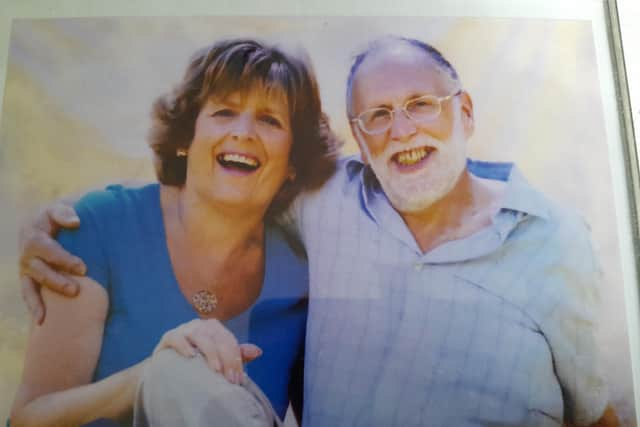
John said the eventual diagnosis – although a total shock for us all – gave ‘something to work with’.
He added: “It made it possible for me to organise the equipment and care support needed to enable me to bring Rita home in 2022. Something she was asking for before she lost the ability to speak.
“Although an earlier diagnosis wouldn’t have changed the outcome we inevitably face, it would have made it easier to prepare and plan. I hope awareness and future research can mean anyone living with corticobasal degeneration doesn’t have to wait as long as we did to receive a diagnosis.”
To help establish fast and accurate diagnosis, immediate treatment and consistent standards of care, PSPA has launched a £2 million appeal.
The Understood appeal aims to raise awareness of corticobasal degeneration and fundraise for life- changing research.
You can learn more at www.pspassociation.org.uk/what-is-cbd/
You can donate to support PSPA’s Understood appeal to fund essential research at www.justgiving.com/campaign/understood