
Chichester Cathedral works to secure future of choral music
Every day in the late afternoon, Chichester Cathedral is filled with transcendentally beautiful music. Each note of choral evensong echoes around the ancient quire stalls and lingers in the air, a still point in a turning world.
Lasting around 45 minutes and open to all, the service marks the end of the day, offering a moment of tranquillity and reflection, enhanced by sacred music.
It has been an important part of Chichester’s cultural heritage for centuries. The clergy and musicians may have changed over time, new compositions added to the repertoire, but the words have remained the same for 500 years.
However, whilst the opportunity for a calm moment at the end of the working day is a draw for many in Chichester, the chance to listen to the world-renowned Cathedral Choir is another.

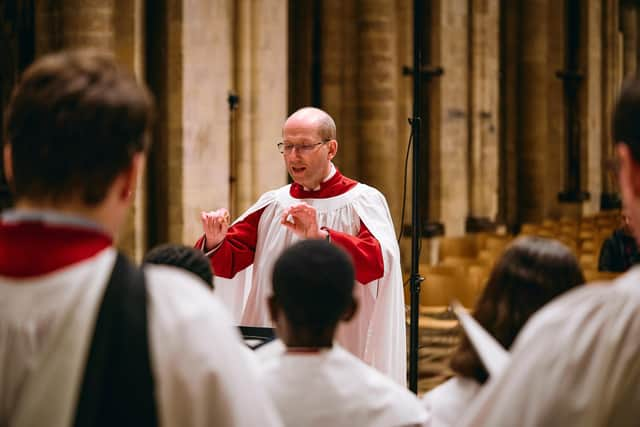
Both the professional adult singers, called lay vicars, who take the alto, tenor and bass lines, and the young choristers who sing the treble, train for 18 hours a week. This aspiration to excellence marks them out, says the Cathedral Music Trust, as “The elite of church music, and among the elite of choral music worldwide.”
The choir’s distinctive “Chichester sound” is a harmonious blend of tradition and innovation, and listening to it is something Dean Edward Dowler is keen that every resident, business-owner and visitor should experience:
“The sound offers a sense of identity to the city. As at all cathedrals, Evensong is free to attend, so if one wanted to see it in very basic terms, there is a free concert of very high quality available at the end of every day.
The particular attraction of Anglican Evensong is that people can take it at their own level.

Culturally, this is a particularly English treasure since other European countries have not preserved choral music with such care in the same way.”
However, this living tradition cannot be taken for granted. Following the announcement of Exeter Cathedral School’s closure, Classic FM presenter Alexander Armstrong warned that “the fragile fabric of a culture that has worked beautifully for a very long time” is now at risk of unravelling.
Whilst up and down the country, the choir schools which educate the young choristers are cutting their cloth to fit a Labour-imposed VAT rise, cathedrals are under huge financial strain as well.
The annual cost of supporting music at Chichester Cathedral stands at nearly £450,000, with almost half devoted to chorister scholarships. These scholarships are vital: they help ensure the choir remains diverse and allow talented boys and girls to take part, regardless of their family’s financial circumstances.
With no government or Church of England funding, the Cathedral depends entirely on the generosity of its supporters to keep this tradition alive.
To mark its 950th anniversary, Chichester Cathedral launched the Platinum Endowment Trust for Music, a fund designed to safeguard its choral tradition for generations to come.
After a year of fundraising and generous support from donors, the Cathedral believes it will surpass its £950,000 target, a milestone that underlines just how deeply choral music and evensong remain woven into the life of the city.
In fact, music has always been central to Chichester’s character. The composer Gustav Holst performed in the Cathedral in 1929, and so precious was the building to him that he requested his ashes be interred there. Meanwhile, Leonard Bernstein’s ‘Chichester Psalms’ premiered in the cathedral in 1965.
William Blake’s ‘Jerusalem’, set to music by Herbert Parry, was famously inspired by the countryside surrounding the city, and Chichester still boasts many choirs, orchestras and ensembles who perform throughout the year.
The cathedral’s own choristers sing night after night at the Festival Theatre’s popular Christmas concerts, as well as at the Cathedral’s own packed Christmas services. Alongside daily evensong, the choir also accompanies the Sunday services and tours the UK.
This week, the choir will sing in the Holy Week and Easter services. It’s something Head Chorister Jasper Severne says is very special: “Easter is a really lovely time of the year, and not just because it's sunny and we get chocolate. It’s joyous, and we are with our friends.”
Jasper also told the Chichester Observer about the chorister experience: “It’s a once-in-a-lifetime experience that you wouldn’t normally be able to have. It's busy and compact, but there’s a sense of fun.”
Describing his first audition for the choir as an eight-year-old, he said: “I had to sing scales and middle notes in triads. It was only then that I realised that my voice could become something. The choirmaster, Mr Harrison, showed me a gateway to something that gives me a future, and I love that.
To be able to sing, to have your voice as your instrument, and as a way to express yourself – I love that. It’s amazing.
The choristers are educated next door at The Prebendal School, which has been the cathedral’s song school since the 11th century, when the first headmaster was simply recorded as ‘John’.
Parents continue to choose the thriving school because, alongside the forward-thinking curriculum, music sits at the heart of its educational philosophy. 95% of all pupils play at least one musical instrument and reach grade 5 and above in the Royal School of Music’s exam scheme by the time they leave the school.
Prebendal’s proximity to and relationship with the cathedral mean the choristers can rehearse frequently enough to reach the high musical standard necessary, whilst staying on top of their schoolwork.
With the money raised from the 950th endowment fund, the rich and long-standing choral tradition that the choristers contribute to can continue.
However, there is always more work to be done, and Chichester Cathedral continues to fundraise.
As Dean Edward Dowler points out: “Cathedrals have been one of the, relatively few, success stories of the Church of England over the past fifty years, with congregations and visitors holding still or increasing. One of the main reasons people come is because of the music.”
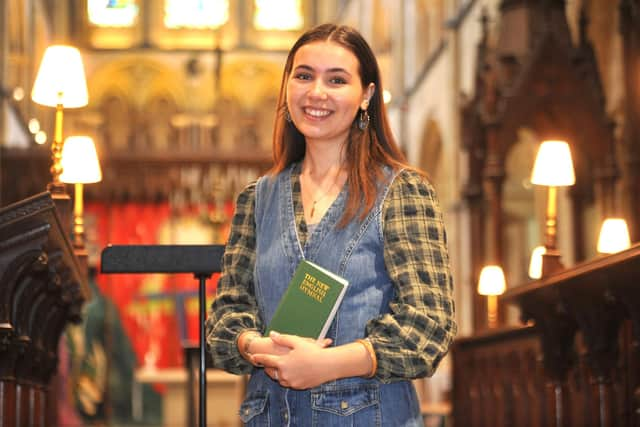
Olivia Upton, a visitor assistant at Chichester Cathedral and a choral singer who has performed evensong there, describes the experience as deeply moving, partly because of the space: “It feels so incredibly grounding and emotive. When you sing here, the sound almost bounces back to you like a physical embrace.”
The Dean hopes that this musical offering will continue to shape the city’s cultural life, meeting that intrinsic human need for the spiritual and transcendent for centuries to come.