

This series of pictures also reveals some fascinating church history and show how times have changed in the Chichester district.
Two pictures of Nutbourne take us back to tranquil days before the A27 became so busy and show how the village has, perhaps, come full circle.
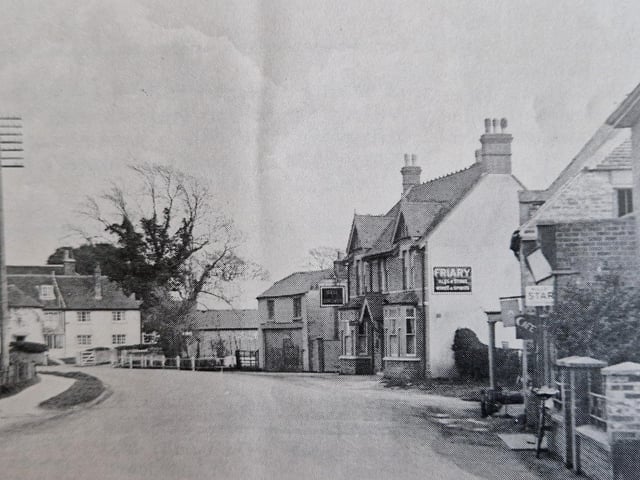
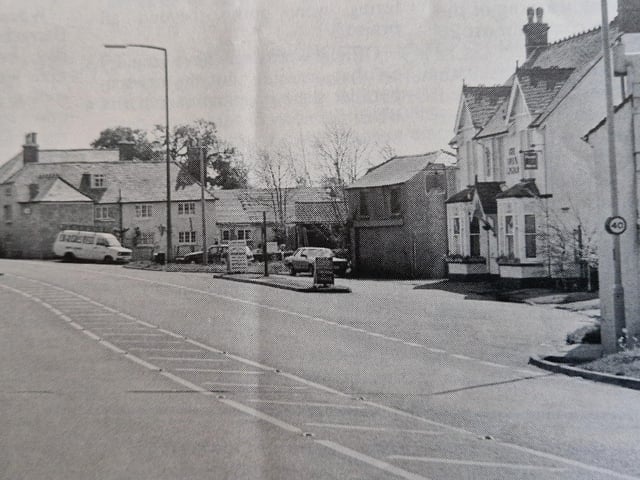
From pre-war tranquillity in 1933 to the ceaseless bustle of June 1988, the two photos of Main Road in Nutbourne show how it looked 50 years apart.
The Bell and Anchor public house, plus adjacent buildings, were virtually unchanged, even to the Friary ales which it was selling. The large house in the centre remained standing but Spencers’ Yard opposite, with Harris’ Yard behind, seen in the 1930s photo with its old-style farm carts, had changed to the Chichester Caravans sales centre 50 years on.
Now, of course, the pub is no longer there. It was replaced in 1996 by residential properties, flats at Bell Court and houses at Anchor Court.
The road, formerly the A27 and now the A259, appeared so peaceful 90 years ago but it went on to carry some of the heaviest traffic in the south of England.
The village lies between Southbourne and Chidham on what was the main communication route between Havant and Chichester from Roman times, if not before. That was until the new A27 bypass opened later in 1988, taking through traffic away and bringing the village full circle.
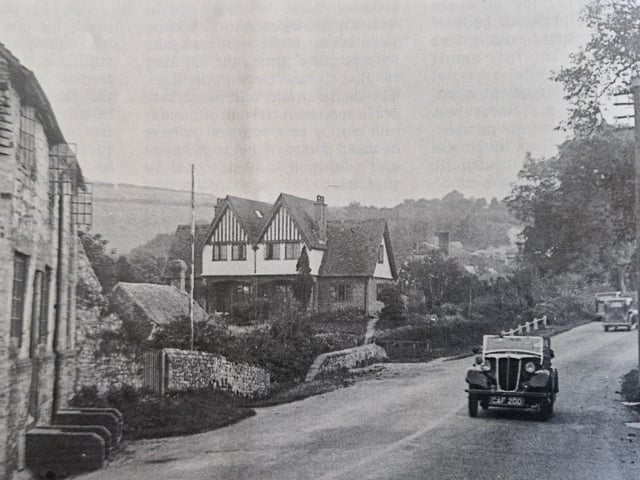
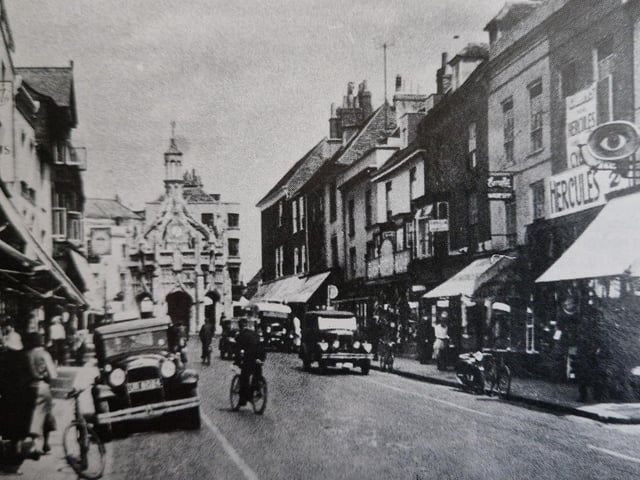
Two other photographs of the quieter world of the 1930s give a view through the lychgate at St John the Baptist Church in Westbourne and an open Morris Eight tourer passing through Cocking, near Midhurst, in 1937. South Street in Chichester, however, is seen bustling with business in the 1930s.
Other scenes of village life include a picture of Taylor's draper shop in South Harting in 1890, with A. Taylor, G. Taylor and H. Todman in their aprons.
We have pictures of Adsdean House, near Westbourne, in 1905 and Bracklesham Bay beach with its pedalo winch and a poster advertising rides at 1s 6d.
See Sindles Farmhouse, elegant in the spring sunshine in the 1980s. The oldest part is on the left and the other wing was added in the early 19th century.
The 300-acre farm is part of the history of the parish, including the spring-fed, five-acre Aldsworth Pond, which dries out in the summer but remains a superb habitat for wildlife.
On a 1785 estate map, the house is marked as a simple rectangle with eastern lean-to. Much of the original structure survived among later extensions. The south wing was added in the early 19th century.
We also uncovered two piece of church history from the Chichester district.
Ox eye daisies amidst the long grass add to the beauty of St Mary's Church at Rumboldswhyke, Chichester, in a picture from August 1990.
The 11th century church was once the hub of a small village outside the city. It was restored in Victorian times but became engulfed in the suburbs.
The main centre of worship became St George's Church after the railway was built and St Mary's, in Whyke Road, was finally made redundant in 1994. It was then adapted as offices for the diocesan architects, opening in 2002 with a new steel mezzanine floor suspended from the nave roof timbers.
The tower of Holy Trinity Church in Bosham is also gleaming in the sunshine in a picture from December 1988. This landmark on the edge of Chichester Harbour is one of the earliest sites of Christianity in Sussex and it features in the 11th century Bayeux Tapestry of the Norman invasion.
Faces from the distant past were discovered high on the church tower during restoration work in 1988. Under the grime of centuries, craftsmen found stone carvings made by Saxon masons 800 years previously.
Close-ups of the carved corbels at Bosham Church, were taken by Commander George Smith, of Cob Cottage, Bosham, when he was chairman of the church fabric committee.
Masked in dirt, they had been unnoticed for years. These extremely rare head-corbels once held an earlier roof, just below the Norman spire. Those on the south and west faces had been eroded by salt winds but the rest were in good condition, strange, haunted images carved into single heads, twin heads, triple heads and some geometric designs.
1. Yesterday in Chichester
An open-top Morris Eight tourer passing through Cocking, near Midhurst, in 1937 Photo: Chichester Observer archives
2. Yesterday in Chichester
From pre-war tranquillity of Main Road in Nutbourne in 1933 Photo: Chichester Observer archives
3. Yesterday in Chichester
Main Road in Nutbourne in June 1988, when The Bell and Anchor public house was still standing Photo: Chichester Observer archives
4. Yesterday in Chichester
South Street in Chichester, bustling with business in the 1930s Photo: Chichester Observer archives