

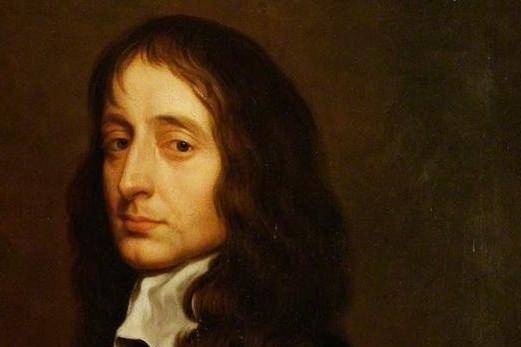
Sure, most have heard of The John Selden pub in Salvington but how many know of the man it honours, an influential legal scholar, MP, historian, author and defender of parliamentary rights, who was born in a farmhouse just a short walk away?
Teacher Kasia Watson, who lives in part of the barn from the Selden family farm, was so saddened by the lack of local knowledge, she decided to explore the possibilities of having a blue plaque.
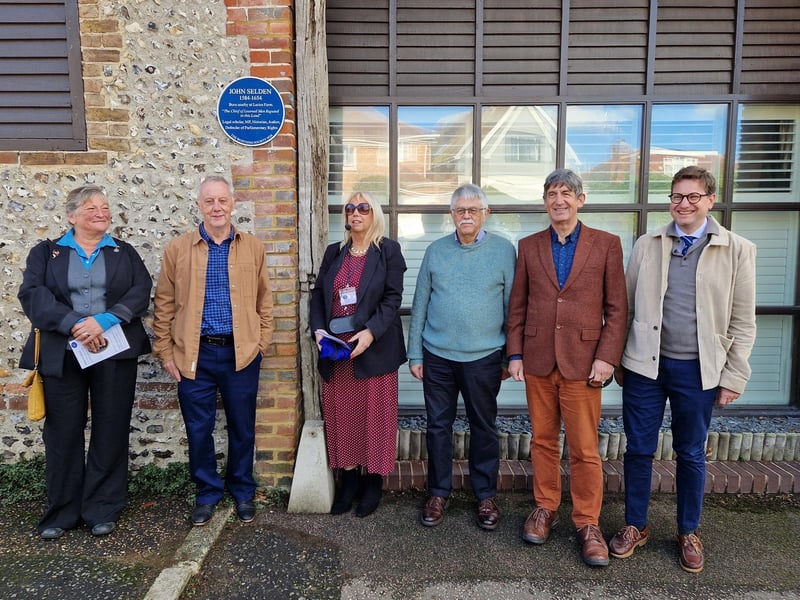
The Worthing Society, which runs the scheme in partnership with Worthing Borough Council, made the arrangements and a blue plaque was unveiled in Seldens Way on Thursday, October 22.
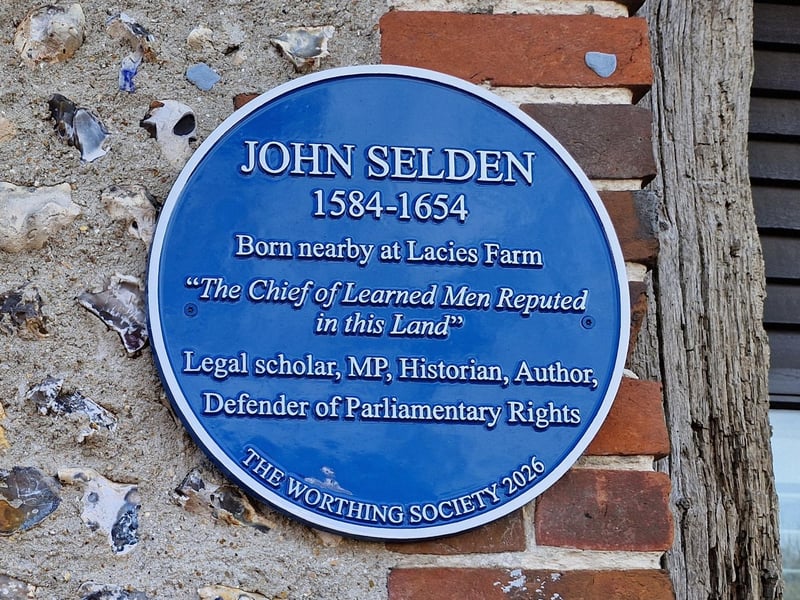
Author Colin Reid, who funded the blue plaque, said: “John Milton described John Selden as 'the chief of learned men reputed in this land', Dr Johnson said he was 'the glory of the English nation', Thomas Horsfield spoke of 'the conscientious defender of the country's liberties'. Despite his significance nationally, somehow John Selden has not been accorded the same fame within the town of his birth.
“I'm thrilled that a blue plaque is being unveiled but may I make a suggestion. Let us raise a bronze statue to Worthing's worthiest son, John Selden.”
Susan Belton, Worthing Society chair, said the blue plaque scheme brings history alive and John Selden was 'a really prestigious national and historical figure'.
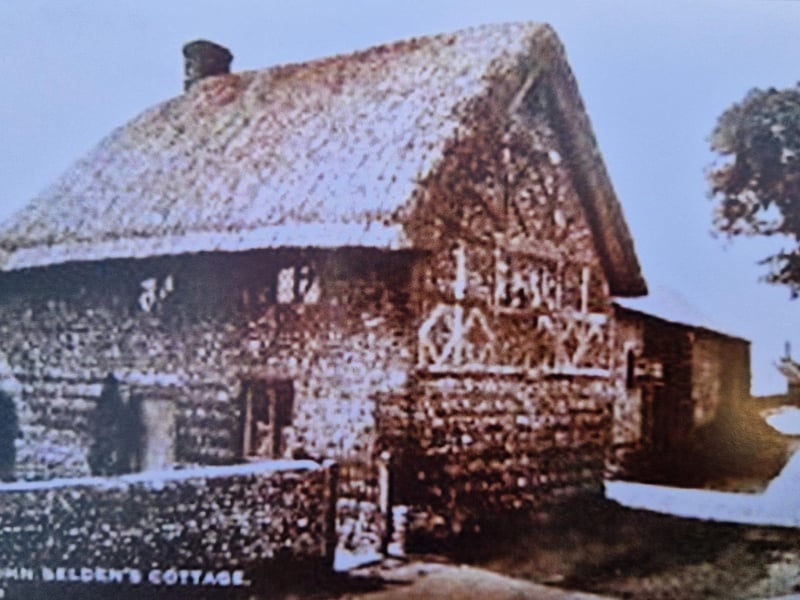
She added: “John Selden was born in 1584 in Lacies Farm. The actual site of the farmhouse would be the bungalow beside it. Sadly, the old farmhouse burned down in 1956. It could have been restored but unfortunately it wasn't, so we're as close as we can be.
“The manufacturer managed to get the quotation from John Milton in italics, so the blue plaque really does summarise how important this gentleman was to the heritage of Worthing.”
Colin gave some of the history of the farmhouse and said its demolition robbed Worthing of one of its most historic buildings.
He explained: “On Saturday, July 9, 1955, a fire broke out in the thatch of Lacies Farm Cottage. The fire brigade removed 20ft by 35ft of thatch and extinguished the fire.
“The cottage, in the ownership of Worthing Corporation since 1938, had already been in a dilapidated state but the damage was not serious and was covered by insurance.
“Selden said he was born in Lacies Farm but during the ensuing discussions about its future, significant attention was given to W.J. Robert's belief that with his parents' wealth, it was unlikely John Selden was born in this modest cottage.
“In February 1956, the Ministry of Housing stated that in view of the architectural interest of the cottage and the historic importance of John Selden, considerable effort should be made to save what remains of his birthplace.
“The president of The Selden Society visited the cottage but local newspapers noted that no representatives of the library and museum committee met with him. By April 1956, the Ministry of Housing and The Selden Society were clear they could not help financially.
“Demolition was the only way forward but 'take a photo of the remains, attach a plaque to the property that takes its place and preserve the oak lintel over its entrance', Robert Elleray opined.”
When the house was demolished, part of a lintel from over a doorway was taken to Worthing Museum, as the last remaining feature of what was once a beautiful farmhouse. On the lintel, in Latin, it says 'welcome if honest, enter make thee free, thief, hence I was not open made for thee'.
Historian Chris Hare said: “Selden was living in troubled times, crime was on the increase during his lifetime and there was political strife, economic strife and religious strife that culminated in the English Civil War. Selden's life of 70 years spanned all these turbulent years and throughout it, he was a voice of calm consideration.
“His intellectual pursuits allowed him to see the bigger picture that often a lot of his contemporaries were unable to see. Although he fell out with both James I and Charles I, he was always trying to bring peace and equanimity to England and when the civil war broke out, he regarded it as a disaster.
“He hoped and believed the civil war would lead to government by parliament. It actually ended up with government by Cromwell and a military dictatorship, although he regarded that as preferable to a further outbreak of civil war.
“I think you can judge a great person on the basis of the things they wrote still resonating hundreds of years later. He said 'you little wonder what foolery governs the world' but he then went on to say 'they that govern the most make the least noise'. Perhaps reflecting the times in which he lived, he also commented 'pleasure is nothing else but the intermission of pain' and this quote, which is one you have to think about, 'judgement falls upon a man for something in him we cannot abide'.”
John Selden was a formidable lawyer, historian and politician. His wisdom and learning were considered unequalled in his day. His reputation developed through his knowledge of the law, rather than as a practising lawyer.
Chris said: “At a time of growing conflict between king and parliament, history became a powerful tool, expertly wielded by Selden.”
Imprisoned in the Tower of London for implying Charles I's belief in the Divine Right of Kings was human rather than godly, Selden spent his time studying and writing, so when he was later rearrested, he was denied books, paper and ink.
His histories and legal arguments influenced the growing opposition to Charles I in the House of Commons. Selden went on to become an MP, acting as his own man and refusing to be bound by party or sect.
Chris said: “When parliament prosecuted the king's loyal advisor, the Earl of Strafford, in 1641, Selden and a handful of reformers voted against the death sentence. He feared that ambitious parliamentarians might establish a new tyranny, with force replacing reasoned argument.”
In his later years, Selden studied the history of the Jewish people and the influence of Jewish laws on English law. When his benefactor, the Earl of Kent, died, Selden married his widow and lived comfortably, having been granted £5,000 by parliament for past services. He died on November 30, 1654, just 16 days before his 70th birthday.
Andrew Cecchinato, a legal historian from The Selden Society, travelled from Nottingham to be at the blue plaque unveiling. He said it was strange that John Selden was not better known locally but he admitted his writings were not easy to study, being written in so many different languages.
Andrew said: “Because of his formidable learning, he has been enormously difficult to read. He has lived in a world of great recognition but difficult circulation, so it is very difficult for scholars to work with him. It is particularly good that he has been recognised in Worthing.”
Kasia urged people to 'go out and talk to people about John Selden'.
She said: “As a primary school teacher, I was constantly amazed that when planning history and local studies, nobody ever knew who John Selden was and we live right here. It's shocking.
“It's just sad that nobody really knows about him and and what he did. He was really important, so thank you, I'm honoured to have this plaque on my home.”
1. John Selden
John Selden was an expert on English law, a historian and a Member of Parliament, born in Worthing Photo: Oxford College / Chris Hare
2. John Selden
Blue plaque unveiling with, from left, councillor Karen Harman, Worthing cabinet member Dom Ford, Worthing Society chair Susan Belton, author Colin Reid, historian Chris Hare and legal historian Andrew Cecchinato Photo: Elaine Hammond
3. John Selden
John Milton's description of John Selden as 'the chief of learned men reputed in this land' has been included on the blue plaque Photo: Elaine Hammond
4. John Selden
John Selden was born in Lacies Farm on December 16, 1584, and just behind the farmhouse can be seen the corner of the barn, which survives to this day Photo: The Worthing Society