

The world-famous artefact depicts the events leading up to the Battle of Hastings and the Norman Conquest of England in 1066, when William, Duke of Normandy, challenged and defeated Harold II, King of England.
The tapestry is nearly 70 metres (230 feet) long and for centuries, it has been kept in Normandy. It is thought to date to the 11th century and believed to have been made in England as a gift for William, telling the story from the point of view of the conquering Normans.
There is obviously a huge focus on Sussex, not only Hastings but Bosham, too, with the village being one of only a few English places named in the tapestry. The Grade I listed Holy Trinity Church, nestled in the heart of the village, is the oldest known place of worship in West Sussex and it is one of the very few buildings in England to be portrayed in the masterpiece.
The Bosham manor house owned by Harold, a powerful and wealthy Anglo-Saxon, also features in the first four panels of the tapestry, with a scene of him feasting after mass at the church. He then set sail for Normandy, where he met William in 1064, and his return to Bosham features later in the tapestry.
Before becoming King, Harold Godwinson was the most powerful earl in England and his sister, Edith of Wessex, was married to King Edward the Confessor.
Harold owned a great deal of land around Bosham, including his fine palace, and he kept his large fleet of ships in the harbour here.
Experts had long been seeking to confirm the exact location of the Bosham palace and Anglo-Saxon Harold Godwinson's extravagant hall, depicted on the tapestry.
An excavation conducted by West Sussex Archaeology in 2006 identified a latrine within a large timber building. This fitted what is now known to be a trend that started in the 10th century, integrating toilets in high-status houses in England.
The team was sure the timber building belonged to someone of elite social status – like a king – and felt it almost certainly represented part of the residence depicted in the Bayeux Tapestry. The banquet hall was likely part of a larger residence which also included a church.
Further vital evidence came to light in January last year, when archaeologists from the University of Newcastle and the University of Exeter visited Bosham to conduct a new survey of Harold's 'power centre'.
A range of methods was used, including a geographical survey of the surrounding area, an assessment of surrounding remains, scrutiny of early maps and records, and a re-examination of evidence from the 2006 excavations.
The experts believe a house in the village stands on the site. Two previously unidentified medieval buildings were found, one integrated into the existing property and another in the garden. The research was published in The Antiquaries Journal.
Dr Duncan Wright, senior lecturer in medieval archaeology at Newcastle University, said: “The realisation that the 2006 excavations had found, in effect, an Anglo-Saxon en-suite confirmed to us that this house sits on the site of an elite residence pre-dating the Norman Conquest.
“Looking at this vital clue, alongside all our other evidence, it is beyond all reasonable doubt that we have here the location of Harold Godwinson’s private power centre, the one famously depicted on the Bayeux Tapestry.”
The research was funded by the Arts and Humanities Research Council and conducted as part of the Where Power Lies project.
Professor Oliver Creighton from the University of Exeter, co-investigator of the project, said: “The Norman Conquest saw a new ruling class supplant an English aristocracy that has left little in the way of physical remains, which makes the discovery at Bosham hugely significant — we have found an Anglo-Saxon show-home.”
A replica of the Bosham panels can be seen in the church to this day. It was worked by Mrs Kathleen Todd, from Nottingham, and donated to the church in 1964 in memory of her sister, Olive Alchin, who lived in Bosham. The tapestry describes Harold's visit to Bosham on 1064 before he set sail for France to meet William when he was Duke of Normandy.
The Bosham panels are captioned in Latin and read: "King Edward; here Harold Earl of the English rides with his attendants to Bosham; the Church; here Harold took to the sea."
The British Museum has worked with the government, French partners and a specialised transport company to ensure the safe arrival of the tapestry in London.
Dr Nicholas Cullinan, director of the British Museum, said: "This has been a monumental effort from colleagues at the British Museum and our partners in the UK and France. Watching the tapestry arrive at the museum is a moment I will never forget and I look forward to seeing the exhibition take shape over the coming weeks and welcoming the first visitors through our doors this September."
It is one of the most significant international museum loans ever undertaken between the two countries. The 11th-century embroidery was transported overnight from Folkestone to London, with the Metropolitan Police and Kent Police ensuring its safe arrival at the museum at 2.50am on July 10.
A British Museum spokesperson said: "“The Bayeux Tapestry exhibition opens to the public on September 10. Over the coming weeks, the tapestry will undergo condition checks before being carefully installed within a custom showcase case ahead of the exhibition opening.
“Demand to see the once-in-a-generation exhibition has already been unprecedented. When general admission tickets went on sale, the museum recorded the single biggest day of ticket sales in its history, generating more than £2.4million in sales in the first 24 hours."
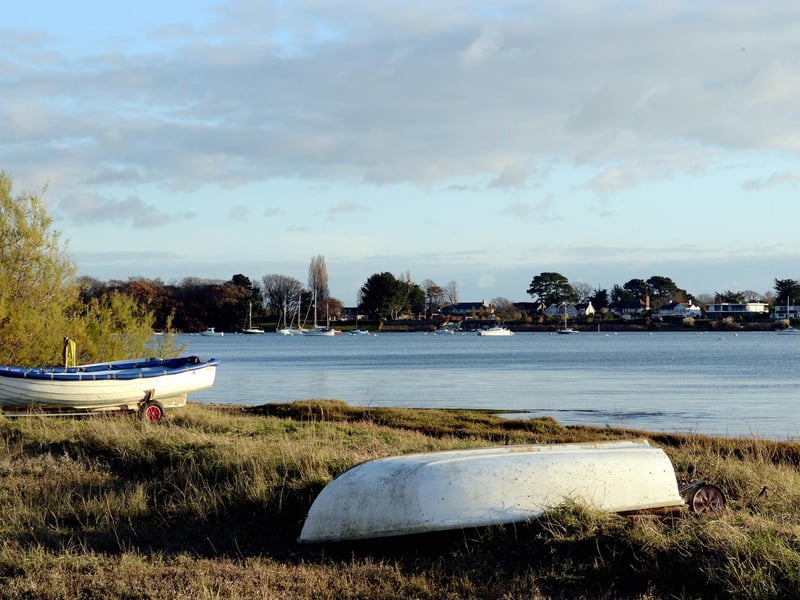
1. The Bayeux Tapestry
Bosham is one of only a few English places named in the tapestry Photo: Kate Shemilt
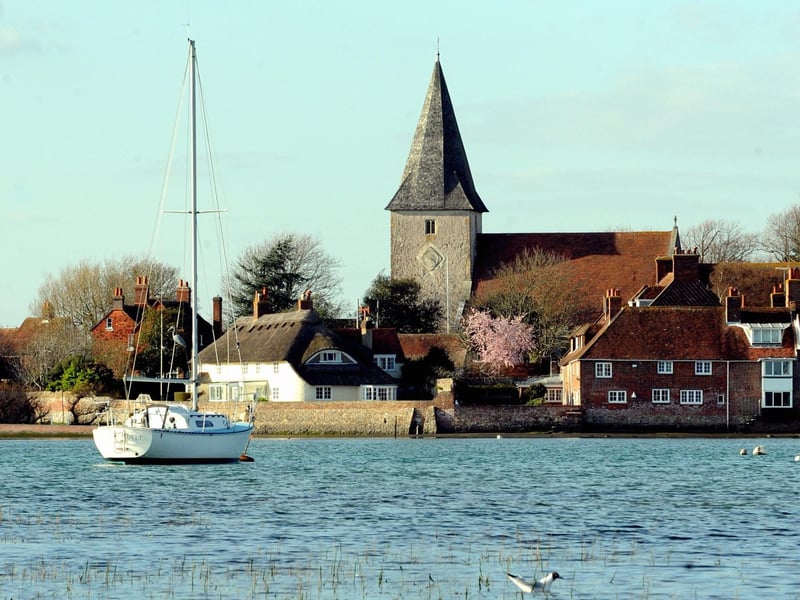
2. The Bayeux Tapestry
King Harold II owned a great deal of land around Bosham and kept his large fleet of ships in the harbour here Photo: Kate Shemilt
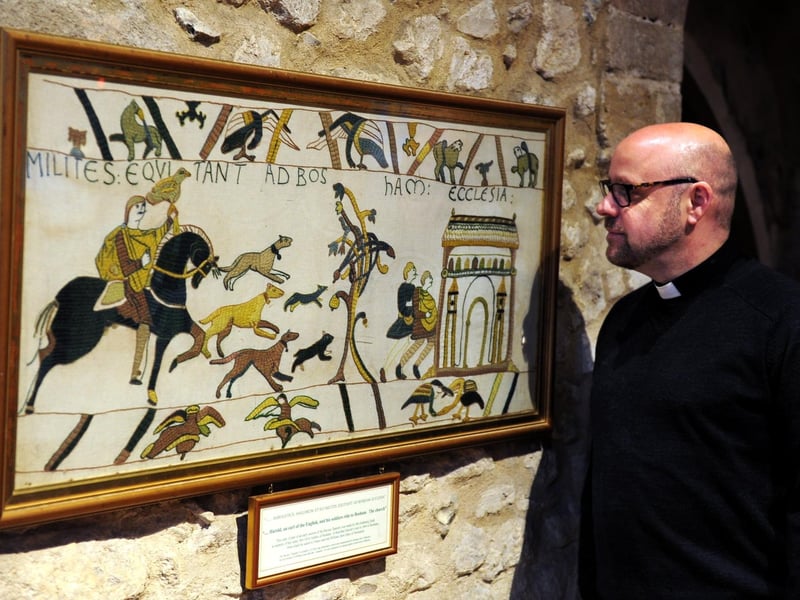
3. The Bayeux Tapestry
The Rev Martin Lane with the replica tapestry at Bosham church, pictured in 2018 Photo: Kate Shemilt
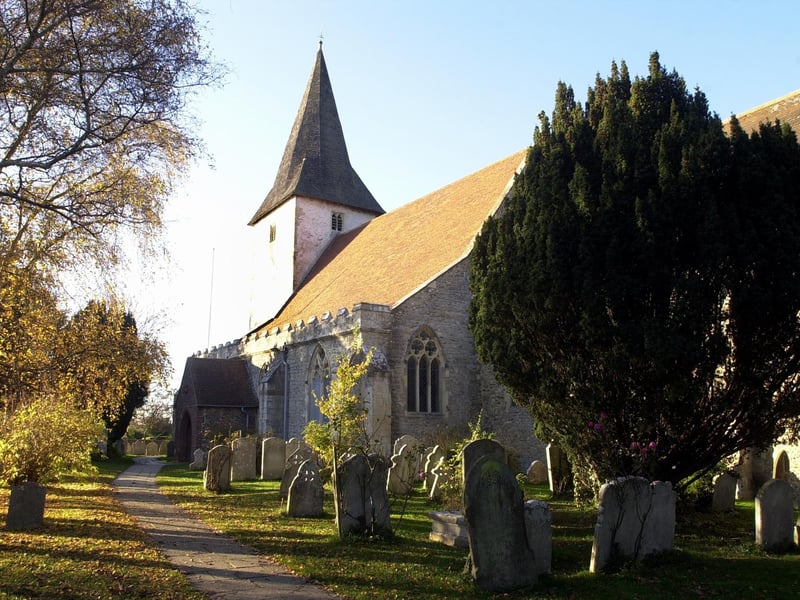
4. The Bayeux Tapestry
The Grade I listed Holy Trinity Church, nestled in the heart of Bosham, is the oldest known place of worship in West Sussex Photo: Matt Scott-Joynt