

Jack Appleton, 13, has been fascinated by trains since he was seven and his research led him to investigate the Selsey Tramway.
A student at Midhurst Rother College, Jack wrote to the Observer with an article on the lost railway that ran between Chichester and Selsey.
Jack said: “I've always been fascinated by trains, since I was seven. I've been researching them more and looking into how to tell them apart by boiler placement, wheel configuration and power source. I also started going to heritage railways around this time, such as The Watercress Line, which runs from Alresford Station to Alton Station.
“When I found out how fascinating the Chichester to Selsey railway was, I just knew I had to do more research on it.”
The railway first came to Chichester in 1846, bringing trains from Shoreham, Worthing and Littlehampton. The early trains were pulled by steam engines, transporting both passengers and goods traffic.
Chichester became a busy station, with London-bound trains and those going to Portsmouth Harbour.
A significant amount of freight and livestock was handled at Chichester’s extensive goods yard, particularly on a Wednesday, when large quantities of farm animals were transported for market day.
For many years, Chichester had two railway stations, one on the site we know today and a second, located just south of the mainline station at Terminus Road. This was the station for the Selsey Tram, which opened in 1897 and became known as 'the noisiest and most rickety railway in the land'.
At its height, the line carried 85,000 passengers a year but nearing its closure in 1935, it could take hours to travel the relatively short distance to Selsey, as the steam locomotives were prone to breaking down.
In his article, Jack wrote: “Today, the journey between Chichester and Selsey is made by road but there was once another way to reach the coast, a railway connecting the two places. The old Chichester to Selsey railway was once part of everyday life in the area, carrying passengers through the West Sussex countryside. Although the trains have long since disappeared, traces of the line and its history remain for those who know where to look.
“The passing of the Light Railways Act 1896 prompted local businessmen to consider a new railway link between Chichester and Selsey. They found it was possible to get authorisation to class it as a tramway, which meant the numerous level crossings would not require special safety arrangements like a standard railway.
“The line opened to Selsey town station on August 27, 1897, and was later extended to Selsey beach in 1898. The line was just 7¼ miles and took 30 minutes to travel. It was officially named the West Sussex Railway.
“However, coming into the early 19th century, the railway began to struggle financially as passenger numbers declined. In 1919, the railway transported 102,292 passengers; however, by 1933 that number had fallen to just 21,088.
“The ½-mile strip of track from Selsey town to Selsey beach was out of use by the end of 1908, and the rest of the line was closed in January 1935.”
In 2022, Bill Martin and David Pearce produced a leaflet on behalf of The Manhood Wildlife & Heritage Group, Walk the Selsey Tram Way, guiding people on an 11.8-mile journey taking in all 11 station sites. Visit mwhg.org.uk/tramway for more information on the ongoing Selsey Tramway Project.
The 1930s saw another major change for train passengers at Chichester. By 1939, the coastal line to Portsmouth and the branches to Bognor Regis and Littlehampton had been electrified and a steam engine on a local passenger train became a rarity – although they could still be seen pulling goods wagons.
The 12-mile branch line from Chichester to Midhurst, which had opened in 1881, lost its passenger service on July 6, 1935, but it remained open for goods trains.
The steam trains continued working this line until a train crash brought an end to 60 years of rail travel between Chichester and Midhurst.
On November 19, 1951, the locomotive left Bognor Regis as usual. It was to pick up and drop off the wagons for the daily goods train at Lavant and Singleton, before the final leg of the journey to Midhurst.
The train was approaching Midhurst on the horseshoe-shaped bend when fireman George Howes saw the bank supporting the rails had been washed away.
Both he and the driver jumped for their lives, just before the engine plunged into a 30ft gully, where it remained until it could be recovered some two months later.
Trains never ran to Midhurst again but the line was kept open between Chichester and Lavant for the farmers to transport their produce.
Sugar beet was grown in such substantial amounts, the train service was kept running until January 1970. The line was then cut back to serve a gravel pit between 1972 and 1991.
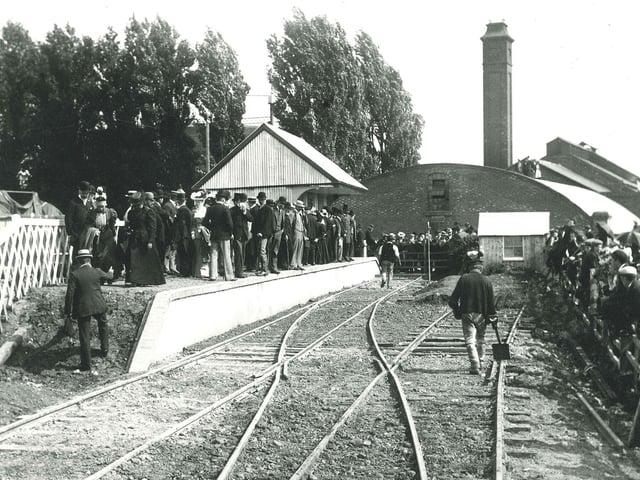
1. Selsey Tramway
Opening of Selsey Tramway in Chichester on August 27, 1897. Picture: The Novium Museum Photo: The Novium Museum
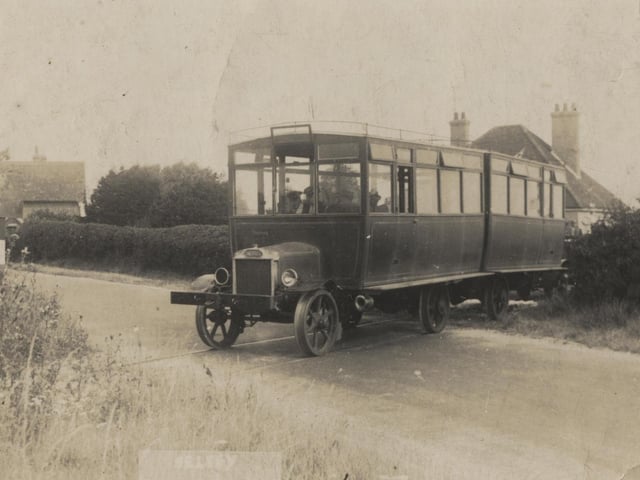
2. Selsey Tramway
View of the Selsey Tramway in a country lane in the 1920s-1940s. Picture: The Novium Museum Photo: The Novium Museum
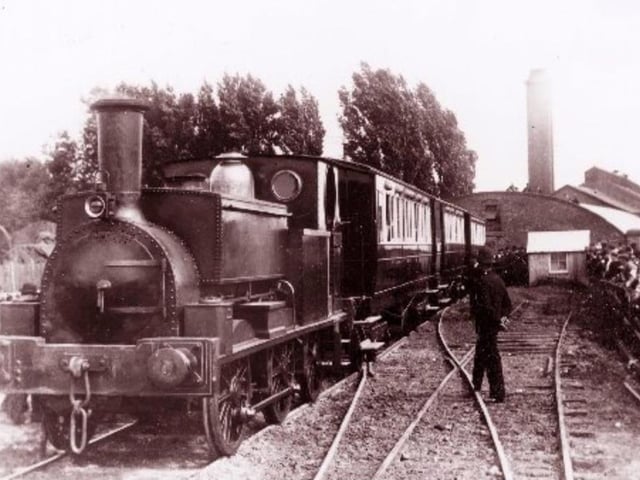
3. Selsey Tramway
The Selsey tram at Chichester railway station. Picture: West Sussex Record Office Photo: West Sussex Record Office

4. Selsey Tramway
Walkers on The Manhood Wildlife & Heritage Group's Walk the Selsey Tram Way trail in June 2016, following the 11.8-mile route of the former railway Photo: Kate Shemilt ks16000611-2