

History enthusiast Ian Richardson has delved into his vast collection of photographs to create an hour-long show, called Cloudy Days Over Sunny Worthing.
The pictures not only show major incidents, they capture scenes that show how the town has changed over the past 200 years.
The hotel that stood opposite Worthing Pier for 75 years, on the site of the Royal Arcade, features for several reasons. This hotel was built on the site of Worthing's first pub, the Sea House Inn, and was variously called the Sea House, the Royal Sea House and the Royal over the years, changing its name after Queen Adelaide, widow of King William IV, stayed there in 1849.
Ian tells the story of a horse bus crash on May 1, 1890, where the horses bolted as the Town Hall clock struck 2pm. The horses took fright while the bus was unattended and raced down South Street towards the pier, taking James Town's Victoria bus with them. They sadly died when they collided with the porch pillars at the Royal Sea House Hotel.
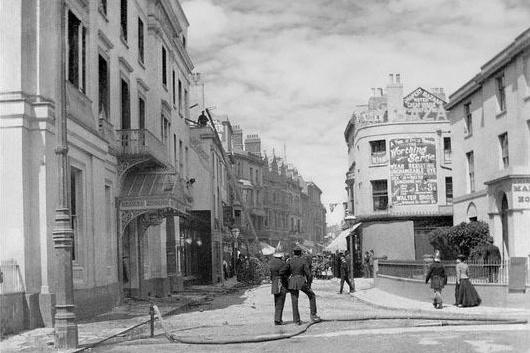
There are also pictures from May 21, 1901, when the Royal Hotel, once Worthing's leading hotel, was gutted by fire. The site was derelict for more than 20 years before The Arcade shopping centre was built there.
Another major fire to be covered is the one at Warnes Hotel on October 28, 1987, alongside slides of the building in its heyday.
Ian said: "Mr Warne had visionary ideas with regard to motoring and he was a pioneer of early aviation. The hotel had its own garage and really, it was second to none. It was a great credit to Worthing.
"Sadly, in 1985, Warnes closed down and a couple of years afterwards, in October 1987, there was a serious fire which destroyed the building."
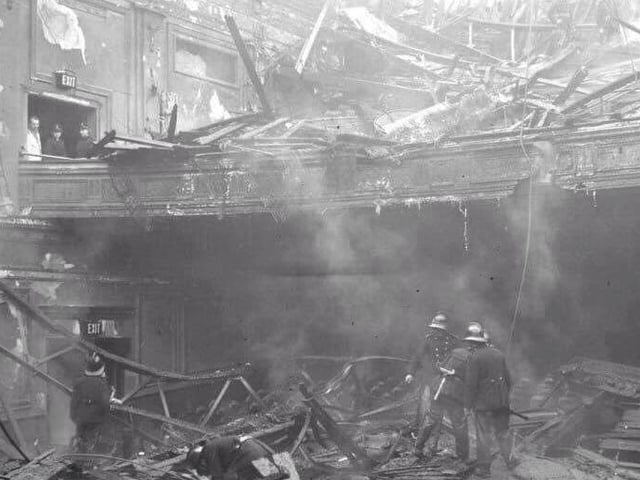
One series of pictures reflects on the devastating fire which destroyed the Rivoli Cinema, which once stood at the north end of Chapel Road.
Ian said: "The Rivoli Cinema was a major attraction in the town. It had a dome on its roof. At that time, many people smoked and to get fresh air, the cinema roof actually opened. The cinema had its own restaurant, an orchestra and organ. It seated around 1,600 people.
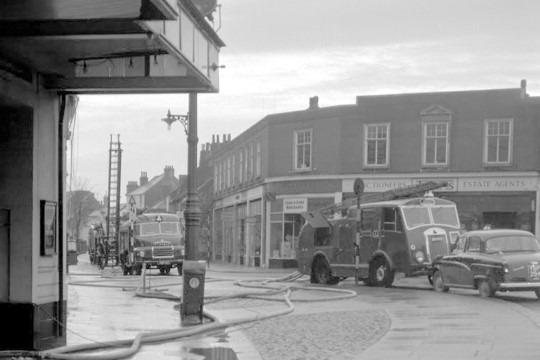
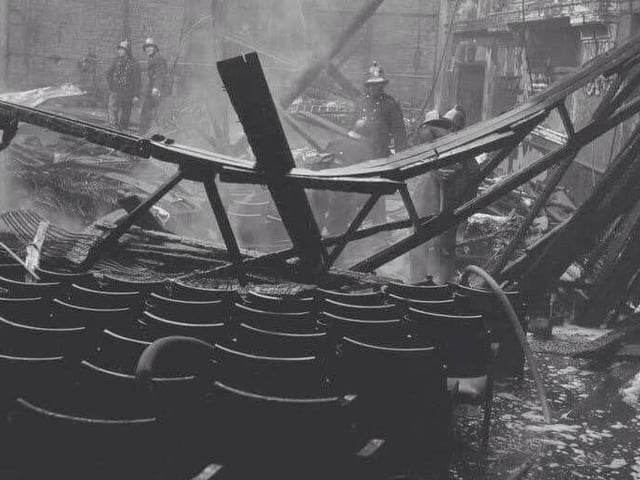
"Early on the morning of Tuesday, January 19, 1960, a police officer on his beat, walking past the cinema at the corner of North Street and Chapel Road, smelled burning and after inspection he saw flames. The fire station at that time was in High Street, not terribly far away, but the fire had been raging for a number of hours. It was well alight."
There are scenes of flooding in South Street in 1877, Worthing Pier collapsing in a storm in 1913 and the fire there in 1933. Ian also speaks of the 'destruction of buildings' like flint cottages in High Street, the old Town Hall and Grafton House.
Also included is the Milk Race, an annual cycling tour of Britain that Worthing hosted in May 1969.
Ian said: "Worthing had the privilege of hosting the UK cycle Milk Race. This was a major event and really was quite something, the publicity was second to none at the time.
"The first leg of this ran from Worthing to Swindon. Later that morning, after the cyclists were racing, they got as far as Liss in Hampshire when a Czechoslovakian rider collided with a lorry and sadly was killed."
Many will remember the stink of the seaweed that covered Worthing's beaches in the 1980s and Ian has some pictures showing just how bad it could be.
He said: "The seaweed issue that hit Worthing caused Sunny Worthing to have many days of clouds, where this weed, which originates off of Bognor, is washed across in to the bay. Four slides really reflect on those bad days when seaweed covered our shores."
There are plane crashes, like the Lancaster bomber that crashed on the beach during the Second World War and the Valiant bomber crash in Southwick in May 1956, road accidents and rail disasters.
On Monday, November 24, 1845, the day rail services from Brighton to Worthing were first launched, a horse in Lancing took fright when it saw one of the locomotives and was hit by the tender. Ian said another train derailed, too, and in the end, the passengers walked the three miles to get to Worthing Railway Station.
The day a double-decker bus was blown off the Old Shoreham Toll Bridge into the River Adur in a terrible storm is also covered.
After showing a picture of the Southdown bus from 1939, taken when it was brand new, Ian tells of the disatrous day ten years later, on Saturday, January 1, 1949.
Ian said: "The bus was working route no.9 from Worthing across to Brighton. The weather that night was extremely stormy, with squalls and lightning. It was a very, very unpleasant night for the first day of the year.
"As the bus made its way into Shoreham, it crossed the toll bridge and a huge gust of wind blew the bus, toppled it over into the River Adur. Very fortunately, it was at low tide, the water level only 4ft.
"There were 25 people aboard the bus. Eight people were trapped and needed to be rescued, including Alex Guildford, the bus driver. Twenty passengers had sadly been injured and later a dozen people were detained in hospital."
The slideshow ends with a picture of a temporary emergency hospital in Newland Road, a scene from the typhoid epidemic of 1893.
Ian said: "A major outbreak of typhoid fever, an epidemic, hit Worthing. There were many clouds which impacted on numerous families and sadly there were 194 known deaths."
Cloudy Days Over Sunny Worthing is due to be shown at the Ardington Hotel on Thursday, April 16. Coffee and cake will be served at 10.30am and the talk will follow at 11am. Tickets priced £11.75 will go on sale soon.
1. Cloudy Days Over Sunny Worthing
Cloudy Days Over Sunny Worthing is due to be shown at the Ardington Hotel on Thursday, April 16 Photo: Ian Richardson
2. Cloudy Days Over Sunny Worthing
A devastating fire destroyed the Rivoli Cinema, which once stood at the north end of Chapel Road Photo: Ian Richardson
3. Cloudy Days Over Sunny Worthing
A police officer on his beat smelled burning at the Rivoli Cinema and after inspection, he saw flames Photo: Ian Richardson
4. Cloudy Days Over Sunny Worthing
The fire at the Rivoli Cinema had been raging for a number of hours before it was spotted Photo: Ian Richardson