

Owned and managed by West Sussex County Council, the house is a multi-purpose venue with exquisitely-decorated rooms.
Thousands of shoppers have walked past the building in West Street but when it comes to what lies inside, the house is a hidden treasure.
It was built in 1696 for maltster John Edes and his wife Hannah but John never actually lived there, as he died before it was completed.
According to British History Online, John was the elder son of John Edes of Dedham and nephew of Dr Henry Edes, Canon Residentiary of Chichester and an adherent of the Duke of Monmouth.
He moved to Chidham shortly before 1688 and married Hannah, daughter of Thomas Aylwyn of Chichester, in 1693. Their son Henry made his home in West Street and he left the house to his only daughter, Mary, when he died in 1722.
Peckham Williams, who served as Sheriff of Sussex in 1750, purchased the house and it remained in his family until 1860, when it was sold to solicitor William Duke. The last owner before the county council was artist Walter Ernest Tower.
The Novium Museum reveals the house was likely nameless for more than 100 years. Records show it was known as Westgate House in the mid-1840s and that name remained in use until 1905, when the property became known as West Street House.
The name was changed to Wren’s House by 1911, in the mistaken belief it was the work of the famous architect, and in 1967, that was simplified to Wren House.
The name Edes House was adopted thanks to county archivist Francis William Steer. It was recognised it was unlikely the house was designed by Sir Christopher Wren, as he was busy with St Paul's Cathedral at the time it was being built.
Edes House has gone through a variety of uses since it was bought by the council in 1916. It was used as council offices for 20 years, until County Hall was built in the grounds in 1936.
The house was used as the county library between 1938 and 1967, when a purpose-built library was opened in Tower Street. It then served as the county and diocesan record office from 1968 to 1989, when West Sussex Record Office was built in Orchard Street.
When the Duke and Duchess of Sussex visited Edes House in October 2018, they were able to view a rare parchment copy of the American Declaration of Independence. One of only two of its kind in the world, it had been in the West Sussex Record Office collection since 1956.
The 'Sussex Declaration' is the only ceremonial copy known to exist besides the signed 1776 copy held in Washington, D.C. It was catalogued and stored at County Hall before being moved to Edes House and then the purpose-built record office in Chichester.
The significance of the manuscript was investigated only ten years ago, after two Harvard academics located it in the archives, and its authenticity was confirmed.
The record office move in 1989 gave the council the opportunity to restore Edes House as a unique venue, for weddings and functions alike, as well as parts still being used as a working council building.
Its listed status means it is expensive to maintain, so raising its profile as a destination venue has helped preserve it for generations to come.
The Foyer is an elegant entrance that offers a warm welcome and serves as an ideal space to meet and network.
The essence of elegance, the house has four rooms available for weddings and civil partnerships. The largest of these is the golden-coloured Richmond Room, which can hold up to 60 guests.
The turquoise Norfolk Room can host 32, the oak-panelled Warnham Room can hold 14 and for a truly intimate setting, the Cowdray Room has capacity for four guests.
These rooms are also available to hire for functions, along with the Leconfield Room, Goodwood Room and Sussex Room.
Each of the rooms in the house has its own unique style and distinct period features, from the BBB tiles made by William De Morgan in The Foyer to the eggshell blue walls of the Goodwood Room.
The Leconfield Room has the feel of a traditional stately home dining room, while The Richmond Room, with its strong links to the area’s racing history, has sunlight streaming through the windows, beautiful fireplaces, late Georgian chandeliers and a baby grand piano.
Picture a twilight wedding with fairy lights coming up the stairs, or a Christmas wedding with a red carpet surrounded by festive decorations. There are options for everyone.
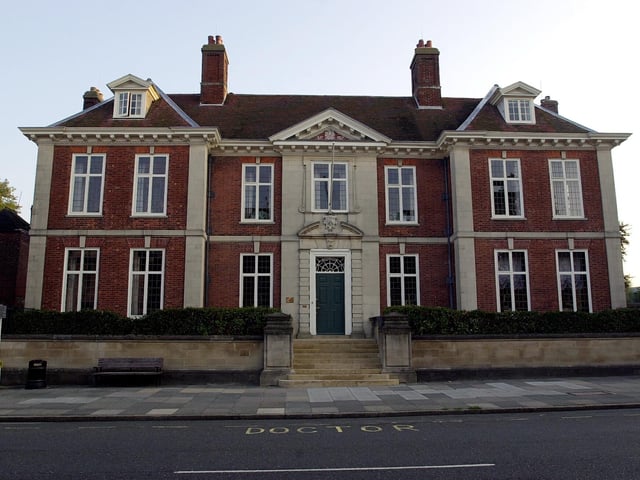
1. Edes House
Edes House is the oldest and most recognisable building on the West Sussex County Council office complex in Chichester Photo: Jonathan Brady
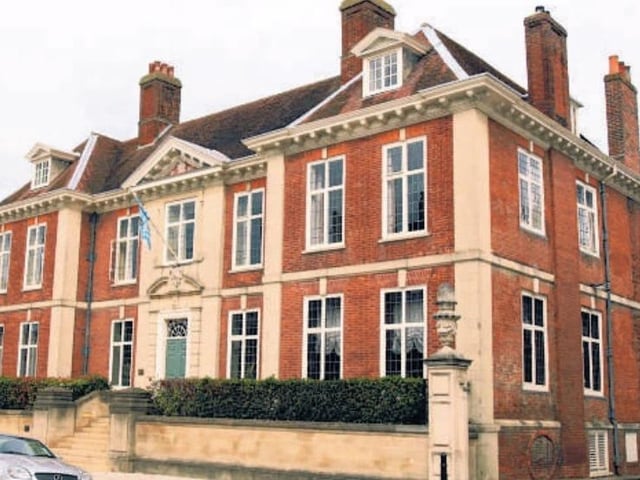
2. Edes House
The house was built in red brick with Portland stone dressings. The approach has been altered in modern times, in the place of a brick wall some way in front of the house, a low stone wall has been built at the bottom of the steps, hiding the basement windows. Photo: Malcolm McCluskey
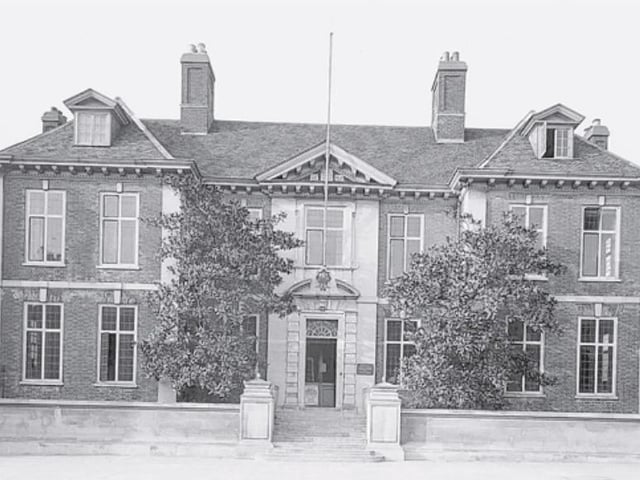
3. Edes House
Edes House was built in 1696 and restored by West Sussex County Council in the 1990s, when the magnolia trees were removed Photo: Chris Hare
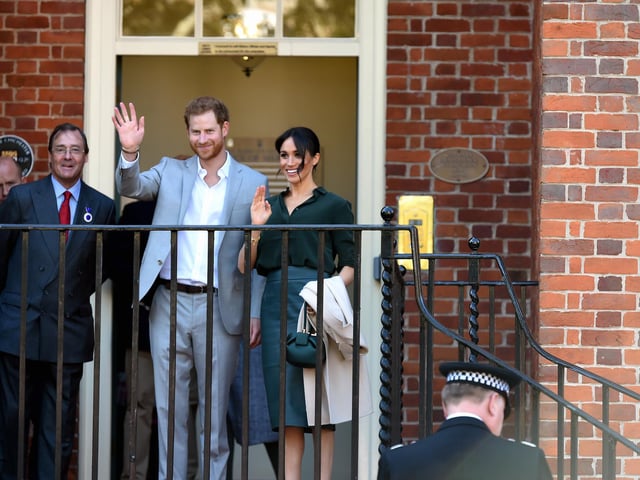
4. Edes House
The Duke and Duchess of Sussex outside Edes House, on the stairs at the rear entrance Photo: Liz Pearce