

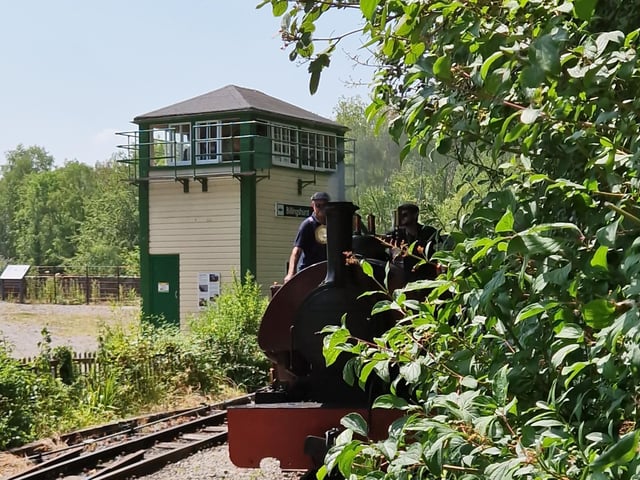
The Billingshurst Signal Box was moved to Amberley Museum in the dead of night in April 2014 and although it then lost its Grade II listing due to the relocation, it is still treated as if it had that special status.
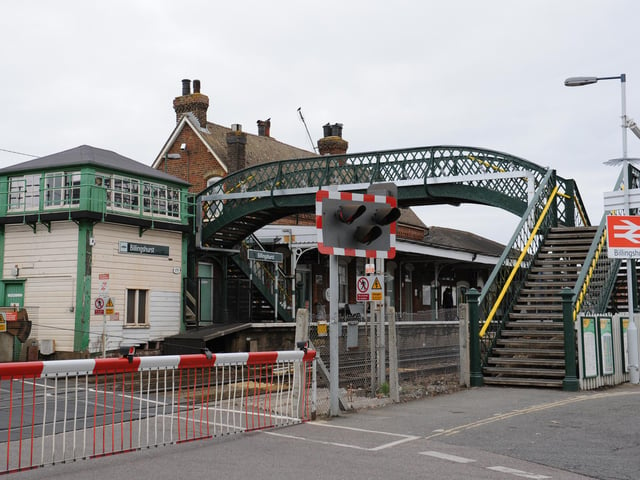
Early records are unclear but it is thought the cabin was built around 1868 with an open-sided locking room below. There was a mirror on the outside of the operating room, to allow the signalmen to check the level crossing was clear before operating the barriers and signals, and a balcony giving access for cleaning.
The original lever frame was renewed in 1876, growing from 17 to 19 levers over the years. The museum understands the signal box was moved to its position beside Billingshurst Railway Station at the same time, 150 years ago, and the Rail Gala Weekend on July 18 and 19 celebrated this significant piece of railway history.
The design is a development of an early signal box built by John Saxby at Lovers Walk, just north of Brighton on the mainline to London. He had invented an interlocking system of levers to control both signals and points. The Lovers Walk signal box was opened in 1862, a year before John Farmer joined the business, and Saxby & Farmer went on to become one of the most dominant manufacturers of signalling equipment, responsible for many signal boxes, including the Type 1b example at Billingshurst.
Visitors to Amberley had the rare opportunity to step inside the working signal box, meet the volunteer signalmen and discover how Victorian railway signalling helped keep Britain's railways running safely. In the hands-on heritage activity area, there were archive photographs and original train register books from the signal box to study.
The world's first public railway to use steam engines was the Stockton and Darlington Railway, which opened in 1825. The railway network spread through the country in the 1840s, after a standard gauge was introduced by parliament, and the Mid Sussex Railway opened its line between Horsham and Petworth in 1859, with stations including Pulborough and Billingshurst.
The journey from Horsham to Billingshurst took 20 minutes and according to a newspaper report of the time, employees were none too pleased to find the station was 'rustically situated in a ploughed field'. One porter even asked 'Where's the village?'!
In the early days of the railway, signal controls were open to the elements and the signalmen would have had only a single-person shelter close to the track. Wooden towers were then built, offering an elevated view of the line.
Signal box designs varied but the row of levers was key and controlling them correctly stood between life and death. It was a high-pressured job, and a lonely one.
Leaving school at 14, the signalman would have to pass a strict eye test before being assigned to a box. He would learn the ropes alongside an experienced colleague before working alone, probably starting in a smaller box.
The days would be long, totalling about 84 hours a week, with only one day off in 14 to change between day and night shifts.
As train signals became centralised, with Three Bridges covering most of Sussex and Surrey, and level crossings were automated, hundreds of signal boxes were removed or abandoned but the Billingshurst signal box was so significant, being one of the oldest working signal boxes in the country, it has been preserved at Amberley Museum.
It was built by the London, Brighton and South Coat Railway on the line between Three Bridges and Arundel, and in its heyday, it controlled 19 points.
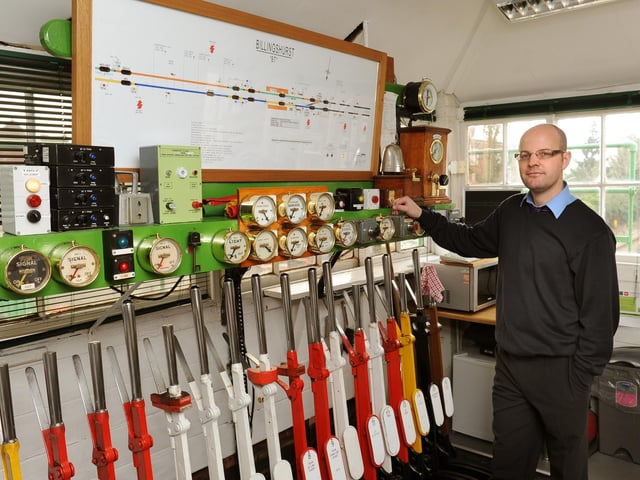
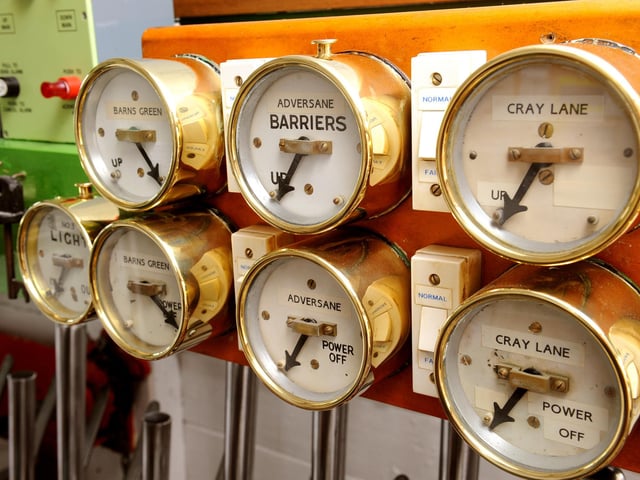
Signalman Paul Charman was one of the last to work the box at Billingshurst, having started there in 2001. He remembered being 'terrified' when he was left to do the job on his own for the first time. He controlled nine miles of track in total and seven level crossings, with 35,000 trains a year running through, and had the station to watch over.
The Billingshurst box was the oldest still in use before it was closed on March 14, 2014, along with the signal boxes in Pulborough and Amberley. It had to be removed by Network Rail as part of a station redesign and the top section, known as the operating room, was transported to the museum in one piece on a flatbed lorry. The lever frame, signalling levers, block instruments and track diagram were also saved.
After volunteers restored the signal box and rebuilt it alongside the narrow gauge railway at Amberley, it was officially opened in March 2018 by newsreader and presenter Nicholas Owen.
As part of the anniversary celebrations, Horsham-based Brolly Brewing was offering tastings of its commemorative ale, Signal Box 150 IPA. The beer was inspired by the era in which the signal box first entered service and brewed in collaboration with the museum, using a late 19th-century recipe.
The celebrations will continue later this year when Billingshurst Amateur Dramatic Society stages Charles Dickens' classic ghost story The Signalman.
Find out more about local railway history, including the signal box, on the Tracing the Rails documentary series on YouTube.
1. Billingshurst Signal Box
Billingshurst Signal Box has been at Amberley Museum since 2014 Photo: Elaine Hammond
2. Billingshurst Signal Box
The signal box stood beside the level crossing at Billingshurst Railway Station for around 140 years Photo: Steve Cobb
3. Billingshurst Signal Box
Signalman Paul Charman was one of the last to work the box at Billingshurst, having started there in 2001 Photo: Derek Martin
4. Billingshurst Signal Box
The box controlled nine miles of track in total and seven level crossings, with 35,000 trains a year running through Photo: Derek Martin