
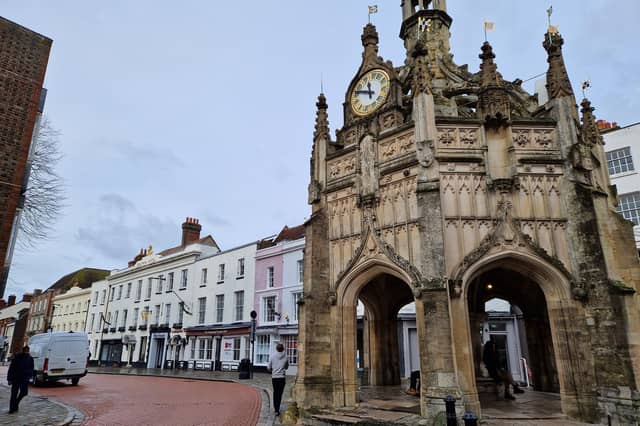


Exploring the city's surviving inns and pubs, and discovering the history of those we've lost, is made easy thanks to The Chichester Society, with its Inns, Pubs and Hotels trail.
The society was awarded a grant of £53,200 in August 2015 for the Chichester Heritage Trails Project and eight free trails were created to take walkers on a journey of more than 2,000 years of history around the city.
Printed versions of each trail were made available but with no funding for reprinting and updating, the society decided to create digital versions in 2018.
Nearly 100 locations have since been identified for Digital Trail 5 – Inns, Pubs and Hotels, and these are all on the main map – but there is also a more manageable walk taking in just 19 sites in the city centre.
History People UK, founded by Worthing historian Chris Hare, produced the printed version, which included 13 former and current inns, pubs and hotels. Much has been added to this information on the digital version.
Chris said: "Chichester's earliest inns can be traced back to medieval times when they catered for pilgrims visiting the shrine of St Richard in the cathedral. Over time they came to serve all types of travellers who needed rest and food after travelling along the notoriously bad Sussex roads."
In West Street, there is The Chichester Inn, built on the site of a medieval house belonging to the Dean of Chichester Cathedral, The Duke and Rye in the former St Peter the Great Church, and The Dolphin and Anchor.
The Chichester Inn is said to be haunted by the ghost of a Roman soldier. The pub has had various names over the years, including The Three Kings, The Duke of Richmond Arms and The Castle.
The Duke and Rye building appears to be extremely old but it was completed only in 1852. The church was deconsecrated in 1982 and St Peter’s Market opened there in 1983. The building was restored by designer Tony Castley and reopened as the St Peter’s Slurping Toad ale house in 1998.
The Dolphin and Anchor dates back to 1997 but its origins go back much further. The pub is in the western part of what were once the principal coaching inns of Chichester, The Dolphin and The Anchor, dating back to the 17th century.
Chris said: "The city was bitterly divided during the civil war of the 1640s and this factionalism continued into the 18th century, with The Anchor becoming the headquarters of the Tory party and The Dolphin becoming the base for the Whigs."
Moving on to North Street, there are The Old Cross, The Chichester Harbour Hotel and The George and Dragon.
There were ale-houses on the site of The Old Cross in 1688, licensed to sell only ale or beer. The Green Dragon pub developed here but the pub was rebuilt in 1928 and renamed in commemoration of the city's outstanding Tudor market cross. The date of the rebuild is shown between dice embedded in the front wall.
The Chichester Harbour Hotel is a Georgian building, originally home to Admiral Sir George Murray. It was converted into a hotel in 1939 and General Eisenhower and General Montgomery are known to have met there in 1944, prior to D-Day.
The George and Dragon was known as 'Bucket of Blood' in the days when the city had a bad reputation for drunken brawling. It is believed the first stagecoach from Chichester to London ran from the spacious yard.
The Park Tavern, in Priory Road, dates back to the 19th century. In the 1920s, it was known as The Ritz Hotel and was the centre for various community and sporting organisations. The pub reverted to its current name in 1964.
The Hole in the Wall, in St Martin's Street, has various tales about the origins of its name. One theory is that food was passed through a hole in the wall to the neighbouring workhouse, another suggests workers at St Martin's Brewery passed barrels back and forth to the cellar.
The Fleece used to be at 58 East Street, now 17 Grams. It was one of Chichester's oldest inns, dating back to 1710, and an ale house before that, from at least 1641, but closed in 1987.
The Nags Head, in St Pancras, is a 20th century mock Tudor building that had its origins in an ale house. The building incorporated an archway that once led to a blacksmith's shop at the rear.
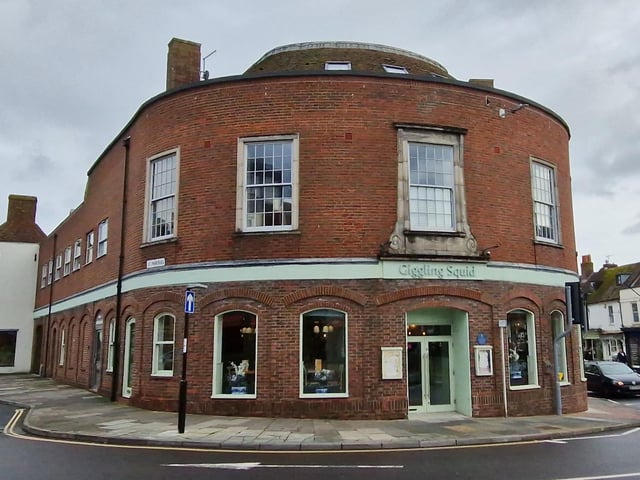
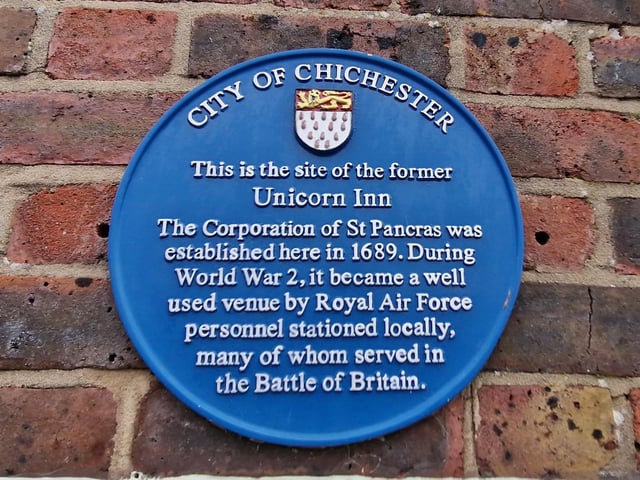
Opposite was The Unicorn Inn, marked by a Blue Plaque at what is now Giggling Squid. The 17th century inn was once home to The Wheelbarrow Club, possibly the oldest dining club in Britain. The Unicorn closed in the 1960s and was then used by Chichester Festival Theatre as the Minerva Studios.
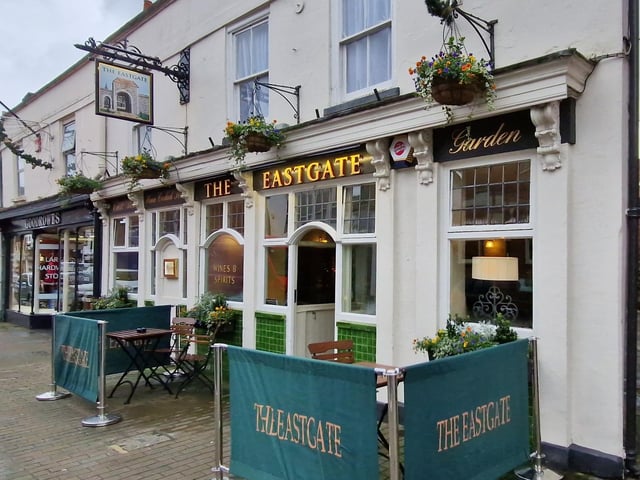
The Eastgate has a sign depicting the long-gone east gate of the city. It was originally a location for brewing from around 1811 and later became a wine and grocery store.
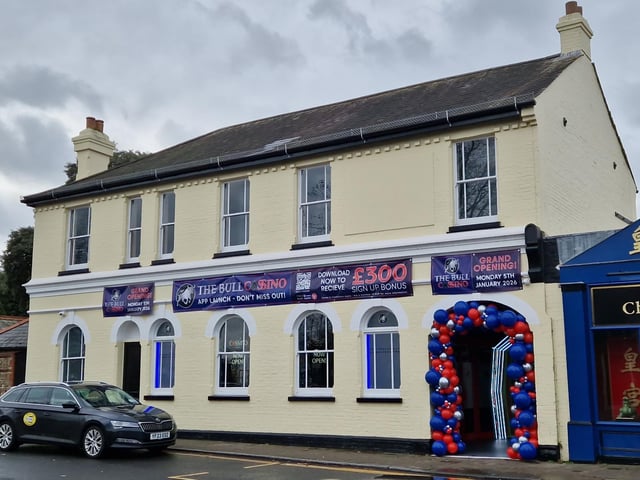
The Bull Inn, in Market Road, was closed in 2015 and stood in a sorry state until 2023, when work began on gutting the interior and repainting the exterior. Permission was granted for change of use to an adult gaming centre in July 2025 and Cassino opened here on January 5, 2026.
Another former pub was the Cattle Market Inn, at 13 Eastgate Square, now Turner's Pies. James Stevens ran The Devonshire Inn beer house here for many years. When a new road to the Cattle Market was made around 1869, James argued he was in an ideal position to service customers, so a spirit licence was granted and it became the Cattle Market Inn.
The National Westminster Bank, in East Street, was formerly The Swan, a hub of life in 18th and 19th century Chichester but dating back to at least 1620. It had to be rebuilt after a fire in 1832 and boasted every convenience, including hot and cold baths. Queen Victoria and Prince Albert stayed at The Swan en route to the Isle of Wight and came out on to the balcony to greet the crowds.
The Royal Arms opposite closed in 2006, after plans were submitted to turn the 16th century pub into shops and homes. Also known as The Punch House, the pub was once a private home and Lord Lumley entertained Queen Elizabeth I there when she visited Chichester in 1591.
The White Horse was at 61 South Street. The inn dated back to at least 1533 but the building was re-fronted in the 18th century. Look out for the original White Horse stained glass windows.
The Kings Head was at 50 South Street, the site of an ale house from about 1599. Legend claims there was a tunnel to the Cathedral, so the choristers could enjoy a covert pint of ale. Greene King purchased the property in 2006 and it is now Trents hotel.
We end on Chichester’s oldest surviving pub, The Fountain, in South Street. It dates back to the late 18th century and once abutted the south gate of the city. Novelist H.G. Wells was the grandson of a former landlord.
Chris said: "By the middle of the 17th century, there were seven inn in Chichester, as well as 50 alehouses, taverns and other premises that sold drink. Given the population was only 2,000 people at the time, of whom over half were women and children, it can be seen that Chichester was a boozy city and remained so until the beginning of the 20th century. Many of the city's old inns have been converted into restaurants and private accommodation."
13. Chichester's oldest surviving pubs – and the pubs the city has lost
Giggling Squid is where the 17th century The Unicorn Inn once was, marked by a Blue Plaque Photo: Elaine Hammond
14. Chichester's oldest surviving pubs – and the pubs the city has lost
The Blue Plaque at Giggling Squid, marking the site's origins as The Unicorn Inn Photo: Elaine Hammond
15. Chichester's oldest surviving pubs – and the pubs the city has lost
The Eastgate sign depicts the long-gone east gate of the city Photo: Elaine Hammond
16. Chichester's oldest surviving pubs – and the pubs the city has lost
The Bull Inn, in Market Road, was closed in 2015 and the site reopened as Cassino in January 2026 Photo: Elaine Hammond