
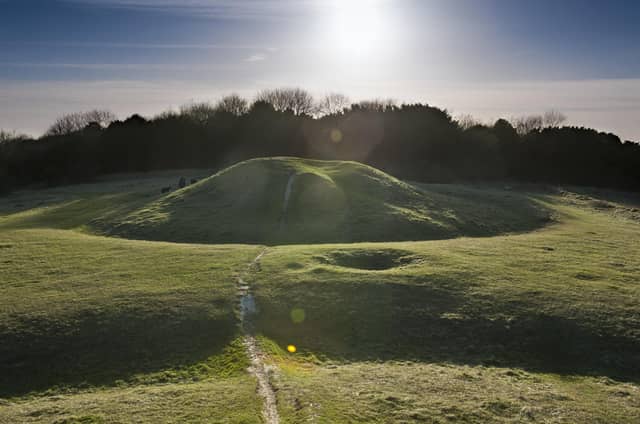


Illustrates talks and a guided walk led by Sussex folklorist Chris Hare will explore hidden history at this year's Festival of Chichester.
A Sussex historian and folk singer, he took part in the festival for the first time in 2025 and is now returning after receiving a great response.
He said: “Last year was the first time I offered events as part of the Festival of Chichester and I was pretty amazed by the response. I am hoping the topics I have selected to speak on this year prove just as popular.”
Prehistoric Sites in Sussex: Mystery and Legend will be held at Chichester City Arts Centre on Wednesday, June 17, from 7.30pm to 9pm.
Chris said: “There are so many prehistoric sites close to Chichester, including the Trundle, the Devil's Jumps and Kingley Vale, and to the west there is Cissbury, Chanctonbury, the Long Man of Wilmington and many more besides.
“Modern archaeology has given us a far greater understanding of the reasons these sites may have been created, and by whom, and when. Yet, there is another way of understanding these monuments, and that is through folklore.
“Past generations interpreted earthworks, hill figures and flint mines in a way that made sense to them in their own times. This talk will explore the mystery and legends that embedded themselves in the minds of our ancestors and how, if at all, they connect with modern archaeological insights.”
Sussex Castles: History and Folklore will be held at Chichester City Arts Centre on Wednesday, June 24, from 7.30pm to 9pm.
Chris said: “Sussex has some pretty impressive castles, including one at Pevensey that dates backs back to Roman times - most of the others are Norman or medieval.
“Locally, there is the glorious mixture of ancient and modern at Arundel, or the mere remnant of a castle at Chichester with the earthen mound in Priory Park.
“This talk will give an historical overview of Sussex castles, who built them and why, and also look at the folklore and legends that have become attached to many of them.
“We will also look at some lost castles, for example Pulborough, and some castles that are not really castles at all, for example Amberley.
Sussex folk song and folk song collectors will be held at Chichester City Arts Centre on Wednesday, July 1, from 7.30pm to 9pm.
Chris said: “What is a Sussex folk song? Is there even such a thing as a Sussex folk song? As well as detailing the different types of song in Sussex that can be considered 'folk', I will be singing songs, some of which I learned from his mother and some of which I learned from retired woodman and agricultural workers in Sussex villages in the 1980s.
“I will also talk about the pioneering work of folk song collectors Lucy Broadwood and Kate Lee in Sussex, in Victorian and Edwardian times. CDs of some of these songs will be available to purchase after the talk.”
Historic and Literary Slindon is a guided walk on Sunday, July 5 from 7pm to 8.30pm. Meet outside The Forge, Reynolds Lane, Slindon.
Chris said: “Slindon is one of the very few downland villages that is actually situated on rising ground - most settlements are found at the foot of the downs, often close to springs, so its elevated position marks it out.
“Historically, Slindon was once a 'Peculiar' of the Archbishop of Canterbury, and Archbishop Stephen Langton, the main author of Magna Carta lived and died here.
“Slindon was one of a handful of parishes in the whole of England where the Catholic Mass continued to be celebrated throughout the centuries of persecution. It was perhaps fitting, then, that the Catholic writer, author, poet and one-time Member of Parliament Hilaire Belloc should have made his home here.
“Belloc lived in Slindon as a child and returned again when he was married and with a family of his own. This walk will include extracts from Belloc's essays relating to Slindon and poems referencing the downland landscape to the north of the village.
“Slindon is built on a hill, so please bear this in mind when booking. Although not long in distance, there is a fairly steep climb from the Forge to our final destination near Slindon College.”
Sussex Rural Writers will be held at Chichester City Arts Centre on Wednesday, July 8, from 7.30pm to 9pm.
Chris said: “This talk looks at writers who were inspired by the Sussex countryside and whose work, both prose and in verse, reflected this inspiration.
“Some wrote of the landscape, others of the country people, and all sought to understand and illuminate the elusive 'Spirit of the Downs'.
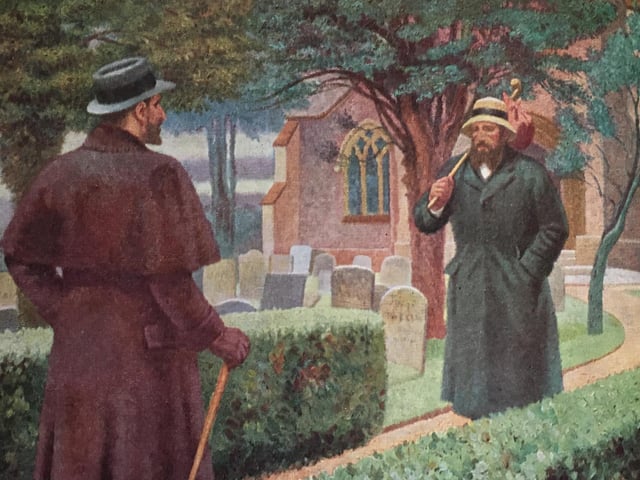
“Writers considered will include Richard Jefferies, W.H.Hudson, who loved the Sussex Downs but hated Chichester, Hilaire Belloc, Sheila Kaye-Smith, and Arthur Beckett.
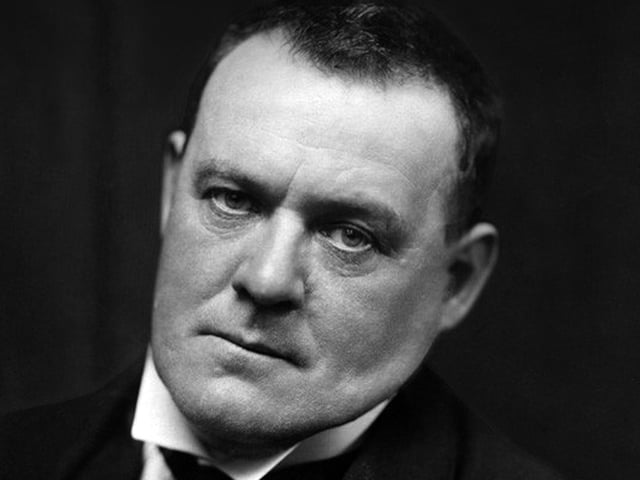
“As England became a country of town and city-dwellers, so the countryside became an unknown, even troubling place. These writers, all in their different ways, sought to reinterpret rural Sussex for urban people, and in doing so also created powerful myths that still endure today.”
All Change! How the Coming of the Railway changed Sussex Forever will be held at Chichester City Arts Centre on Wednesday, July 15, from 7.30pm to 9pm.
Chris said: “Hard as it is to believe today, before the coming of the railway to Sussex in the 1840s, this county was underpopulated and poor. Many emigrated, despairing that the good times would ever return and hoping for better things in a new land overseas.
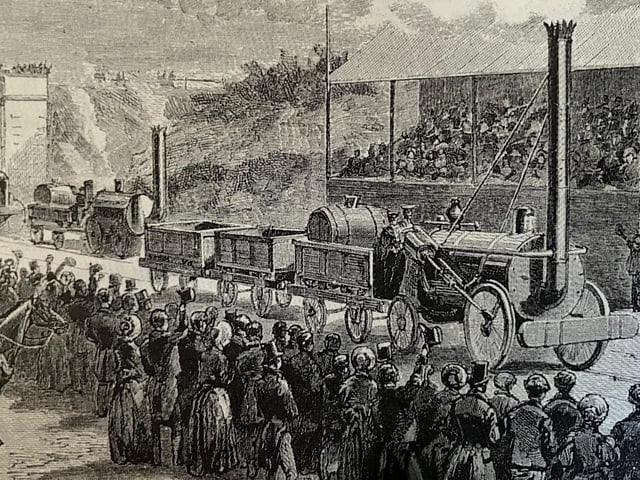
“Yet, by the 1850s, the railway was transforming the fortunes of Sussex, employment opportunities were increasing, and with the new jobs came higher wages.
“Small, insignificant little villages like Worthing, Littlehampton and Bognor became bustling seaside resorts, while horticulture increasingly displaced traditional agriculture. A Sussex man or woman of 1900 had very different and improved expectations of their forebears of 1800, and it was the railway that delivered the change.”
Visit www.tickettailor.com/events/historypeople for more information and to book. Tickets are priced at £9 per person for that talks and walk, with an early bird option of £7.50 for some talks. Contact Chris at [email protected] if you having any problem booking any of these events.
Chris is well known for his books and articles on history and folklore topics. He is also a regular contributor to BBC heritage programmes.
5. Festival of Chichester
By the 1850s, the railway was transforming the fortunes of Sussex Photo: Chris Hare
6. Festival of Chichester
W.H.Hudson meets an imaginary Richard Jefferies in Goring Photo: Chris Hare
7. Festival of Chichester
Hilaire Belloc, one of the writers who sought to reinterpret rural Sussex for urban people Photo: National Portrait Gallery London / Chris Hare