

Its origins as a Georgian workhouse tell of the social history of Easebourne in the 18th century.
Grade II listed since June 1959, the impressive collection of original properties was built in 1794 around a central courtyard.
Known euphemistically as Easebourne House of Industry, it provided accommodation for poor people from 16 local parishes but at a price. Many unwanted children were sent there and, alongside the adults, suffered harsh conditions.
The parishes had formed a Gilbert Union in 1792 and shared the cost of building the workhouse. As such, it was aimed at children aged under 14 and adults aged over 60.
Women with small children were also admitted. They were given domestic work, while the men worked on the farm or as gardeners on the two acres of land, and the children made linen and wool. Everyone was fed with gruel, broth, bread and cheese, and scraps of meat.
Graham Tite from Midhurst tells of the site's history: “As the former workhouse for Midhurst and the surrounding parishes, this building, now listed Grade II, was constructed in 1794 and is an exceptional survival dating back to the era when Gilbert’s Act resulted in the country’s first purpose-built places where the poorest in rural areas could be held and maintained.
“Most other workhouses have been lost but Easebourne's managed to remain in its elevated location, where it is currently surrounded with coppiced land, soft-wood forest and open fields on its west side.
“From surviving evidence of the organised regimes once imposed within the workhouse, it can be seen that much time for the inmates was spent outside in the surrounding fields and woods, where they were supervised in labour at coppicing, wood-cutting and agriculture. Much of their food ration was produced locally and idleness was to be avoided.
“Budgenor is a special building for the whole south-east region, with the later Sundridge Hospital site near Sevenoaks, Kent, as another rare but later survival from 1838 when workhouse design had changed.”
Midhurst Poor Law Union was formed in May 1835 and it was renamed Midhurst Union Workhouse. West Sussex County Council took control in 1930 and it became Budgenor Public Assistance Institution. In the 1970s, the council used it as a hostel to provide temporary accommodation for the homeless.
Christ for the Nations UK ran Budgenor Lodge as a Bible training college for seven years before moving to The Royal Norfolk Hotel in Bognor Regis in 2004.
Budgenor Lodge was sold to developers and permission was granted for 42 houses, apartments and duplexes. Demolition of a listed wall was also eventually allowed, so the new pavement would run directly alongside the road, rather than using a 'tunnelled' footpath as was originally planned. The original footpath had been removed in 1937 to widen the road.
Mr Tite, like others, is concerned about the Draft Local Plan for the South Downs National Park, which shows an open area next to Budgenor Lodge as a site designated for future housing.
He said: “For two decades now, the conversion to flats and modest extensions at the Easebourne site have brought new life to this striking reminder of how the poorest once survived from the 18th and into the 20th centuries. At the rear it is open to the surrounding fields and so it should remain.
“Historic buildings depend on their setting and not just on 'bricks and mortar' to maintain character and significance and our rare, local landmark workhouse should remain as it is and not be cluttered with new houses on the site to the rear.”
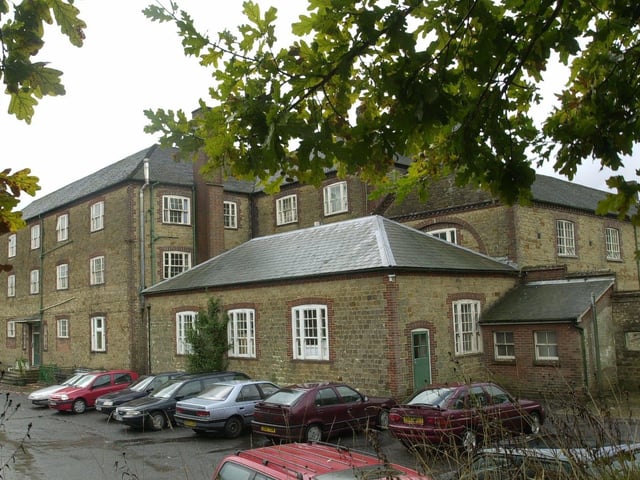
1. Budgenor Lodge
The main block from the north east in June 2005 Photo: Bill Shimmin
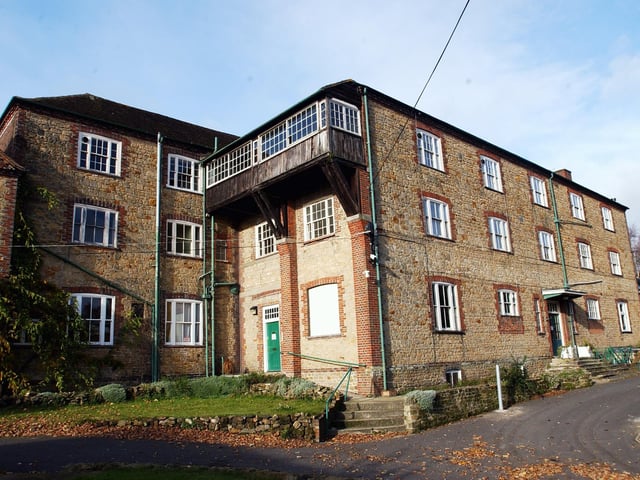
2. Budgenor Lodge
The main block from the south east in June 2005 Photo: Bill Shimmin

3. Budgenor Lodge
Sue Mills from Christ for the Nations UK at Budgenor Lodge in June 2005 Photo: Bill Shimmin
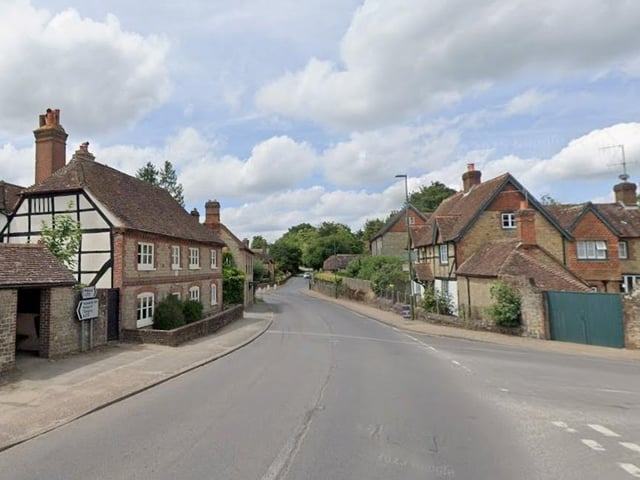
4. Budgenor Lodge
Easebourne formed a Gilbert Union with 15 other parishes in 1792 Photo: Google Maps