
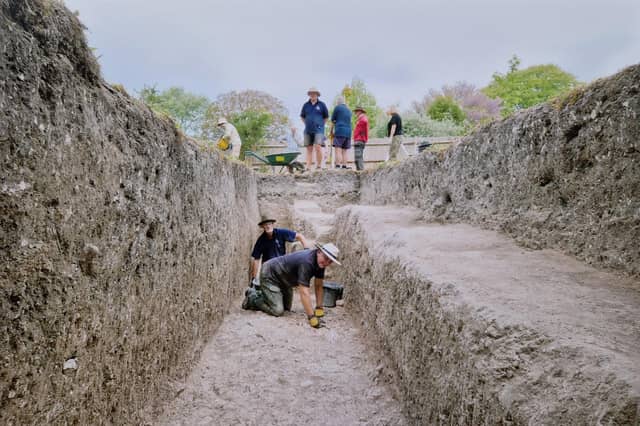


Discoveries made during the Burpham Big Dig two years ago have gone on display at Worthing Museum and the story of the Saxon burh that dominates the area is told through the finds.
Worthing Museum partnered with Worthing Archaeological Society and residents of Burpham for a major series of excavations in 2024, with more in 2025. The success of the operation means archaeological work will continue with a ten-year plan of investigation, including an enclosure with possible Iron Age and Roman origins to be explored this year.
More than 30 test pits were dug in private gardens and five large trenches were opened in the last defensive ditch of the promontory fort that gives Burpham its name.
The 17,000-plus artefacts recovered help tell the story of Burpham and Wepham from the Stone Age to today. These finds have gone on show, alongside maps and photographs, in the Studio Gallery until October 17, showcasing the community exploration of local history.
Burpham Camp is a scheduled monument, an Iron Age promontory fort that became a Saxon Burh fortification with ramparts and ditches. The Burpham Big Dig, led by Worthing Museum's archaeology curator, James Sainsbury, was the first substantial excavation of the burh's defensive ditch. He was keen to find out more about the villages around the camp, Burpham and Wepham, having done a lot of archaeological work in the area in the past.
The exhibition explains: “From an archaeological point of view, there were some major surprises. The refortification of the burgh in the early 1200s is a key development in the historical narrative of the area. Additionally, the establishment of Wepham as the earlier settlement is significant and may go some way to explain why Burpham is not recorded in the Domesday Book as a village in its own right.
“On the other hand, much of the material recovered was as expected – a large collection of finds reflecting the rural nature of the parish through the centuries. In many ways little has changed at Burpham and Wepham in centuries - the road network probably dates to before the Norman Conquest, many dwellings are hundreds of years old and the rural nature of the parish continues.
“It is perhaps comforting to know that flocks of sheep dominated the wider landscape of the parish a millennia ago and they continue to do so to this day.”
The village of Burpham seems to have been established in the century after the Norman Conquest, though the church is likely to have been built in wood before it.
The fortified settlement was first recorded in the Burghal Hidage, an Anglo-Saxon record of burhs dated between 911 and 914. But the 8m high rampart seen today was the result of refortification.
The earliest pottery found dated to around 1200, suggesting the ditch was made deeper and wider at some point, clearing away Saxon finds. The spoil from the recutting and widening was thrown on to the rampart, increasing its height to what is seen today.
A large original artwork by Lauren Gibson gives a bird's eye view of the burh, Wepham and Burpham. A bridge would have crossed the deep defensive ditch. Any Saxon structures in the burh would have been timber, lost to ploughing in the early 1900s.
It is possible the defences were allowed to crumble as Arundel Castle was founded in 1067. The current working theory is that local inhabitants refortified the burh during the First Baron's War, when large French forces had landed under Prince Louis, at the invitation of the Barons, with a view to placing Louis on the throne and deposing King John.
After this conflict had ended, it seems the ditch became a rubbish dump, slowly filling with soil, broken pottery and other unwanted items over centuries. By the 1600s, and quite possibly earlier, it seems there were houses built on level ground where once there was a deep wide ditch.
Half of the village agreed to have their gardens excavated and hundreds of people turned up for the open day, and it was this level of interest that inspired the excavations at Highdown Big Dig last year.
Most of the metal finds were iron nails. There was also a large amount of metal slag, which was no surprise as there were still three working blacksmiths in Burpham up to the 1950s.
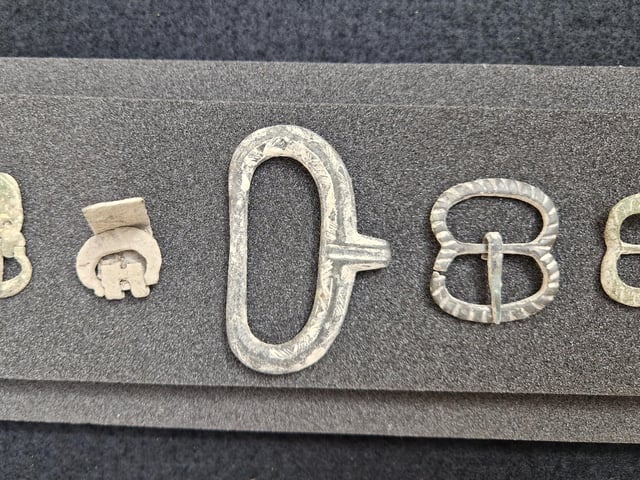
There was a range of buckles from the 1400s to 1600s, including a decorated example from around 1425 and a Georgian iron shoe buckle.
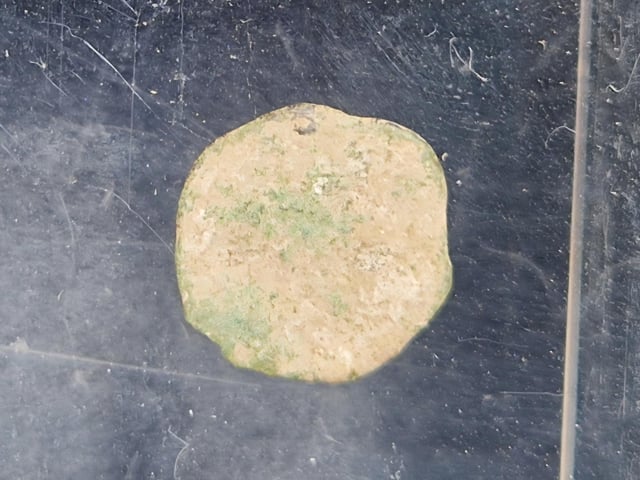
Perhaps the biggest surprise was the lack of coinage, with just one Roman coin, dated around 350, and a single penny from 1984. This suggests the residents of the past had little disposable income and payments were made in kind or through bartering.
There were also trade tokens from the 1600s, one belonging to John Gittings, landlord of the Vinters Arms, Chichester, dated around 1636.
Among the many clay pipe bowls and stems was a particularly fine example of a fish-scale pipe bowl dating to the early 1800s.
There were 749 scattered bones of cattle, sheep and birds, including deer bones with marks of butchery found deep in the ditch trenches, perhaps the remains of a Medieval feast.
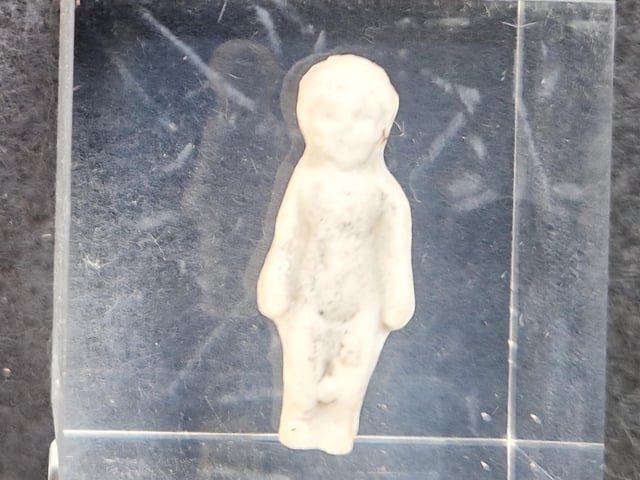
Two middens were found in The Street, Burpham, one filled with oyster shells and the other whelks. Other finds included marbles, a 1960s plastic dinosaur, doll fragments, a tiny Frozen Charlotte doll from the 1800s, and two pieces of writing slate.
The exhibition shows Burpham Big Dig was a great success, in both furthering knowledge of the history and development of the parish, and in engaging local residents with their shared heritage.
13. Burpham Big Dig
There was a range of buckles from the 1400s to 1600s, including a decorated example from around 1425 and a Georgian iron shoe buckle Photo: Worthing Museum
14. Burpham Big Dig
The only Roman coin found, dated around 350, from the House of Constantine Photo: Worthing Museum
15. Burpham Big Dig
A tiny Frozen Charlotte doll from the 1800s Photo: Worthing Museum
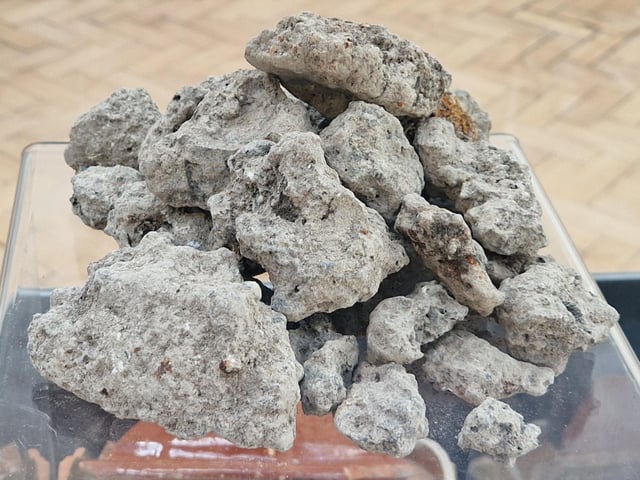
16. Burpham Big Dig
There was a large amount of metal slag found Photo: Worthing Museum