
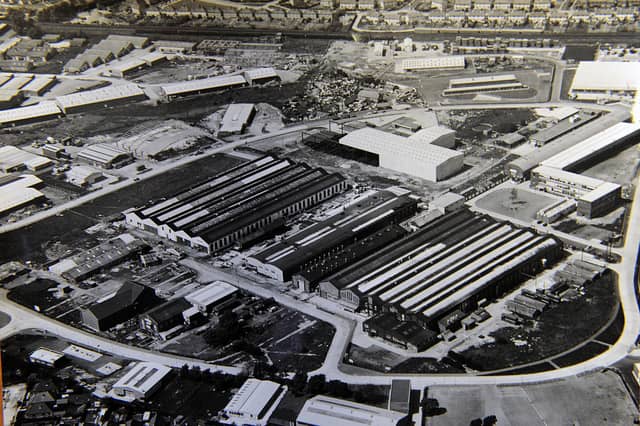


Keen Worthing historian Ian Richardson has put together a two-hour talk featuring photos from the works, as well as engines and coaches that were built and restored there.
He said: "It has taken years to get this collection. It is really very special. There is nothing like it anywhere else."
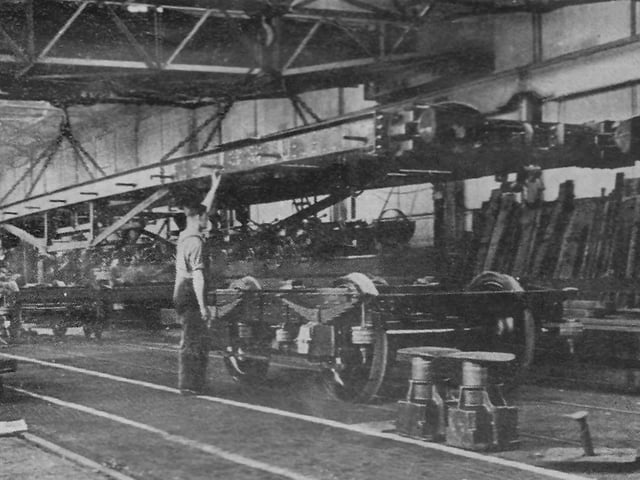
Ian's father, Robert Richardson, joined the company in 1947, initially as a painter but later working there as a crane driver. Some of his photos and memorabilia are included, like an interesting picture from a brochure which Ian says was staged, as the two parts being put together in the picture did not actually match.
Lancing Carriage Works operated for just over half a century, until Dr Beeching’s reshaping of the railways in the 1960s heavily impacted the site, effectively making it redundant.
Ian points out the area was previously populated by farmers, fishermen and market gardeners, who enjoyed a tranquil village environment before the coming of the railway.
To ease the pressure on its works at Brighton, the LB&SCR board decided in 1902 to move the operation to Lancing. Around 137 acres of land used for market gardens on the Carr-LLoyd Estate was purchased for £21,683 and it was to become the second largest industrial area in West Sussex.
Ian said: "The decision did not go down well with the people in Lancing. From time to time, there were riots and disquiet in the public houses. The Brighton workers were not happy about having to go to such a quiet place, either.
"But the works brought prosperity and better wages than those for working in market gardens."
The carriage and wagon works opened in 1909. Ian has photos of the first wagon built at Lancing, dated April 13, 1909.
The works covered an area of 66 acres and comprised 27 shops for building and repairing wagon stock and carriages.
To make it easier for the staff, there was a daily train to and from Brighton, known as the Lancing Belle. Ian said this would go through each station slowly but never quite stop, so the workers had to quickly jump on and off the moving train.
As well as carriages and wagons, like the ventilated van of 1904, guards vans and open wagons, the works even made platform refreshment trolleys.
Following the merger to form Southern Railway in 1923, it was decided carriage construction would be concentrated at Lancing, including all new carriage underframes and the renovation of all the bogie carriage stock.
This meant hundreds of workmen moving to the village from the Ashford carriage works, though the third works at Eastleigh remained open.
New roads were built to house the hundreds of families making the move – Wembley Avenue and Annweir Avenue, north of the railway line.
The cottages at Bessborough Terrace were for the works' firemen. These men also served as retained firemen for Lancing Fire Station, in South Street, where the Parish Hall is today. They would be seen in their brass helmets, riding the fire truck, and would also take part in annual firefighting competitions.
Before the Second World War, the staff were men and they did everything, even sewing the upholstery. As well as building from scratch, the works took in carriages from other regions for painting and overhaul.
During the war, some of the workshops were adapted to deal with government work, including the construction of Pontoons and tail units for Horsa gliders. Ian has a picture of women working at this time in the Pullman car shop.
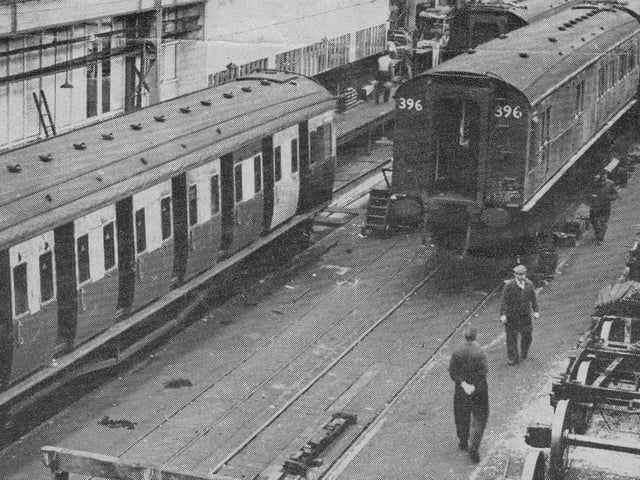
Lancing became the main workshop for the repair of steam-hauled, electric and diesel-electric coaching stock in the Southern region. A progressive repair system was in operation, the bodies, underframes and bogies each receiving attention as the carriages moved from stage to stage.
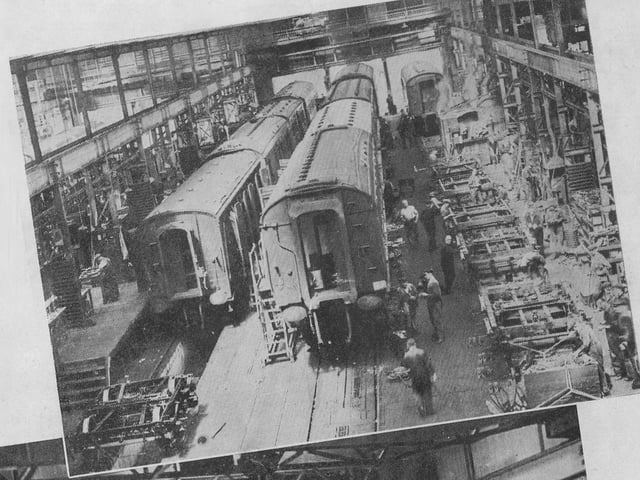
Around 2,500 vehicles were repaired each year, based on 1,950 employees working a 44-hour week.
Electric stock had begun to be introduced in the 1930s, with the first six-car set running from London to Worthing on January 1, 1933. Electrification came to Portsmouth a few years later, though it was not introduced into Kent until the 1950s and the majority of Hampshire until the 1960s.
After the Lancing works were closed, this meant Southern stock had to be towed to and from Eastleigh by steam because they did not have the third rail. Ian said it was a 'crazy decision'.
The only two double-decker trains designed by Oliver Bulleid were built at Lancing, 4001 being completed in September 1949 and 4002 in October 1949.
Ian said: "The reason for the double deckers was particularly the overcrowding on the services from Charing Cross to Dartford. Only two were ever built by Southern.
"It was an absolutely brilliant design, however the failure was the length of time at stations with people getting off and on."
One of the last jobs before the works closed was to refurbish the railway carriage that became the hearse for Winston Churchill's funeral train in January 1965. They repainted it in the Pullman livery of umber and cream.
Ian said: "It was a very sad time."
The closure of the works was announced on Wednesday, September 19, 1962. There were 1,683 people employed there at the time, around 800 of them living in Worthing, Lancing, Shoreham and Sompting. According to that week’s edition of the Worthing Herald, the workforce were ‘shocked and dumbfounded’ by the news.
After the closure, that prestigious final build was marked with the naming of the replacement, the Churchill Industrial Estate. Land and buildings were sold off in packets for industrial development and as the estate was developed.
It was rebranded Lancing Business Park in 2004, after a period of successful work led by Adur District Council to build a community between residents and the businesses based there.
9. Lancing Carriage Works
This photo of Ian's father was staged for a brochure, he believes, as the two parts being put together in the picture did not actually match Photo: Ian Richardson
10. Lancing Carriage Works
Lancing became the main workshop for the repair of steam-hauled, electric and diesel-electric coaching stock in the Southern region Photo: Ian Richardson
11. Lancing Carriage Works
Around 2,500 vehicles were repaired each year, based on 1,950 employees working a 44-hour week Photo: Ian Richardson
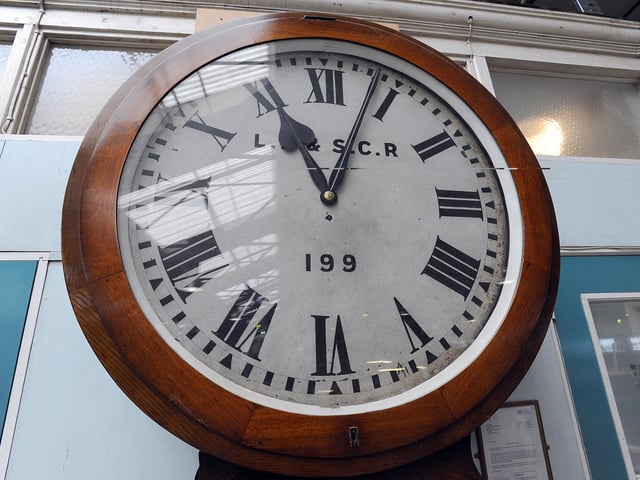
12. Lancing Carriage Works
The original Lancing Carriage Works clock from the days of London, Brighton and South Coast Railway Photo: Stephen Goodger