

Talks, tours and get togethers during Quaker Week have helped to highlight the story of Quakers in Chichester and some of the associated landmarks.
Author and journalist Michael Gilson, who conducted a two-hour tour on September 27 to launch the week, said: "I think people were surprised there was so much Quaker history in Chichester.
"While relatively small in number, I think they played an outsized role in the history of the city. We were delighted to explain a bit of this history and to explain what Quakerism stands for."
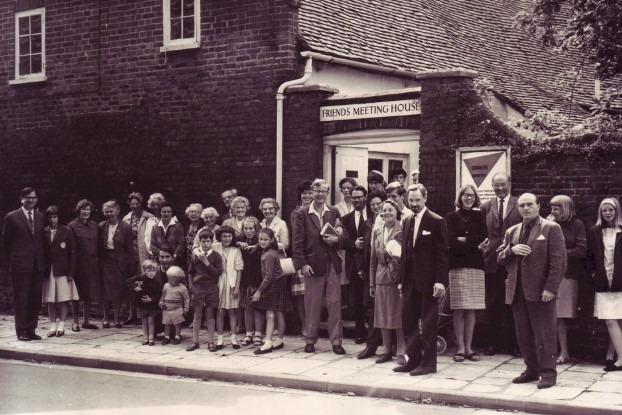
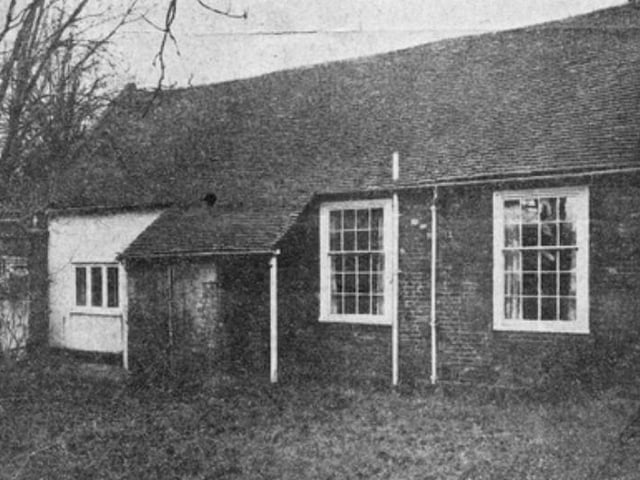
A long-since demolished jail, the site of one of the first free schools in the city and the home of the man who helped found Adelaide in Australia were some of the landmarks revealed on the tour, along with Friends Meeting House, in Priory Road, which has been a place of worship since 1700.
George Fox, founder of the Quakers, formally known as the Religious Society of Friends, brought the faith group to Chichester in the 17th century.
Michael Woolley, late mayor of Chichester, set the scene in his history of the Quakers, published by the Religious Society of Friends: "On a Saturday in the late summer of 1655, a strange little group made its way from Arundel into Chichester. They almost certainly approached the town down the street called St Pancras, which led to one of the city's still standing gates.
"Most of the buildings both in the street and in Eastgate Square had been flattened in the Civil War 13 years earlier and apart from a little row of newly-built cottages adjoining the site of St Pancras church, there would have been a clear view of the city walls."
Fox, a roaming preacher, was a difficult man, given to impenetrable silences, interspersed with passionate and sometimes lengthy outbursts, but he inspired tremendous loyalty. Michael said it was unlikely that he had been an easy travelling companion. He was outspoken and uncompromising, with a penetrating gaze.
"He was a powerful and highly complex person who, despite his humble origins, and his remarkable ability to annoy people, was a national character," explained Michael.
"He and the MP for Chichester at the time, William Cawley, were products of the Reformation, the break from Rome under Henry VIII. People began searching for some kind of truth after the tumult and Fox’s charisma ensured it was the Quakers that many turned to to find this new way."
The house of John Smith, near The Eastgate pub, in The Hornet, was one of the first places Quakers used for worship in Chichester.
It was a time of huge religious persecution and for months, the Friends suffered. On one occasion, soldiers violently broke the glass windows, smashed the tables and benches to pieces and were rude and abusive to the women before dragging the whole assembly out by force. Informers returned repeatedly, often drunk and accompanied by soldiers.
Fox and other Quakers were even imprisoned for their beliefs. The Quaker Act of 1662 required subjects to swear an oath of allegiance to the king but the Quakers refused, believing all men were equal under God and all should be treated with equal respect.
It became illegal to refuse an oath and illegal for five or more Quakers to assemble for worship. The Arundel Meeting was raided and members taken to Chichester to be sentenced.
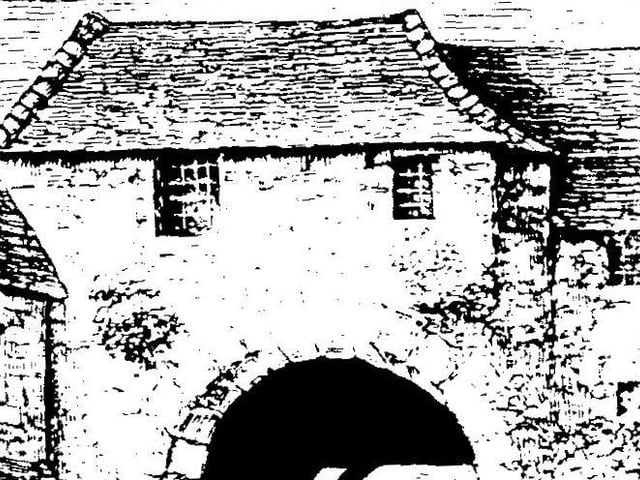
Michael said: "They were hobbled together in chains and paraded down the main streets to the jail above the East Gate, where they were treated very brutally by the jailer. The Arundel men were asked a groat a night and Friends who wouldn't pay, as a form of protest, were harshly treated."
Margery Wilkinson, who met Fox when he first arrived in Chichester, went on to be a leading Quaker. She held First Day meetings in 1669 in her house in North Street, now the Chestnut Tree House shop.
Three years later, Margery, together with Richard Green, Edward Hamper and others, leased a piece of land in The Hornet for use as a burial ground. This area next to La Fish is now a Quaker freehold, let to the district council as a small garden.
Two Lancastrian schools were set up by Quakers in 1812 to give free education to city children, one in East Walls and the other at the old Army and Navy site.
They were inspired by Joseph Lancaster, who had set up a free school in London in 1801 and visited Chichester on September 13, 1810, at the invitation of economist John Barton and his friend, the composer John Marsh.
Michael said: "Lancaster spoke about his monitorial system, which basically consisted of a teacher drilling older pupils who then drilled younger ones, allowing one adult to instruct very large numbers of children.
"Following his visit, committees were formed, subscription lists opened and by 1812, two schools were established. The schools were non-sectarian and though Friends took a leading role in their establishment and management, the vast majority of the pupils were from the Church of England.
"When the state system finally absorbed the two secondary schools, they were allowed to keep the name Lancastrian until late in the 20th century."
Barton also founded of the Chichester Mechanics' Institute in 1825 to provide adult education for skilled men.
Other notable Quakers include William Smith, who lived in South Pallant and was mayor of Chichester six times. In 1887, his second year as mayor, he took a prominent part in Queen Victoria’s Jubilee celebrations and planted the first memorial tree in Jubilee Park.
He worshipped at the Meeting House in Priory Road but was often alone in the simple, elegant, old room where so many had sat before. When he moved to Rustington as an elderly man to be with family in 1908, the meeting house was closed due to lack of members.
James Hack and Charles Dendy founded the Chichester Bank in 1809. This independent bank operated from premises in East Street and prospered throughout the 19th century, eventually being incorporated with Barclays as a going concern. The present 1961 building has a plaque in the porch commemorating the Hack Dendy partnership.
James' brother, Stephen Hack, founded a leather merchants in Little London in 1804 and his nephew, Barton Hack, was one of the founding fathers of Adelaide in Australia. Barton and his family had sailed south for the sake of his health, having been advised by his doctor to seek a better climate.
The Quakers role in the story of Chichester was news to many, Michael said, after a successful Quaker Week. The theme of this year's event, which ran from September 27 to October 5, was Tranquillity in a Time of Turmoil.
Michael said: "Quakers is an equal community of worshippers meeting together quietly, finding strength and inspiration for actions. Out of this tranquillity, they support and actively work on campaigns for peace, climate justice, equality and against discrimination."
1. Quakers in Chichester
The opening of the current Chichester Meeting House in Priory Road in November 1967 Photo: Chichester Quaker Meeting
2. Quakers in Chichester
The original Chichester Meeting House in the 1680s Photo: Chichester Quaker Meeting
3. Quakers in Chichester
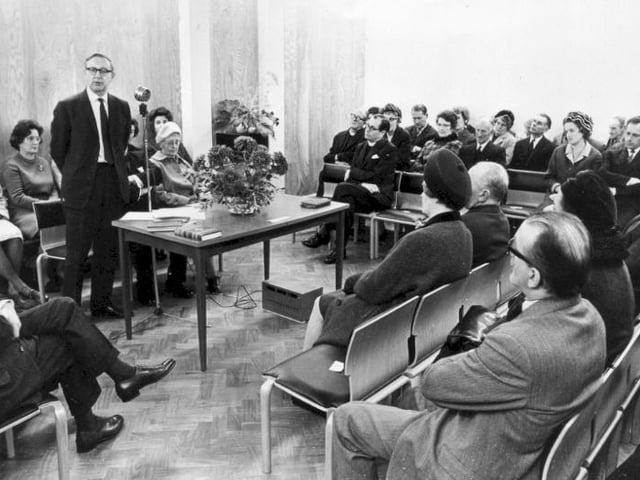
Ormorod Greenwood opening the new Meeting House, which replaced the 1700 building on the same site Photo: Chichester Quaker Meeting
4. Quakers in Chichester
This picture of East Gate of Chichester by Grimm in 1782 shows the cells where the Quakers were jailed Photo: Chichester Quaker Meeting