
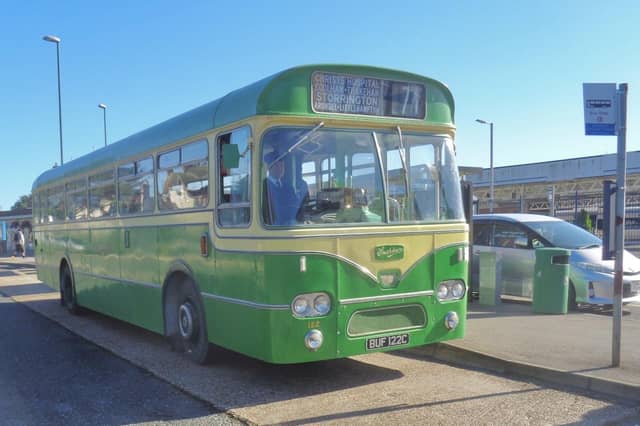


Paul Landymore and Paul Llewellyn organised the exclusive trip to mark 53 years since the bus company closed its depot in East Street, Littlehampton.
It was a bombshell for the depot's 60 staff, who were devastated to hear Southdown planned to withdraw or greatly reduce the frequency of most of its rural network of bus services in West Sussex.
At the time, Littlehampton was the biggest of three West Sussex depots facing the axe, with staff including drivers, conductors and maintenance staff. Also under threat were Pulborough with 12 employees and Petworth with three.
They were warned in September 1971 that the garage was likely to be closed, as fewer staff would be needed if the drastic cuts to rural services went ahead.
To mark this event, a re-run of service 71 was planned on Saturday, September 28, with two former Southdown buses, and 12 free tickets were offered to Arundel and Liittlehampton residents via the Worthing Herald and Littlehampton Gazette.
The aim was to rekindle memories of the lengthy cross-country Southdown route introduced in the summer of 1945, from Horsham via Christ’s Hospital, Storrington, Amberley and Arundel to Littlehampton.
The 1965 Leyland Leopard with Marshall bodywork, provided by long-time Southdown driver Norman Stanbridge, and a 1976 Leyland National owned by Paul Llewellyn, were timetabled but on the day, the National suffered an electrical breakdown and it was left to the Leopard to carry out the trip alone.
It was already gleaming in the sunshine at Horsham, ready for the 10am departure, when the message came through. The passengers boarding were a mix of enthusiasts and local people who had read about the run in the newspaper.
James Freeman said: "Heading south from Horsham, we soon turned off the main road to travel through Christ’s Hospital along roads not quite wide enough to allow 'Chelsea Tractors' to pass the bus without some fun and games.
"Several passengers were picked up at Barns Green, where the appearance of a full-blown Southdown single-decker, complete with accurate blinds, caused a minor sensation: 'it’s 59 years late!', as one wag put it.
"Then it was on via Coolham crossroads to Storrington, which on a sunny Saturday morning was awash with cars causing long queues, but it was not too bad for the bus, as it swept impressively into the bus station.
"After a quick comfort pause, it was on towards Arundel, through Amberley, known for its famous Chalk Pits Museum. But before that, we turned off to divert through the pretty little village of Amberley itself. When the route last ran, way back in 1971, it was unlikely that all the villagers had cars but in 2024 there were lots of parked vehicles, making progress along the main street a somewhat tortuous process.
"Attractive Arundel is a tourist hotspot and several intrepid travellers aboard opted to leave the bus here, to rejoin it on the way back. The bus stand at Riverside was unfortunately blocked by an articulated lorry, which rather cramped 122’s style as it unloaded. Half an hour later saw the Leopard arriving at Littlehampton, just off East Street and round the corner from the one-time Southdown depot. Its arrival was greeted by several photographers, some having travelled considerable distances to witness and record the event.
"Due to the closure of the Banjo coach park on the seafront, Paul Landymore had made arrangements for the bus to be parked at the leisure centre, a little bit further east. This involved the special unlocking and opening of a height barrier, which was duly carried out.
"After the lunch break, it emerged that the staff member who had opened the gate had gone off duty taking the only key with them! Half an hour of frustration followed until a manager appeared to open the gate and the bus could escape.
"Departure from Littlehampton was therefore half an hour late but once everybody had heard the story ('You just won’t believe this, but...!') no harm was done and the bus headed north towards Arundel.
"The return run was a lovely ride through the West Sussex countryside, retracing the outward route and happily meeting fewer oncoming vehicles in the narrower parts.
"All-too-soon the trusty Leyland Leopard was driving into Horsham, stopping first at the Carfax, before heading for the station and the final terminus.
"The bus had performed faultlessly, being more than capable of all that was asked of it. Fitted with a four speed manual transmission with conventional clutch, it had a twin-speed rear axle, controlled by an electrical switch on the steering column, which gave it great flexibility and a surprising turn of speed.
"Compared to today’s buses, all automatic and power-assisted, it was definitely a heavier drive, but all very firm and reassuring. For the passengers, of course, the three mountainous steps at the entrance were quite a challenge – people didn’t know any different when these buses were new, but that’s how you see that progress has been made in accessibility.
"But, steps or no steps, for a pure wallow in nostalgia, this Southdown trip to the seaside in the sunshine was hard to beat as a way of spending a September Saturday."
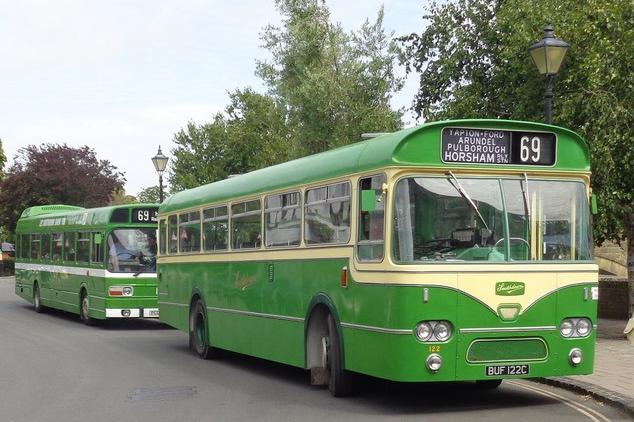
9. Southdown service 71
At Arundel two years ago, two Southdown buses that were new in 1963 and 1975. Picture: Paul Landymore Photo: Paul Landymore
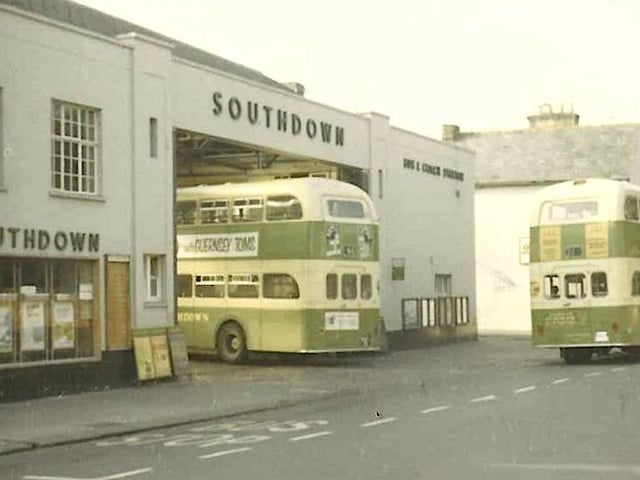
10. Littlehampton Bus Garage
Littlehampton Bus Garage in June 1970 Photo: Paul Landymore
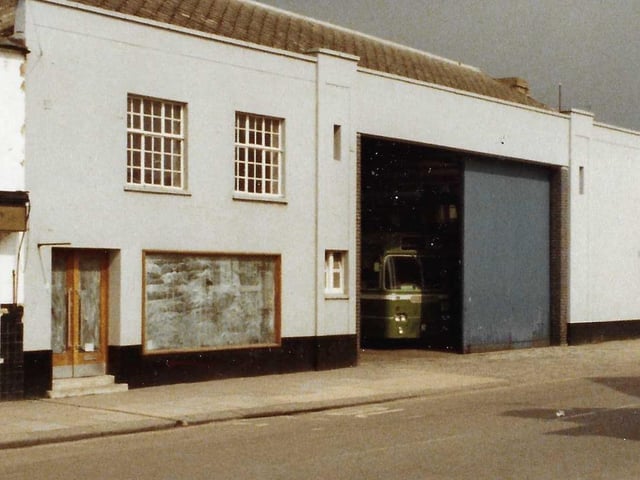
11. Littlehampton Bus Garage
Littlehampton Bus Garage in April 1978, being used to store buses not required in service Photo: Paul Landymore
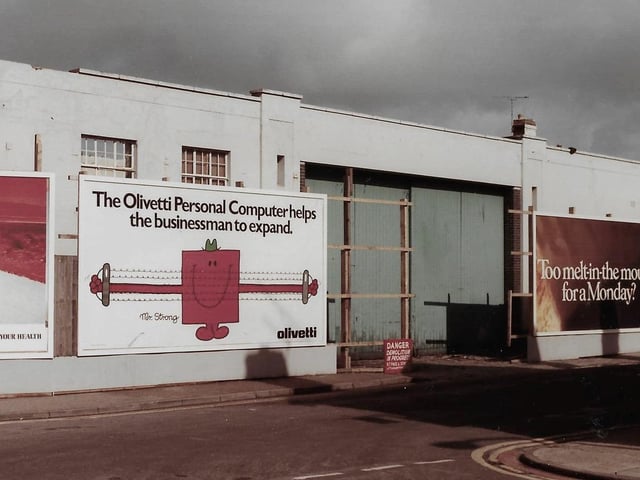
12. Littlehampton Bus Garage
The site in March 1985, two months before the former bus garage was finally demolished 14 yeas after closure Photo: Paul Landymore