
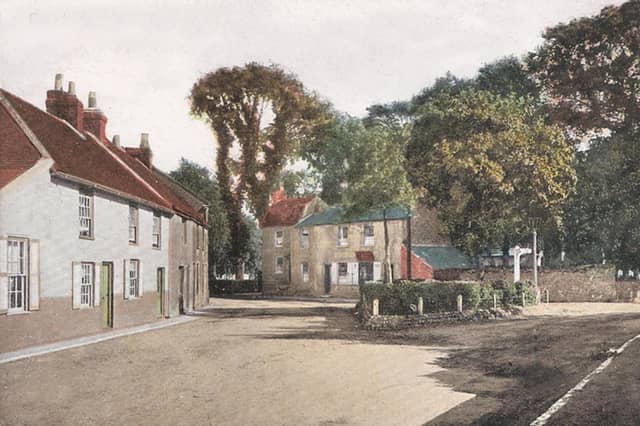


History enthusiast Ian Richardson has made Broadwater the focus of his latest talk, a two-hour pre-recorded tour featuring some superb photos and maps of the area over the years.
He intends his recordings to provide a history of Worthing for future generations and hopes they will be helpful, particularly to students.
Ian said: "Being involved in our town's history makes a great study for all who want to investigate - a great opportunity to become engulfed in the future, discovering more and more of our town's past history.
"The borough and district recordings I have made are free to watch, however, I do kindly request each show organiser for a donation to be made towards a community facility here."
The Top Tier Broadwater, with background music from Worthing composer Charles Williams, starts with an aerial photo showing Dominion Road, Broadwater Manor and Broadwater Green, and continues with an aerial flight simulation across the village.
Ian said: "The ancient parish of Broadwater formerly contained separate settlements, namely Broadwater, Offington and Worthing. It was increasingly dominated and finally engulfed by the growth of Worthing."
A 1778 map shows little more than the church, the site of the manor house, The Quashetts footpath and the 'modern' South Farm Road, previously the main thoroughfare, named Brooksteed Lane.
Ian said: "You have got the shoreline in 1778 and a further line showing the possible Saxon shoreline. It is a very interesting map, showing how much the sea visited, coming up close to the great village of Broadwater."
A slightly later map shows a tidal inlet taking water across to Tarring, over to Brooklands and up to Sompting.
There were significant changes over the next 100 years and in 1894, that part of Worthing became a civil parish.
The oldest part of the village centres on St Mary's Church, where tombs were used by smugglers for more than 140 years. Ian has photos of the church in various states, including the spire that was taken down in 1826 and the turret that replaced it but this was later removed.
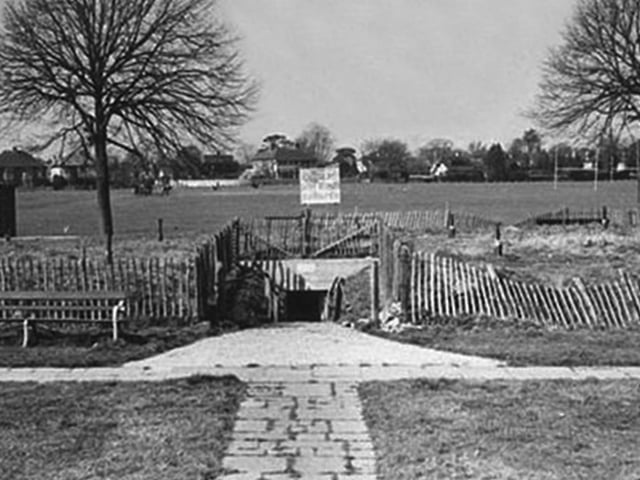
Various pictures show Broadwater Green over the years, including its ducking pool and cucking stool, the air raid shelter, midsummer tree and water fountain, which included a horse trough.
He added: "At the end of the 19th century, surprisingly, they used quite a large portion of Broadwater Green, on the north-eastern flanks, as a public stone and gravel pit.
"Following this purpose, the parish council decided that they would turn it into a pond. Then, a few years afterwards, they decided they didn't want a pond and it should go back to a full-size Broadwater Green."
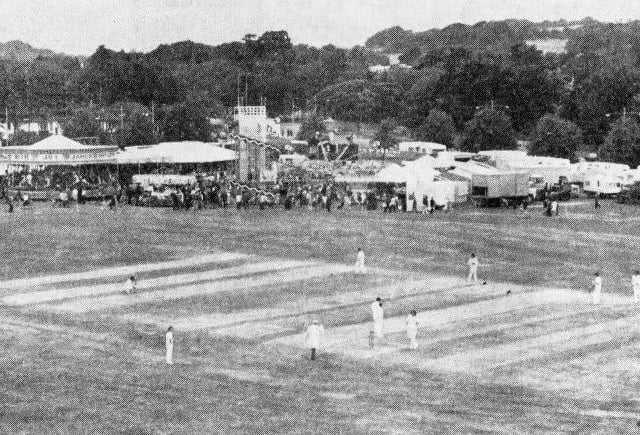
Fairs have been held since 1313 and in more recent years, a funfair has regularly visited the green each June. A picture from the 1960s shows one such fair taking place while a cricket match is in play.
Ian said: "Cricket was first recorded back in 1720. Sheep used to graze on the green for many, many years and the only time they were actually moved away was on Saturday afternoons, when the local cricket club wanted to play."
Part of the collection features the original Broadwater Bridge. This was built in 1852 and the same year, Worthing Corn Exchange was built alongside, on the north side of the railway line. This building was later used as the headquarters of the Civil Defence Corps in Worthing.
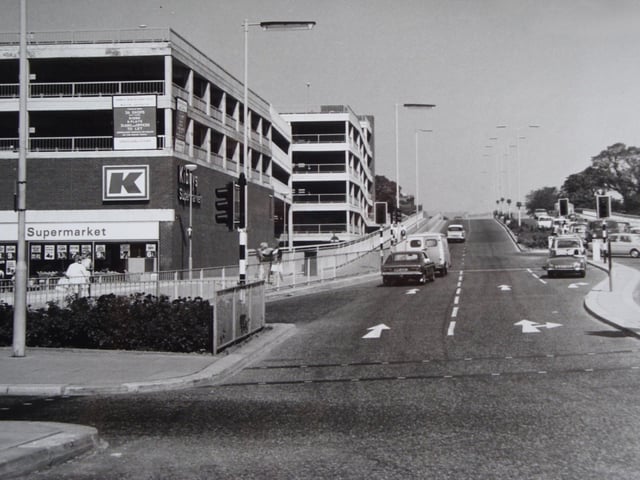
Photos show the demolition of the old bridge before the current Broadwater Bridge was built in 1969, along with Teville Gate Shopping Centre on the west side. On the other side of the bridge, The Co-op store, now Morrisons, was built in 1988.
Ian's presentation covers a wide range of landmarks, including Charmandean, a manor house built around 1810 by the Thwaytes family and demolished in 1963 to make way for housing development.
Comedian Arthur Askey lived on the Charmandean estate, at the top of First Avenue, and Ian has a picture of his thatched house, called Grey Wickets, as it looked then.
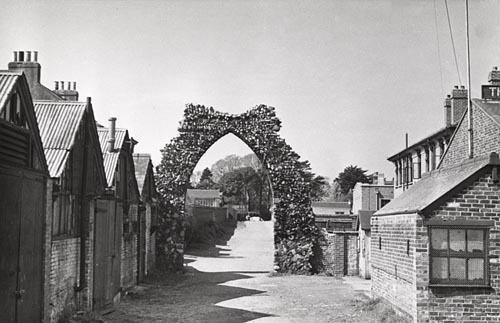
There are a few pictures of the arch built by Dr Cyrus Elliott from large stones, which later became covered in ivy, hence the name Ivy Arch Road today.
Also featured are The Cross, Decoy Pond, the glasshouses, West Worthing Laundry and Broadwater Mill, which opened in 1820 and was demolished in 1920.
It is wonderful to be able to see the many shops that used to be in Broadwater, both in the village centre and other parades, like Dominion Road.
Ian said his talks take two to three months to put together. His previous projects have included Top Tier Worthing Pier, Goring Nooks and Crannies, Worthing town centre, Lancing Carriage and Wagon Works, and Top Tier Durrington High Salvington.
5. Broadwater
The current Broadwater Bridge was built in 1969, along with Teville Gate Shopping Centre on the west side Photo: Ian Richardson
6. Broadwater
The arch built by Dr Cyrus Elliott from large stones, which later became covered in ivy, hence the name Ivy Arch Road today Photo: Ian Richardson
7. Broadwater
A picture from the 1960s showing a funfair taking place while a cricket match is in play on Broadwater Green Photo: Ian Richardson
8. Broadwater
The air raid shelter on Broadwater Green, now used by Worthing Fire Station for training exercises Photo: Ian Richardson