

The former waste tip on the border of East Worthing and Lancing was turned into Brooklands Pleasure Park in the 1950s and Worthing Borough Council is now keen to see the completion of its transformation into a green space for recreation, biodiversity and community use.
Local historian Ian Richardson charts the history of the site in his latest film, Historical Look at Brooklands Park. He runs the Surfleet Worthing and District History Group at East Worthing Community Centre and Steyne Local History Study at the Ardington Hotel.
Ian said: “Hundreds and thousands of people enjoy this particular spot between Worthing and Lancing, and the film gives a brief history of this area from quite ugly times to, as we go forward, much greener.”
The Teville Stream runs through East Worthing and flows into the lake at Brooklands. The route is now fully piped but Ian remembers the stream exposed and looking beautiful when he was a boy, surrounded by trees and wildlife.
He has an early 20th century map showing the Teville Stream, the Lancing Carriage Works and the wastewater treatment works in East Worthing on the site of Brooklands.
https://www.sussexexpress.co.uk/heritage-and-retro/retro/history-of-lancing-carriage-works-told-in-pictures-after-years-of-building-special-collection-4982544
Water flowed from Sompting Brooks, Broadwater Brook and the Teville Stream, making up the Ham River, flowing into Brooklands.
Another picture shows the site in the Second World War with anti-glider defences, in case of a German invasion.
Ian said: “It's useful to see this photograph because you get some idea of the landscape, with Sompting Parish Church and Sompting Abbotts in the distance.
“It was very rugged, quite a wild landscape about 100 years ago. There were once boats on the beach on the south side of Brighton Road.”
One picture shows a line of cars parked on the west side of Western Road.
Ian said: “One thing's for sure, those families in those cars have not come to Brooklands, because it was a rubbish tip at that time. They've probably come some distance, not from Lancing or Worthing, down to the seaside.
“It was a very sad Brooklands, neglected as it was up until the mid-1950s. Probably for the Worthing councillors at the time, it was out of sight, out of mind – put the rubbish over towards East Worthing and Lancing.”
Henry Cookson could see the potential of the area, however, and in 1947, he decided to run a miniature railway, parallel to Brighton Road.
Ian said: “This was very, very popular. There's a couple of shots, one where you can see the coaches have got WMR on, and I would assume that would be Worthing Miniature Railway. It was a great idea and really, he was a pioneer of bringing pleasure to Brooklands.”
It was in the 1950s that work began to turn the old rubbish tip into a pleasure park and Ian has many pictures showing all the activity to convert the site for community use.
Ian said: “Positive changes probably came from the population of the Lancing, East Worthing and Sompting areas actually speaking to their councillors and saying 'enough's enough, do something'.
“The sluice gate was constructed adjacent to Brighton Road, at the southerly point of Brooklands. Once upon a time, the beach inspectors used to come up to the sluice gate, attend to the lock there and when there was potential flooding from heavy rain or high seas, they would deal with that responsibly.”
Photographs from the early 1960s show the construction of paddling pools. Ian said: “From memory, they were in the shape of various animals, a very clever idea.”
A further batch of photographs taken in the 1960s, 1970s and 1980s really shows off the beauty of Brooklands Pleasure Park.
Ian said: “For many years, the pleasure park catered for the community and there were many things for children to enjoy. One of the important ones was the miniature railway that ran 360 degrees around Brooklands from about 1965 to 2018, when the railway was closed down.
“Brooklands had its own golf course and even a mini golf course as well. For many years, Brooklands had its own karting track and this was a very popular venue. During the 1960s and 1970s, Brooklands even had pleasure fairs that came for one or two weeks during the summer.”
Ian says it was the Rampion Offshore Wind Farm that changed Brooklands and led the council to rethink its future.
“During the 2010s, Rampion wanted to build a wind farm off the coast of Sussex and particularly Worthing. There were 116 windmills that were positioned about eight or nine miles off the coast of Worthing.
“Their feed into Sussex was beginning at Brooklands and this really changed Brooklands forever. It has really had a new chapter, a much greener one, looking towards the environment with very attractive nature trails around this very special green treasure for Worthing.”
Further slides portray all the developments which have taken place in Brooklands during the past ten years or so.
Surfleet Worthing and District History Group meets monthly at East Worthing Community Centre on the third Monday of the month, 7pm to 9pm, and Surfleet Local History Study is at the Ardington Hotel, in Steyne Gardens, on at the end of each month on Tuesday, 10.30am to 12pm.
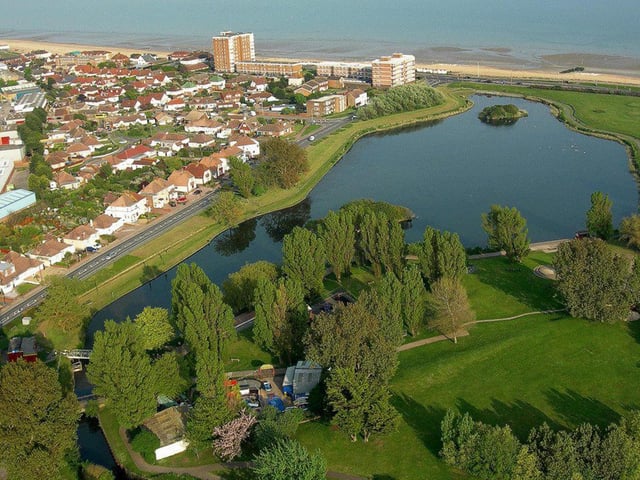
1. Brooklands Park
Worthing's largest park may have a planned future as a jewel-in-the-crown destination but it was once a muddy, stinking rubbish dump Photo: Ian Richardson
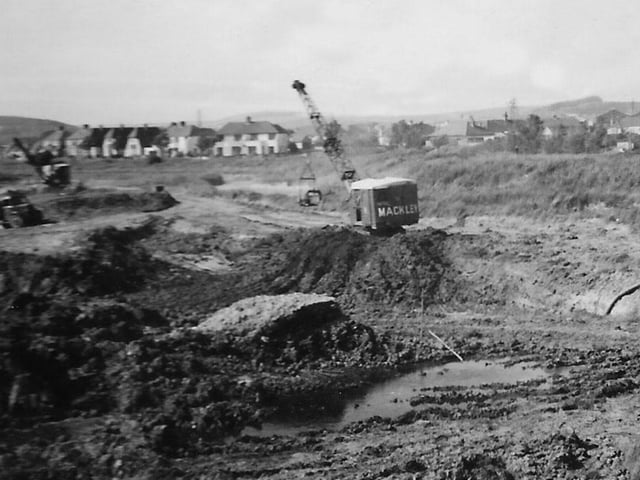
2. Brooklands Park
In the 1950s, work began to turn the old rubbish tip into a pleasure park Photo: Ian Richardson
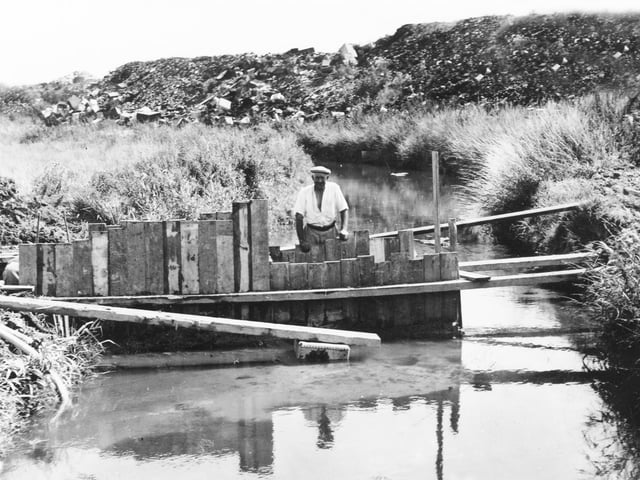
3. Brooklands Park
Water flows from Sompting Brooks, Broadwater Brook and the Teville Stream into Brookland Photo: Ian Richardson
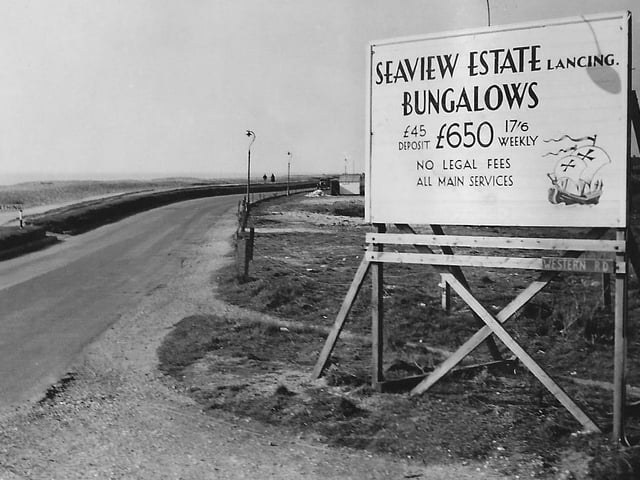
4. Brooklands Park
The transformation of the area began in the 1950s Photo: Ian Richardson