
Selsey Tramway – possibly the most unusual, problematic railway of the Chichester area
Selsey is a small working village, roughly eight miles south of Chichester. In the late 19th century, it was remote and isolated.
However, in 1895, under the Light Railways Bill, a railway line from Selsey to Chichester was proposed, operated by The Hundred of Manhood and Selsey Tramway Company.

By August 1897, the Selsey Tramway was born. The tramway linked the outlying villages south of Chichester, known as the Manhood Peninsula. This was especially important for local farmers, fishermen, and manufacturers, who could load their goods on to the tramway to bring to the Chichester markets, a journey that normally took two hours via horse-drawn carriage.
To avoid the strict safety regulations of a railway, a tramway was built which allowed for cheaper construction. The line had no level crossings or signals, and few engineering works were required, aside from a drawbridge over the Chichester Canal.
The mind behind the tramway was engineer Colonel Holman Fred Stephens. Stephens had been involved in the construction of at least 15 different light railways across Britain, famous for their economic build and use of second-hand equipment.
The Selsey Tramway was no exception. In total, it cost a meagre £21,000 to build – in comparison, the average railway at the time could cost hundreds of thousands of pounds.
The tramway consisted of approximately seven-and-a-half miles of track, with 11 stops in total, linking Chichester, Hunston, Sidlesham and Selsey, as well as privately-owned farms and Selsey Golf Club.
Only three of the 11 stops were manned – many were simply sheds on the side of the line. Extensions to the Witterings and Itchenor were later proposed but never constructed due to the outbreak of the First World War.
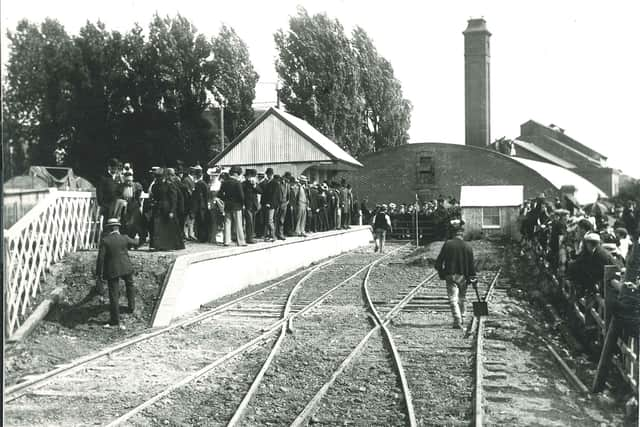
On August 27, 1897, a ceremonial opening of the tramway was held at the Chichester station, with the Selsey station still under construction. Crowds gathered for the unveiling, including Alderman Ballard, mayor of Chichester. They were disappointed when the first train arrived an hour late, setting the standard for the rest of its run.
The tramway was possibly the most unusual, problematic railway of the area. Delays were expected, with drivers seldom sticking to their schedules and frequent breakdowns. Animals on the line, weather-related issues and crashes were also common.
Journeys from Selsey to Chichester could take hours, instead of the intended 30 minutes. Cyclists were known to race the tram from Chichester to the final stop at Selsey Beach and, often, the cyclists won. Its slow journeys earned the Selsey Tramway one of its famous nicknames, the ‘Sidlesham Snail’.
In December 1910, the tramway found itself in one of its most serious predicaments yet. The sea had broken through the embankments near Pagham, causing severe flooding. Part of the tramway line was submerged, causing physical and financial ramifications.
The Sidlesham station had to be rebuilt and several pieces of track needed repairs. The tramway was forced to operate as two separate lines for a time, with a replacement horse-bus linking the two.
Despite its shortcomings, serious injuries from the tramway were rare. Most occurred at Stockbridge Road in Chichester – a lack of crossing gates meant the train often crashed into the side of cars moving across the line.
There is only one known fatality caused by the tramway, in 1923. The train jumped the rails near the halt at Selsey Golf Club, killing the engine’s fireman. Upon inspection, the tracks were found to be in poor condition and badly secured, forcing Colonel Stephens to introduce new equipment, including petrol rail cars.
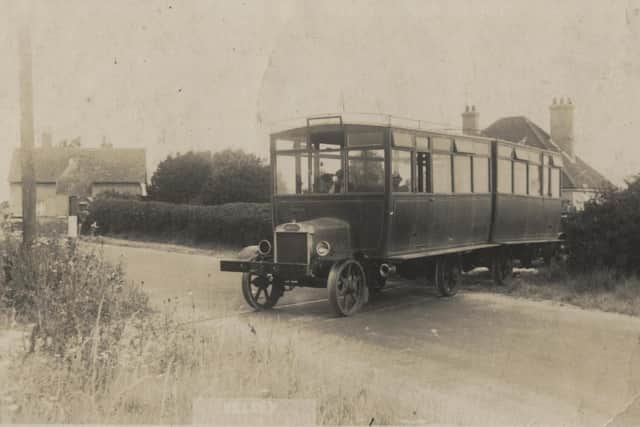
These rail cars resembled single-decker buses but they were adapted to run on rails with petrol engines. The cars were noisy and shook passengers about, earning the Selsey tramway another of its nicknames, the ‘Old Bumpity Bump’.
By the 1930s, bus services around Chichester were more reliable. The Southdown bus had been introduced, which also ran from Chichester to Selsey. Bus tickets were dearer and the journeys were longer but they were noticeably more comfortable than the Selsey Tramway.
Goods carriers, too, had begun to move away from horse-drawn vehicles and towards quicker motor haulage. The Selsey Tramway was being outcompeted.
By November 1934, only one daily service was running on the tramway and its last service ran on January 19, 1935. There were plans for Southern Railway to purchase the line but the cost of maintaining it was deemed too expensive. After 38 years of operation, the Selsey Tramway had come to its end.
Today, there is almost nothing left of the tramway. There are remains of the embankments near Selsey Golf Club where the train jumped its tracks and some concrete foundations where the Hunston drawbridge once was.
The Manhood Wildlife and Heritage Group released a revised Walk The Selsey Tram Way guide in 2022, mapping out a walkable route from Chichester to Selsey, which follows the journey of the line. They also restore bits of the tramway, such as station platforms.
The Selsey Tramway was fondly remembered by those who saw it and it played a vital role in the growth of Selsey. For a time, it was practically the only link between the Manhood Peninsula and the rest of the world.
If you wish to learn more, the Novium Museum is currently hosting a free exhibition dedicated to the Selsey Tramway. Walk the Selsey Tram Way leaflets are available to purchase from The Novium Museum shop.