

Steeplejacks installed a new weathervane on top of the 277ft spire on November 2, 2011, and the landmark sight was the 3ft cockerel gilded in Fairtrade and Fairmined certified gold.
The team climbed 131ft up 205 steps to reach the base of the spire and then ascended a narrow 146ft ladder, arriving finally at a tiny scaffold platform, erected around the Spire Cap especially for the project.
The gold covering the weathervane was sourced by Chichester-based ethical jewellers Cred from the Sotrami Mine in Peru, one of the first mines in the world to be certified to Fairtrade standards.
Fairtrade and Fairmined gold continues to provide a lifeline for thousands of impoverished and exploited miners in places like Bolivia, Colombia, Ecuador and Peru.
The cost of the weathervane project was borne by a private donor. Only 10g of gold was needed and it cost a modest £400 but the diocese said the wider ambitions of Fairtrade and Fairmined Gold were priceless.
Chichester Cathedral became the first public building to display ethically-sourced gold thanks to its pioneering collaboration with Cred and the Fairtrade Foundation.
Speaking at the time, the Very Reverend Nicholas Frayling, who was Dean of Chichester Cathedral, said: “With all that’s going on out there in the world this is a fantastic good news story for the cathedral.”
The gold mine in Santa Filomena, a village in the Atacama Desert, had been Fairtrade certified only a matter of months. Sitting at 2,400m above sea level in southern Peru, the mine provided the base material, which was sent to Italy to be turned into gold leaf. One of Florence’s oldest companies, Manetti has been producing premium gold leaf since 1600.
The mine was part of a new, revolutionary programme of Fairtrade and Fairmined certified gold that launched on Valentine’s Day in 2011. This was the world’s first independent ethical certification system for gold.
Certification enables businesses, from designers and retailers to fabricators and distributors, to offer their customers the guarantee of a product which has been responsibly mined.
Crucially, this means that small-scale miners receive a fair price for gold, ensuring a more stable future for their families and their communities.
The leaf needed to gild the weathervane was just 8 microns thick - 1 micron is 1,000th of a millimetre. The gold started life as a pure 24 carat but the leafing process introduces a small amount of copper, so it is made out of 23½ carat gold.
At the launch, Chris Davis from the Fairtrade Foundation expressed optimism that such gestures could inspire people to think more ethically when buying a wide range of products.
Just a few weeks later, the cathedral was in the news again following the restoration of the Shrine of St Richard, a place of pilgrimage since the 13th century. With visitors lighting candles and up to 200 written prayer requests being left each week, the work restored it to its former glory.
The shrine platform was cleared of all furniture, apart from the altar, which was set back to enhance the feeling of space. The Richard Stone was raised, having previously laid flat, and it was set below the altar with Saint Richard’s name gilded on it.
The surfaces of the altar platform were cleaned, revealing the original grey-coloured stone. The statue of Saint Richard was moved as part of the work and new kneelers and candle stands were placed a short distance in front of the shrine.
The refurbishment of the shrine was made possible with the help of a fund set up in memory of Bishop Eric Kemp, a former Bishop of Chichester.
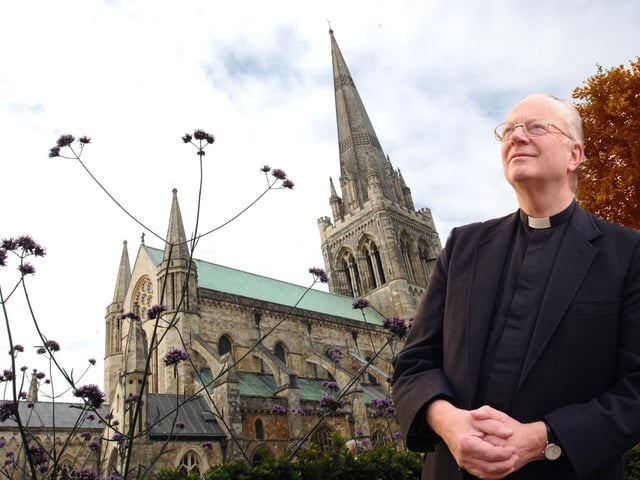
1. Chichester Cathedral
The Very Reverend Nicholas Frayling, who was Dean of Chichester Cathedral until he retired on his 70th birthday in February 2024 Photo: Louise Adams
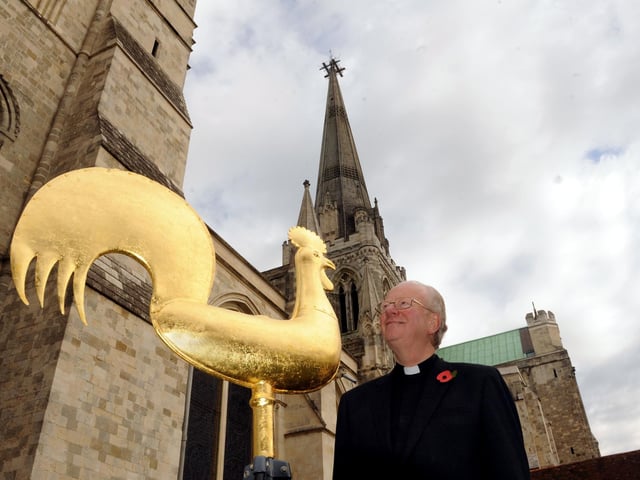
2. Chichester Cathedral
The Very Reverend Nicholas Frayling with the 3ft cockerel gilded in Fairtrade and Fairmined certified gold Photo: Kate Shemilt
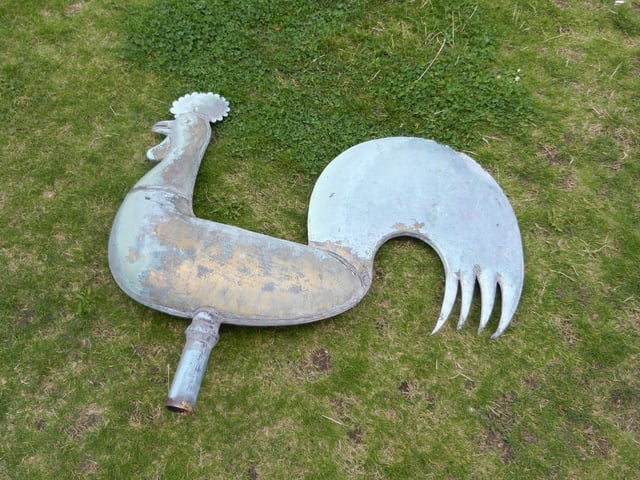
3. Chichester Cathedral
How it looked before, the weathervane taken from the top of Chichester Cathedral spire for refurbishment. Pic: Clare Hawkin Photo: Clare Hawkin
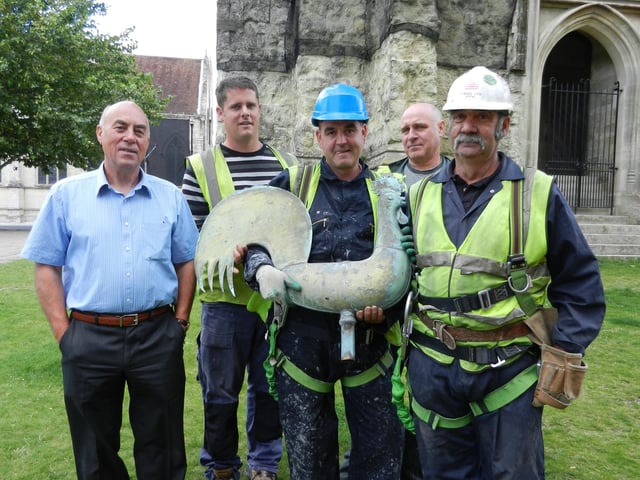
4. Chichester Cathedral
Chichester Cathedral's clerk of works Ralph Tyreman with Daniel Fallowfield-Cooper, Bernard Kuil, Dave Bull and Robert Harfield, steeplejacks who scaled the spire of Chichester Cathedral to take down the weathervane for refurbishment Photo: Clare Hawkin