

Delving back into the archives, we discovered several schools taking part in World War Two re-enactments, where the children were waved off by their parents.
One particular school took the extra step of involving the whole village, to given youngsters an insight into what life might have been like for evacuees during World War Two.
Pupils in years five and six at Upper Beeding Primary School took part in a re-enactment of evacuation as part of their No Time to Say Goodbye topic in January 2010.
What made it particularly special that year was the involvement of so many people from the local community. Beeding and Bramber Local History Society gave the school a great deal of help in tracking down people, documents and stories about life in the village during the war.
Society members went to the Gladys Bevan Hall, in Church Lane, Upper Beeding, to choose the children who would be billeted with them. They went with specific requirements, including boys to help look after the horses and 'nice' girls to help look after young children.
Christine Slator played the part of the school billeting officer, helping to place the children in suitable homes. It had even been arranged that a few pupils would not be selected, as happened in the war.
These children were taken to some houses in the village, pre-arranged with the school, where teachers would knock on the doors and ask people to take them.
As part of the topic, pupils researched what life was like for children in World War Two by using entries from the school’s log book. They discovered the first 210 children to arrive in Upper Beeding came on September 1, 1939, from the Bellender Road Council School in Peckham.
Following the evacuation, some of the people who billeted the children accompanied them back to the school to talk about their experiences of the evacuation.
Later the same year, history came to life for Southwick children when they took part in their own World War Two-style evacuation.
Year-six pupils from Eastbrook Primary School were evacuated from the school’s north site in Manor Hall Road to the south site in Gardner Road, Fishersgate, as part of their Battles, Bombs and Bravery topic in September 2010.
After catching the train from Southwick to Fishersgate railway station, the children were interviewed by their prospective host families.
The idea was to give them an experience of what evacuation felt like and to make their whole understanding of the topic a bit more real. They were asked to imagine that it was 1939 and they were part of the first evacuation leaving their school to go and live with a new family.
All the children taking part wore clothes from the era and carried gas mask boxes they had made themselves.
And in November 2010, pupils in years three and four at Shoreham Beach Primary School had to leave their parents behind to take part in their own evacuation.
They were waved off by their parents at Shoreham railway station as they boarded the 9.22am train. They were then met at Fishersgate railway station by an evacuation officer, before being taken to St Peter’s School in Shoreham.
The children were led into the evacuation centre to hear at first hand a recounting of life during the war in Shoreham before visiting an air-raid shelter under the school. They then spent the rest of the day taking part in World War Two activities.
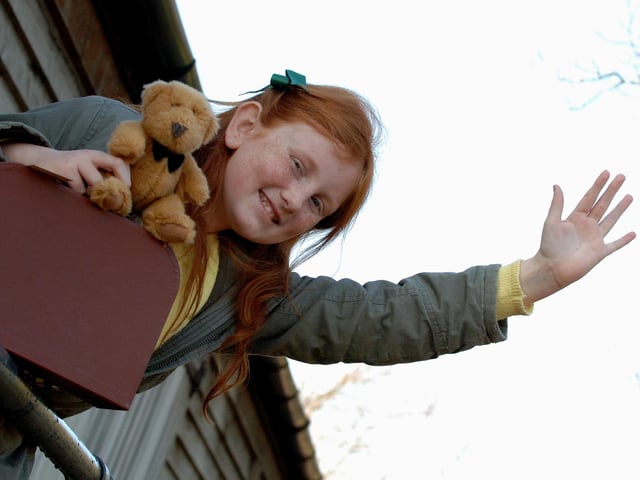
1. Evacuation Day
Lucy Norman from Upper Beeding Primary School being evacuated as part of a World War Two topic in January 2010 Photo: Stephen Goodger S04010H10
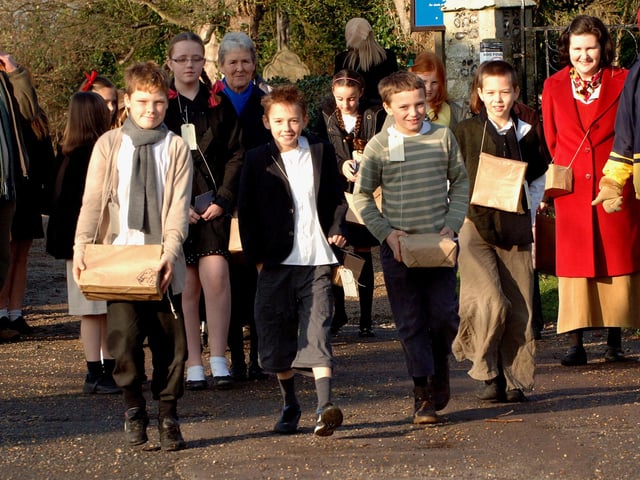
2. Evacuation Day
Upper Beeding Primary School pupils being evacuated as part of a World War Two Topic in January 2010 Photo: Stephen Goodger S04017H10
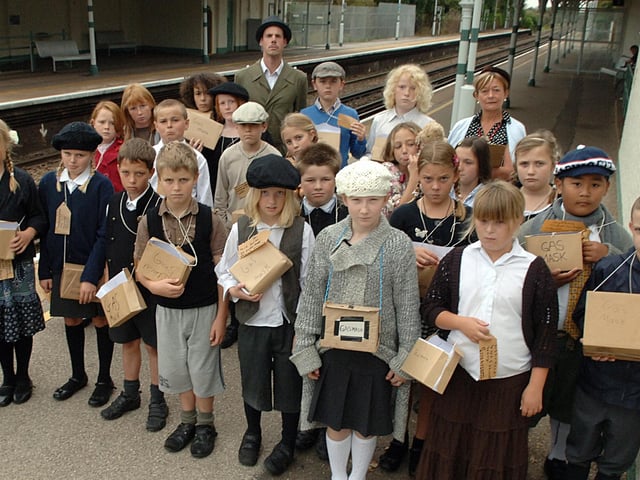
3. Evacuation Day
Eastbrook Primary School evacuees at Southwick Railway Station in September 2010 Photo: Gerald Thompson
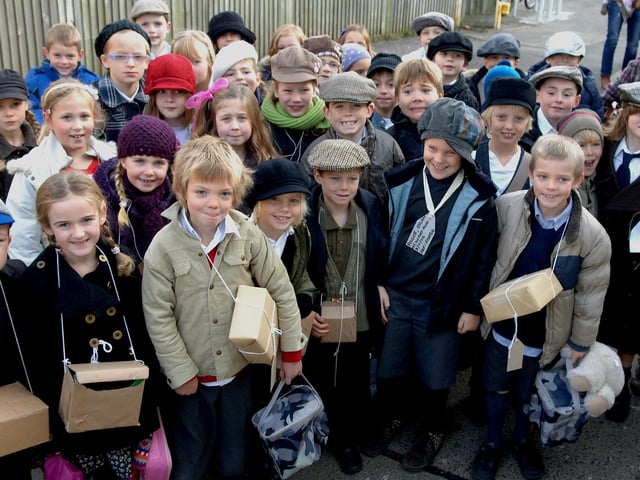
4. Evacuation Day
The World War Two evacuation at Shoreham Beach Primary School in November 2010 Photo: Gerald Thompson