

James Lillywhite was born in Westhampnett in February 1842. He played for Goodwood and Priory Park before becoming a professional cricketer at the age of 20.
A slow left-arm bowler, he was known as Jim and played first-class cricket for Sussex, appearing in all the county matches between 1862 and 1881.
In September 1871, James played for the United South of England XI in a three-day match against Priory Park, alongside all-time cricketing great W. G. Grace and his brother, George Frederick Grace.
The match report in the West Sussex Gazette reveals the Grace brothers were late, having missed their train at Salisbury. They eventually arrived during the lunch interval, to the cheers of the large crowd of spectators.
The great man made up for lost time, knocking huge sixes over Greyfriars and the refreshment tent, before falling three short of his century.
James contributed 42 with the bat, as well as claiming six Priory Park wickets in their first innings.
James toured Australia six times in total, the first with W. G. Grace, and at the age of 35, he became the first Test captain. The iconic game between Australia and England took place in March 1877 and Australia won by 45 runs.
According to Wisden Cricketers' Almanack: "There had been previous combinations to tour that country, but not until March, 1877, did the Australians regard themselves as strong enough to engage an English eleven on level terms.
"That their faith in themselves was justified is proved by the fact that they won by 45 runs, but in the return match played just afterwards England, who on the previous occasion had been compelled to take the field without a regular wicket-keeper, were successful by four wickets."
James' contribution was one wicket in the first innings, a catch taken by Andrew Greenwood to get Ned Gregory out for a duck, and one wicket in the second innings, bowling out John Hodges on eight. A hard-hitting lower-order batsman, he came in at number ten and scored ten in the first innings, before being caught and bowled by Tom Kendall, and four in the second innings, before he was bowled out John by Hodges.
It was thanks to Chichester Priory Park Cricket Club that James was able to play, as Sue Price recorded in her book, published to mark the 150th anniversary of the club.
A Brief History Of Chichester Priory Park Cricket Club reveals that it fell to the members, most notably Charles Stride and Arthur Hobgen, to provide the bulk of the money for James Lillywhite's trip to Australia – and if it hadn't been for them, the first chapter in the history of test cricket would have been delayed.
James was leading the touring side, playing a series of exhibition games. At the end of the tour, Lillywhite agreed to England playing against a combined Australian XI, a game recognised as the first official Test match.
A deed was executed between Stride, Hobgen, another member of the Hobgen family and Lillywhite to finance the tour. Months later, Test cricket was proving so popular that Lillywhite on his return was able to make straight for Charles Stride's office in Chichester to repay the debt.
James came from a notable cricketing family, having an uncle and three cousins who also played for Sussex. He was known for his organisational and promotional skills, a natural choice to lead the English team in Australia.
He kept The Wheatsheaf Hotel, in North Street, and was always a popular figure in Chichester. He even brought the England team to the city in September 1876 as a thank you for Priory Park's support.
The match saw Priory Park field 18 players – a bid by Lillywhite to even things up a bit – but, nevertheless, they managed only 70 and 38 for 14 against All England scores of 146 and 140.
James toured America in 1868 and for some years was secretary of the United South of England XI, as well as being an umpire.
He died in October 1929 at the age of 87, having been the last surviving member of the England team that played in the inaugural Test match. James is buried at St Peter’s Church in Westhampnett, along with three bishops of Chichester.
1. Cricketing history
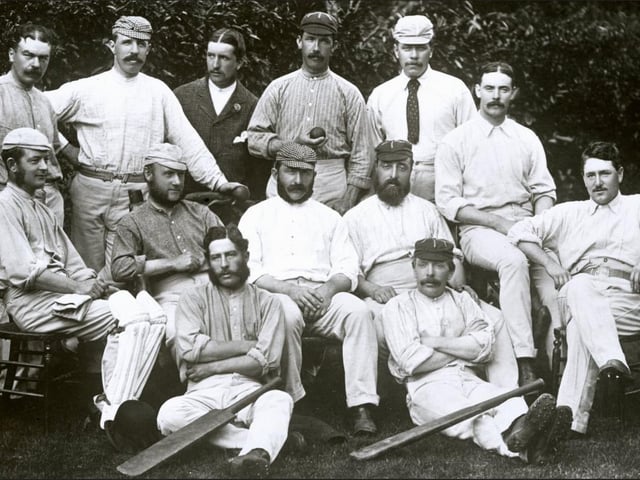
The English cricket team, captained by James Lillywhite, before they departed for their tour of Australia and New Zealand in 1876, back from left, Harry Jupp, Tom Emmett, R. Humphrey, Allen Hill, Tom Armitage and George Ulyett; centre, Ted Pooley, James Southerton, captain James Lillywhite, Alfred Shaw and Andrew Greenwood; front, Henry Charlwood and John Selby. Picture: Sussex Cricket Museum Photo: Sussex Cricket Museum
2. Cricketing history
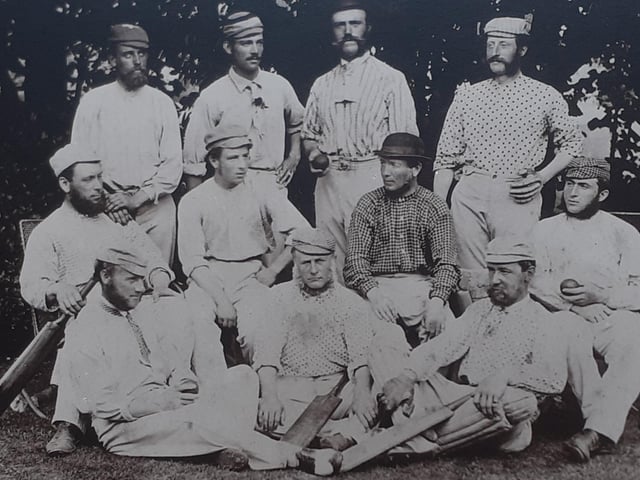
Sussex Eleven, August 14, 1867, with, back row from left, Killick, C.C. Ewbank, Stubberfield, C.H. Smith, centre from left, Ellis, Charlwood, Wells, James Lillywhite, front from left, Southerton, John Lillywhite, C Payne. Picture: Sussex Cricket Museum Photo: Sussex Cricket Museum
3. Cricketing history
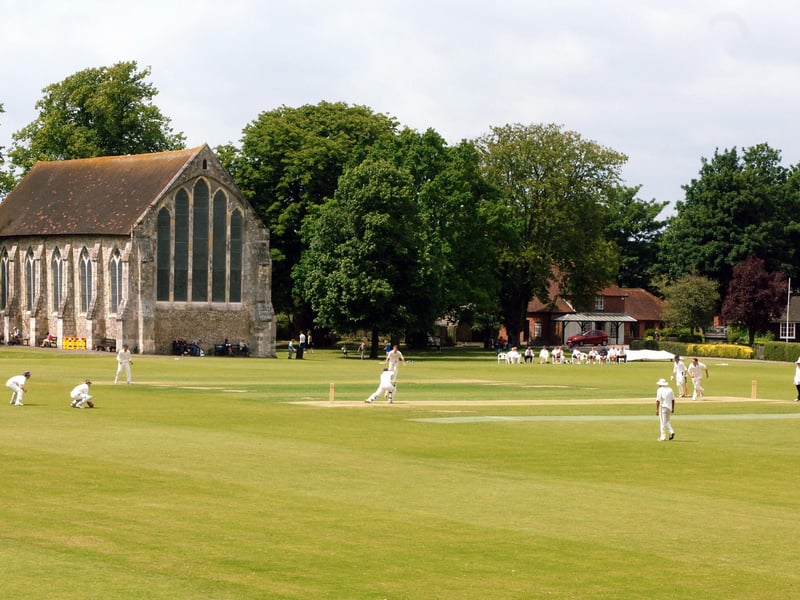
Chichester Priory Park Cricket Club played a part in the first Test match, by funding the captain's tour Photo: Malcolm McCluskey
4. Cricketing history
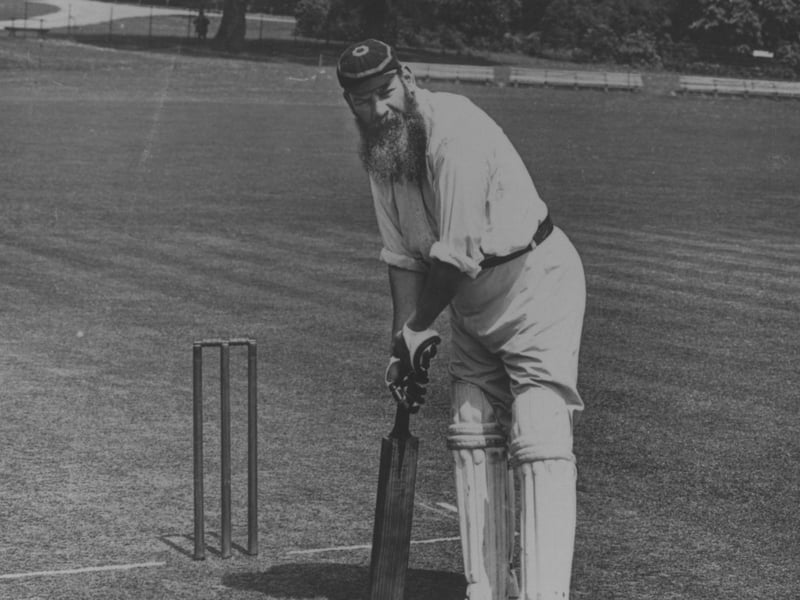
Legendary cricketer WG Grace retired from first-class cricket at the age of 60 Photo: Hulton Archive/GettyImages