

The UK overall has experienced one of its wettest winters since records began in 1836 but for southern England, it was only the fourth wettest. It was a different story in the West Midlands, Cornwall and Leicestershire, which all recorded their wettest winter on record, while Dorset and Warwickshire had their second wettest winter.
From December 2025 to February 2026, the UK experienced a conveyor belt of low-pressure systems, prolonged rainfall and little sunshine. Met Office statistics released on March 2 reveal, however, that southern regions recorded some of the mildest winter conditions, the eighth warmest winter since 1884.
Dr Amy Doherty, Met Office science manager, said: “February’s mild and notably dull conditions have brought a winter of considerable contrasts to a close. While February itself stood out for its exceptionally low sunshine and above average temperatures, the broader winter picture shows just how varied conditions have been around the UK.
"Some southern and central areas of the UK experienced persistent rainfall, leading to saturated ground and several areas recording one of their wettest winters on record. In contrast, parts of northern and western Scotland were markedly drier, which is notable given these areas are typically among the wettest in the UK."
Southern England's wettest winter was actually 12 years ago, in 2014, with 413.3mm of rainfall recorded compared to the 369.1mm recorded for south-east England and central South this winter.
The worst winter storms on record hit the Chichester area over Christmas in 2013 and the new year of 2014, causing widespread flooding, road closures and damage.
'Soul-destroying’ blockages flooded the A27, as well as nearby businesses, with the stretch between the Portfield roundabout and the A285 at Halnaker being particularly bad. At one point on Friday, January 17, 2014, the A27 at Chichester was closed between Tangmere and the Portfield roundabout after heavy rain caused flooding and a number of other roads were affected, including the A29 at Bury Hill.
The onslaught of heavy rain throughout January 2014 caused a groundwater flood alert for West Dean, Singleton, Charlton, East Dean and Chilgrove. Flooding disrupted roads around Stoughton, Walderton and Westbourne, particularly the B2147 and the A286 between East Lavant and East Dean, and the B2146 between Hairs Lane and West Marden was also temporarily closed.
Some roads in Bosham were flooded, including Brooks Lane and Taylors Lane, and there was a flood alert in place for the River Lavant, with alerts for West Dean, Singleton, Charlton, East Dean and Chilgrove. The A286 was flooded both ways between The Drive, Chichester, and Chichester Road, Midhurst, after the River Lavant burst its banks on January 24, 2014. The Environment Agency said it was because high groundwater levels were keeping the level of the River Lavant high.
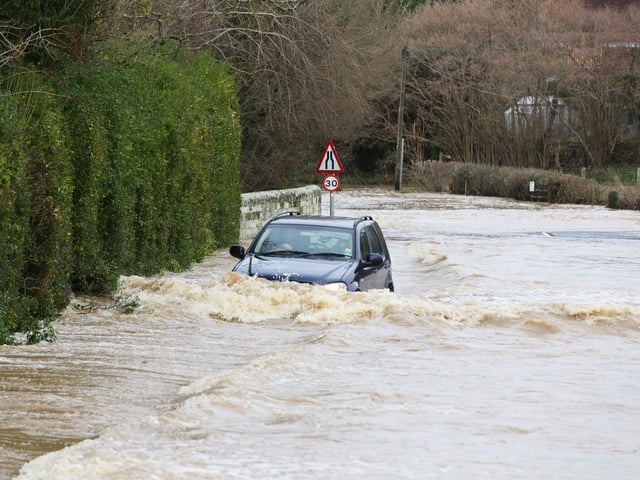
The River Rother also burst its banks, causing a catalogue of problems in Fittleworth, including the risk of flooding to homes from excess surface water on the recreation ground. At Pulborough Brooks, the winter floods were very dramatic, with two of the hides becoming inaccessible, and inevitably a significant clean-up operation was necessary once the floods receded.
Piles of pebbles were left on the storm-battered Bognor Regis seafront on January 9, 2014, after shingle from the beach was thrown on to the promenade by a week of strong gales and high tides. The maximum wind speed in the previous seven days averaged 52mph, measured by the town council’s weather observers, meaning some gusts were even stronger. The stormiest day saw a high tide of 6.3m at 12.22pm, accompanied by a gale force nine wind, sending spray across the promenade as the waves crashed against the shore.
Random acts of kindness from strangers helped a family in Midhurst when floods devastated their house, including doing their washing, while an 80-year-old woman woman was rescued by two unnamed knights in shining armour when she was left stranded in flood water near Woolbeding Bridge with a disabled friend. At the White Hart pub at Stopham Bridge, picnic tables were left in trees and £10,000 worth of damage was caused by a flood over the Christmas holiday.
The Met Office said it was unusual conditions in the tropics and stratosphere that gave rise to the very wet months of December 2013 and January 14. Climate change made a secondary contribution by increasing the moisture-holding capacity of the atmosphere.
The national meteorological service said: "The winter of 2013-14 will be remembered for many years for remarkably widespread and persistent flooding that affected many parts of England. Rainfall between December 2013 and February 2014 smashed previous winter records in numerous regions – including for the UK as a whole and for southern England.
"Some of these rainfall series extend back more than 250 years. The seemingly unprecedented nature of events – and further exceptionally heavy rainfall and flooding in winter 2015-16 – has led to questions about whether the UK is beginning to witness a dramatic change in its climate."
In February 2014, the Met Office noted unusual weather patterns globally and said this could be linked to the very wet weather. Over the course of a season, even influences from the other side of the globe can change the weather experienced in the UK.
Jeff Knight, lead author of a study published in 2017, said: “During winter 2013-14, there was very heavy rainfall over the Western Amazon - even greater than usual. This effectively created a disturbance to high-level wind patterns that propagated outwards from the tropics. At the UK’s latitude, it resulted in a southward kink in the jet stream that was very long-lived and brought storm after storm across the country.”
Workers at West Sussex County Council were praised in Parliament for working flat out to help people affected by storms and floods across the county. A total of 750 incident calls were dealt with outside normal working hours between December 23, 2013, and January 7, 2014. Of these, 250 were flooding related, while another 250 were to do with fallen trees.
1. Wettest winter on record
The River Rother burst its banks in Fittleworth on December 30, 2013 Photo: Eddie Mitchell
2. Wettest winter on record
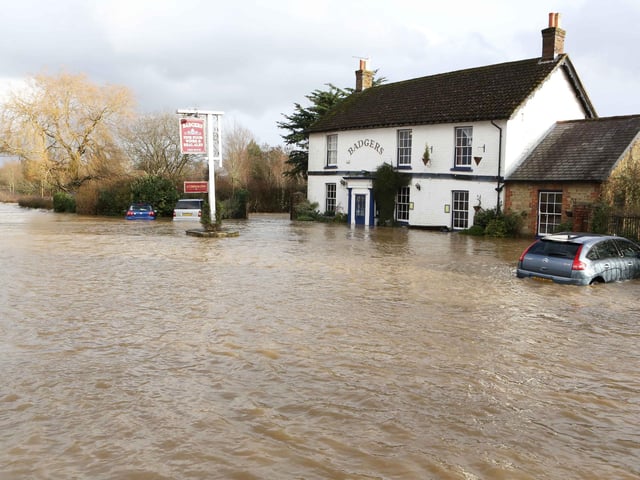
The Badgers pub at Coultershaw Bridge in Petworth on December 30, 2013 Photo: Eddie Mitchell
3. Wettest winter on record
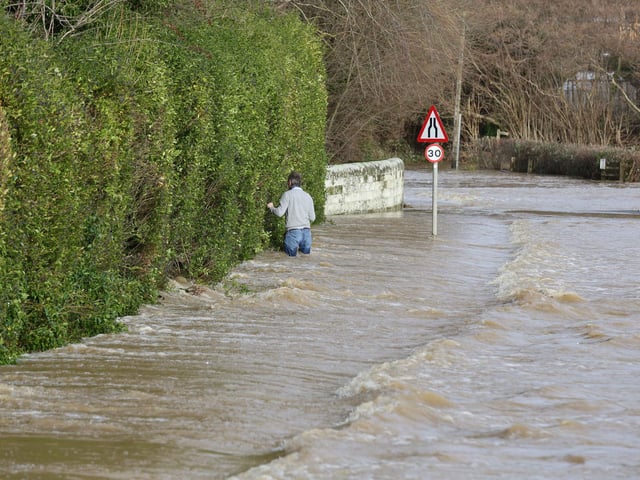
Walking through flood water in Fittleworth on December 30, 2013 Photo: Eddie Mitchell
4. Wettest winter on record
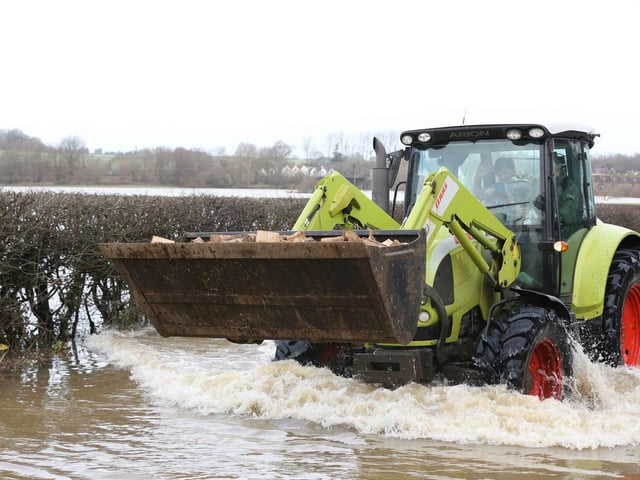
The A29 in Pulborough on December 30, 2013 Photo: Eddie Mitchell