

The locations of the bus stops have changed over the years, from the north end to the south end and now more in the middle, and the type of transport has varied, too, but fundamentally, if you want to get in or out of town, here is generally the place to start.
Some features of the street have stayed the same for decades but it is surprising how much has changed over the past 100 years or so. Traditionally, it has been home to long-standing department stores like Bentalls and Debenhams, for example, but these are all now gone.
Local historian Ian Richardson has created a series of films chronicling Worthing's past, including three covering the town centre's Montague Street, South Street and Warwick Street, to take people back on a journey through time.
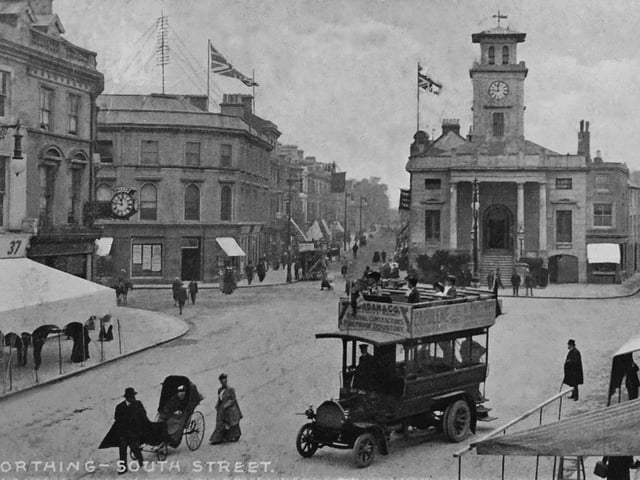
He said: “South Street has always been a major area for boarding buses going throughout Worthing and beyond. In the early 1900s, the new motor buses run by the Worthing Motor Omnibus Company began competing with the horse-drawn buses.
“It's very interesting, seeing the contrast of the new buses and the 19th century horses and carriages. One is seen advertising the Lavender Sanitary Laundry in Ham Road and Jordan & Co removal contractors and furniture depository.
“You can also see the beginnings of motor cars coming into the town and at the same time, deliveries with horses and carts. Bear in mind that in Victorian times, there were as many as 400 horses stabled in the centre of Worthing.
“In one photo from the early 20th century, there's a double-decker bus coming south along South Street, passing quite a busy pavement with horses and carriages offloading.
“It's interesting that people have decided to ride upstairs, probably to get a bird's eye view. It could be it's a very nice day as well, as you see the sun shades are being used. To the left of the bus, you've got an early disability carriage being towed. It could be the son pulling his mother in the carriage and his wife is by the side.”
The old Town Hall was at the north end of South Street and there were many gatherings outside it, in the town square, in times of joy and times of sadness. One example came just after the First World War, when Worthing received a presentation tank.
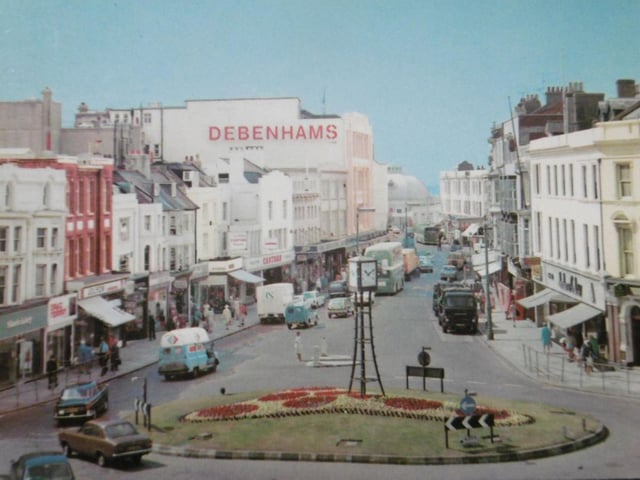
Ian said: “There was a wonderful roundabout, very attractive, particularly with its flowerbeds, and during the Second World War, it had a completely different purpose, housing an air raid shelter.
“I wonder how many of those people working neighbouring shops and banks actually used the shelter. I remember my mother telling me that before she joined up, she worked at Bentalls and that was very close, so she probably used the shelter.”
When Warwick Street was open to traffic, there were zebra crossings at the north end of South Street.
Ian said: “It was a busy junction. You can just see the congestion of traffic. There's Warwick Street with two-way traffic and a zebra crossing, which is quite challenging, I should think, to cross.
“Over many years, the town hall fell into neglect and disrepair, so the planners decided to do something new and turn this area into a sort of community area where you could sit and just chill out and watch the traffic.”
One place they may have studied was Lloyds Bank, on the corner. Ian wonders how many people were employed there in the early days and he has various photos showing how it has looked through the years.
He pointed out: “The population was very much smaller 100 years ago and yet Lloyds Bank thought of the importance of Worthing, to have such a major-sized branch.”
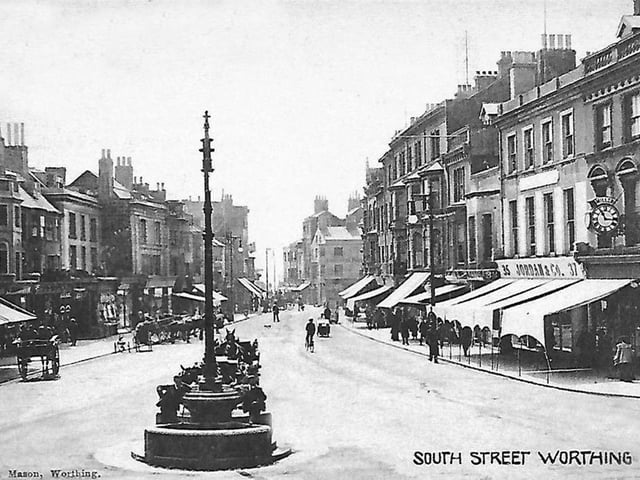
H.D. Jordan began trading at 27 South Street in 1885. Five years later, Mr Jordan took on a partner and Jordan & Gray took over 35-37 South Street. The shop was set out with drawing-room refinement and luxury, the furniture 'tastefully and invitingly placed so that one feels tempted to occupy one of those delightfully easy chairs at the risk of becoming the observed of all observers outside'.
In 1921, the firm became Jordan & Cook and Ian has a picture of its steam-driven removal van in about 1927. He said it remained Worthing's leading furnishers until the shop was taken over by Bentalls in 1979.
Walter Bros was behind the Marine Hotel. Billed as a drapery bazaar, it was a department store selling 'china, glass, stationery, toys, fancy good and drapery of all kinds'. Advertising banners urged people to 'try us', saying 'we have the reputation for sterling value in all departments'.
That whole building has gone and the south end of the street has seen many other changes, too, particularly in the aftermath of the fire that destroyed the Royal Sea House Hotel in 1901. Various photographs show the temporary shops and the development of The Arcade on the site of the hotel.
Ian said: “In one picture, the new shops have been built, including Burton the tailor, which was in this shopping parade for many years. Outside The Arcade is a motorcyclist positioning and parking his bike. Just around the corner is a milk float with a churn. We can see the beginning of the motor traffic which now appears in the town.”
On the east side of the street was Hubbards. This popular department store was acquired in 1937 by Bobby & Co Ltd, which came within the group of stores controlled by Debenhams.
Extensive alterations began in 1938 to create a 60ft-high building, faced in cream faience, with a bronze canopy running along the 75ft frontage. The acquisition of a piece of land from Marine Garage, on the south side of the shop, meant the main premises could be extended through to Marine Place.
The building was a true landmark but disaster struck on the morning of August 20, 1947, when a major fire broke out and the store had to be encircled with walls of water to save the town centre from devastation.
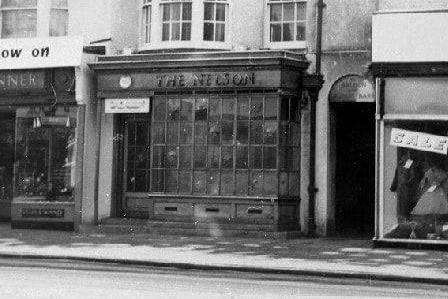
In the 1950s, like many other large town across the south, Worthing had a Lyons teashop. There were also pubs in South Street, like The Nelson, which was on the east side for around 150 years, and The Ship, which was opened on the west side in the 1930s.
Ian runs the Surfleet Worthing and District History Group, which meets monthly at East Worthing Community Centre on the third Monday of the month, 7pm to 9pm, and Steyne Local History Study at the Ardington Hotel, in Steyne Gardens, at the end of each month, meeting on a Tuesday, 10.30am to 12pm.
1. South Street, Worthing
South Street looking south, with the roundabout looking pristine Photo: Ian Richardson
2. South Street, Worthing
In the early 1900s, new motor buses run by the Worthing Motor Omnibus Company began competing with the horse-drawn buses Photo: Ian Richardson
3. South Street, Worthing
H.D. Jordan began trading at 27 South Street in 1885 and five years later, Jordan & Gray took over 35-37 South Street Photo: Ian Richardson
4. South Street, Worthing
The Nelson pub was on the east side of South Street for around 150 years Photo: Ian Richardson