

We are looking back at Warwick Street as it once was, before and after it was pedestrianised, bringing back memories of some of its lost shops.
Let us start in October 1964, when an advert for Civic Trust Week promoted 'the changing face of Warwick Street', describing it as the Bond Street of Worthing.
There was an opening ceremony by the mayor of Worthing on Monday, October 19, as shops in the street worked together to promote their wares.
Whibley the jewellers was among them, a shop still enjoyed today, and The Thieves' Kitchen was there, with its 'famous chop house'. This restaurant premises was linked to Roberts Wine Merchants and it was opened in 1962 with an entrance from Marine Parade.
Others on the list included Cobbs furniture store, Leal delicatessen, Bernard Luper men's outfitters, Simpsons florists, Searles prams and toys, David Winter antiques, Joan Crocker ladies' outfitter, Peter Ashley greetings cards and Lumleys bakers and confectioners.
There was also a hearing centre, dry cleaning, a high-class tobacconist and a dental repair shop, as well as The Spinning Wheel café for quality home cooking.
At the time of Civic Trust Week, the road would have been busy with cars and buses, as Warwick Street was not pedestrianised until 1980. Stanford Square was added in 1985.
Taking us back on this journey in time is local historian Ian Richardson, who has created a series of films chronicling Worthing's past. His latest three cover Montague Street, South Street and Warwick Street.
He said: “This Civic Trust Week advertisement may well go back to October 19, 1964, but I've included it for obvious reasons because it gives you all the businesses that operated in Warwick Street at that particular time. It says Warwick Street is the Bond Street of Worthing.
“What I have done is for the students of the future. There was a lot of redevelopment that took place in Warwick Street in the 1980s. Alan Cowdrey, historian, did a lot recording all the changes that took place in Warwick Street. My thanks to him for having the foresight to actually go out with his camera and capture these scenes.
“It's good to remind everybody that tomorrow, today will be history. So, do go out and actually record what you see, record the buildings - very, very important for the future generations to see where we are currently in 2026.”
Ian has various photographs showing Roberts & Son, indicating the wine merchant's success through the decades. One of the rear of Warwick Street shows a whole line-up of Roberts vehicles, probably dating from the 1930s.
Ian's vast collection of photographs and postcards goes back probably 100 years further to the early days of Warwick Street as a shopping parade in the 19th century. His oldest photographs in this collection show bicycles and a horse and cart but later, the road was filled with cars and double-decker buses.
You can see Warwick Street bedecked in flags, celebrating the coronation of King George VI and Queen Elizabeth in May 1937 – a splendid sight.
Ian said: “Of course, a couple of years after the celebrations, on September 3, 1939, was the beginning of the Second World War. In one photograph taken in South Place, adjacent to the old Town Hall, we can see an air raid shelter.
“Following the Second World War, car ownership really took off in Britain and clearly in Worthing as well and there are some pictures of Warwick Street with very congested scenes, with two-way traffic and a poor old bus having to battle to get from one end to the other.”
From around 1930 to 1970, there was a Sainsbury's in Warwick Street, before the supermarket moved to Chapel Road, where Peacocks is now located. The old J. Sainsbury sign was uncovered again in 2019, when Guild Care moved into Warwick Street.
Around the 1960s, builders Andrew & Co was at number seven Warwick Street, having been established in 1900, and next door was Godden, dealer and expert in antique furniture. Ian said their building had wonderful architecture and great character, with beautiful columns, sadly lost to the modern world. Across the road was a butcher and Blaker, the ironmongers.
By the 1970s, the zebra crossing at the busy junction with South Street had been replaced by an electric crossing and the two-way traffic was controlled by traffic lights at the other end.
Ian said: “We had traffic flying up and down Warwick Street and the businesses look as if they were all doing very well.”
By 1984, the traffic lights had been switched off and removed. Warwick Street was still being described as 'Worthing's Bond Street' but it had become a precinct.
One advert promoting it stated: “Warwick Street in 1984, Worthing's premier precinct where traffic is totally banned and calm elegance reigns once again.”
One early picture of the precinct shows some trees that have 'grown from nowhere' and benches have appeared in what was the middle of the road.
There is Warwick Lane, leading through to Ann Street, and this featured a successful row of shows in the 1950s and 1960s. Ian has also put some emphasis on the passageways and the beautiful old lamps that lit them.
He said: “Now, in old Worthing, there were many passageways and alleyways, and The Quashetts. Why I'm drawing attention to this particularly is because of the pavement. In old Worthing, most of the streets had bricks and they were either grey bricks or red bricks.”
Through the decades, the photographs show a busy, vibrant Warwick Street. Ian said it has been filled with 'delightful little businesses serving the community, all different, and look at the employment that they gave locally to so many'.
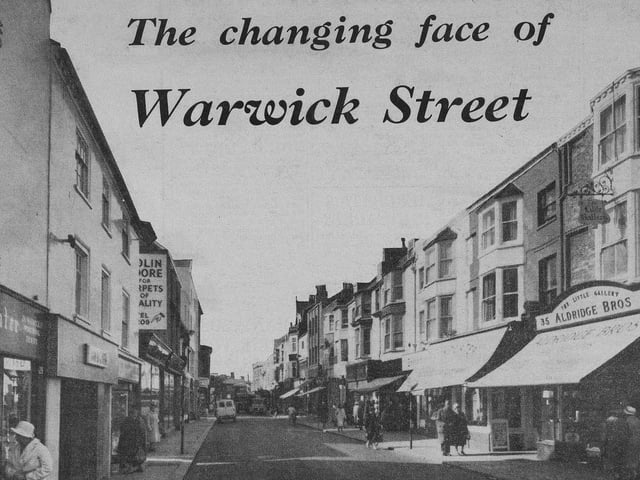
1. Warwick Street, Worthing
This Civic Trust Week advertisement dates back to October 19, 1964 Photo: Ian Richardson
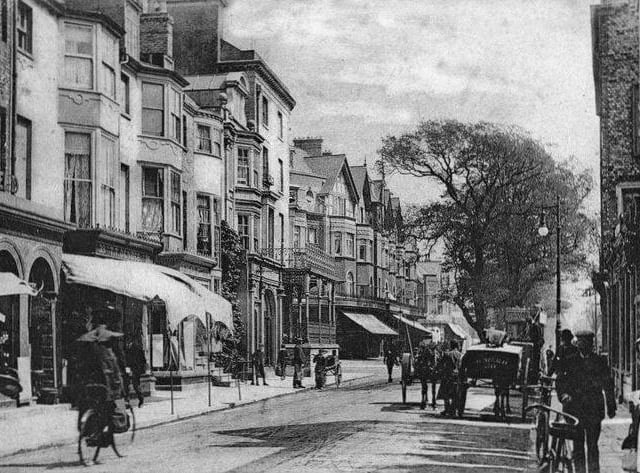
2. Warwick Street, Worthing
The oldest photographs in this collection show bicycles and a horse and cart Photo: Ian Richardson
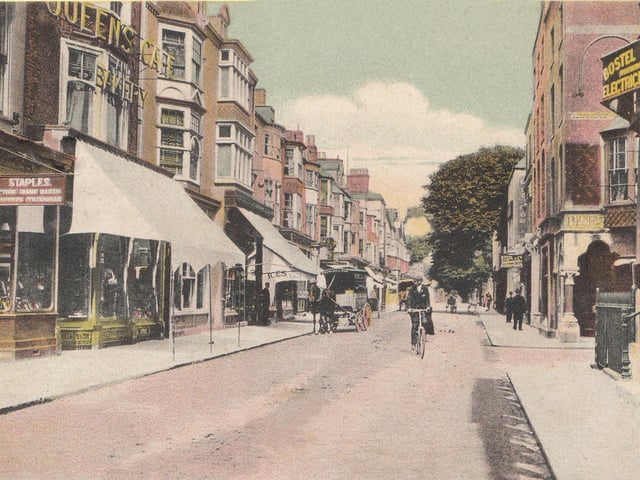
3. Warwick Street, Worthing
Ian Richardson's vast collection of photographs and postcards goes back to the early days of Warwick Street as a shopping parade in the 19th century Photo: Ian Richardson
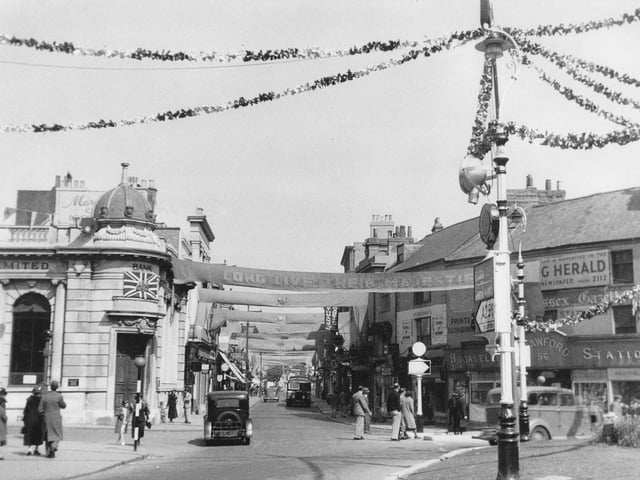
4. Warwick Street, Worthing
Warwick Street bedecked in flags, celebrating the coronation of King George VI and Queen Elizabeth in May 1937 Photo: Ian Richardson