
The complex wine region of the Rhone Valley
For the dedicated lover of French wines, getting to grips with the intricacies of the wine regions can be testing.
In Bordeaux, there is the complicated system of classification, with up to five levels for the top wines or Cru Classé, another classification of Cru Bourgeois which has changed several times in recent years and then a large number of other named regions or Appellations. Then there is the hyper complicated region of Burgundy with its myriad of ‘climats’ each having its own identity and different quality classification.
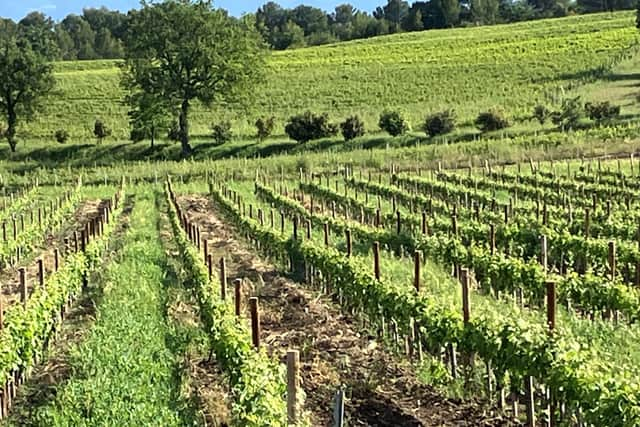

The Rhone Valley is another complicated region, this time more in terms of its geography, since it is a 250 km long region from north near the town of Vienne, right down to vineyards near the towns of Avignon and Nimes in the south of France. An ancient vineyard region, vines have been grown here since the times of the Greeks and the Romans, the quality of the wines much acclaimed throughout their historical development up to the current day.
The soils vary from granite and sand to clay and limestone, with a variety of microclimates created by the different topography, with steep, craggy, stone terraces in the north and rolling hills in the south. Several different grape varieties are grown, the two most iconic being Syrah for the reds and Viognier for the whites, both indigenous to the region and now planted worldwide. In general, wines are made from single varietals in the northern part of the Rhone Valley, such as the powerful wines of Cote Rotie and Hermitage from 100% Syrah and Condrieu from pure Viognier.
From the middle of the region, down to the south, the different, warmer, climatic conditions create the need for a blend of grape varieties in order to produce top quality, balanced and expressive wines. Gigondas is a famed cru region just north of Avignon and Carpentras, the red wines being a blend of Grenache, Syrah and Mourvèdre. As with all wine regions, change is a constant factor and in 2023, Gigondas Blanc was born, which must contain a minimum of 70% Clairette grapes in the blend. These new wines are about to be bottled, so watch this space for a future review!
The general Appellation for the region is Cotes du Rhone, with some excellent wines produced even at this level. The next level up in quality terms is Cotes du Rhone Villages and a named village represents higher quality still. There are a number of these, such as Chusclan, Sablet, Vaison La Romaine and a host of others, each with its own characteristics and flavour profile. At the top of the hierarchy are the ‘Cru’ wines, with such fabulous regions as Crozes Hermitage, Beaumes de Venise, St. Joseph and Lirac, to name but a few.
The vineyards of the Rhone Valley represent 9% of French vineyards yet are the Second most important region in terms of volume, for production of Protected Appellation wines. Around 84% is red,10% rosé and 6% white, the latter two categories tending to increase in recent years, with some first-class whites and pinks now available. The expressive wines of the Rhone really come into their own in the Summer, so I suggest a little tasting is in order in the next few months.