

Record-breaking heatwaves and prolonged dry weather have turned much of our beloved green spaces yellow and arid.
July 2026 was the driest in England since records began in 1836, according to the Met Office.
Data published by the Environment Agency revealed south-east England saw less than 1mm between Wednesday, July 29 and Tuesday, August 4.
The National Farmers’ Union (NFU) has described the conditions as ‘one of the most severe droughts many farmers and growers have lived through’.
NFU President Tom Bradshaw said: “Harvest yields are looking poor, farmers are struggling to access water to irrigate fruit and vegetables, and livestock farmers are having to use grass they cut this spring for their stores of winter feed for cattle as there's very little grass growing now.
“The picture is even worse when we look across Europe to many of the countries we import food from, with huge wildfires across France and Spain. While retailers are used to managing variations in global supply, we’re not going to be able to trade our way through this potential crisis."
With yet another heatwave on its way, there doesn’t seem to be much respite on the horizon.
Temperatures are expected to reach 30°C in Littlehampton on Thursday (August 13), with no mention of rain in the forecast.
Met Office Chief Forecaster Jason Kelly said: “Heat will gradually build this week, with temperatures reaching into the mid-30s Celsius in what will be a fairly widespread heatwave for England and Wales.
“The driver for this week’s heat is high pressure, this becoming dominant over the next day or so, bringing plenty of sunshine and allowing temperatures to build day-by-day. Southerly or southeasterly winds will also tap into the hot conditions over Europe, meaning we’re looking at further notable heat for many this week, likely peaking on Thursday.”
The hot weather has resulted in a ‘very high’ risk of wildfires across the county.
West Sussex Fire and Rescue Service (WSFRS) has warned residents to ‘take extra precautions outdoors’.
A WSFRS spokesperson said: “The recent prolonged period of warm, dry weather has left grassland, heathland and woodland areas particularly vulnerable to fire.
“Even small heat sources, such as discarded cigarettes, disposable barbecues or campfires, can develop into significant incidents that spread rapidly, especially during hot, dry and windy weather.
“That not only poses a risk to people, property, wildlife and the environment, it also places significant pressure on emergency services.”
The fire and rescue service said people can play their part in reducing the risk by avoiding the use of disposable barbecues in open spaces; taking litter home; extinguishing smoking materials properly, and reporting any signs of fire immediately by calling 999.
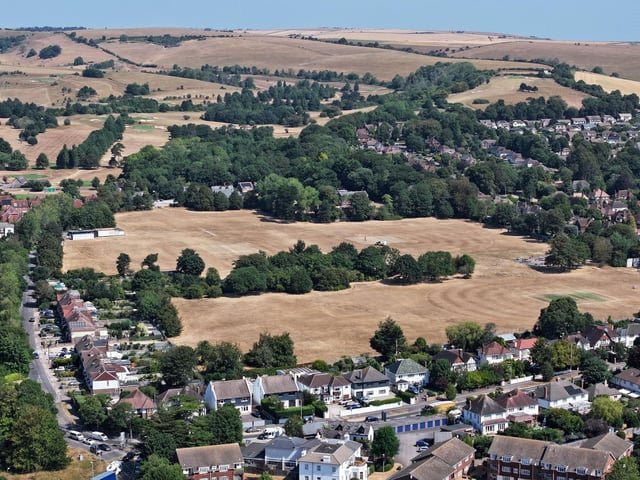
1. Aerial photos show impact of heatwaves on Worthing's green spaces
Hill Barn Golf Course Photo: EDDIE MITCHELL
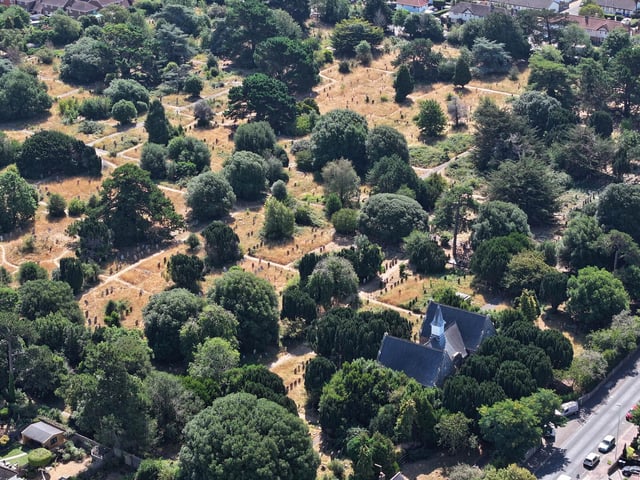
2. Aerial photos show impact of heatwaves on Worthing's green spaces
Broadwater Cemetery Photo: EDDIE MITCHELL
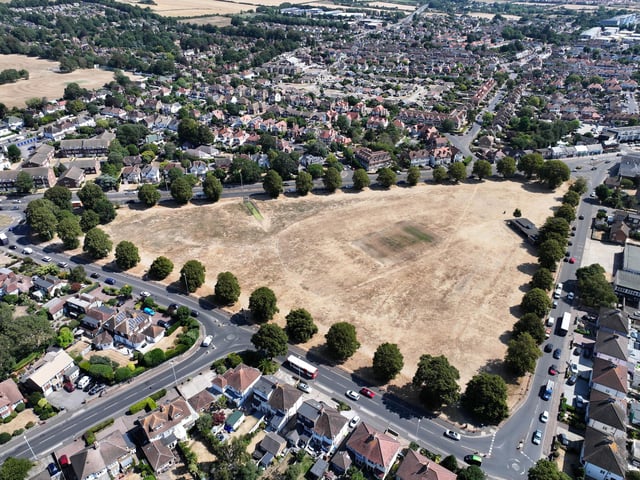
3. Aerial photos show impact of heatwaves on Worthing's green spaces
Broadwater Green Photo: EDDIE MITCHELL
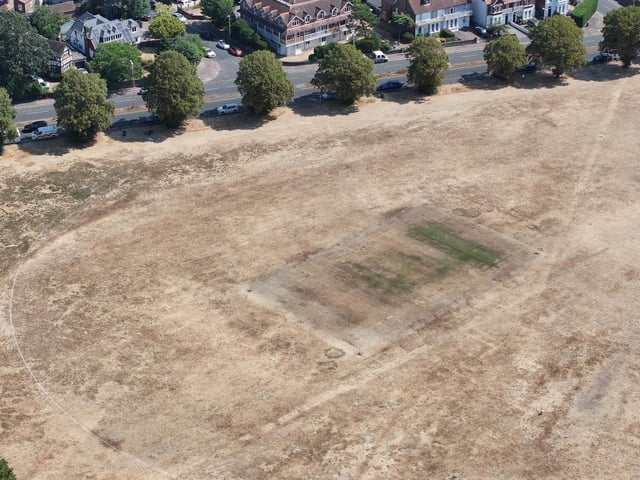
4. Aerial photos show impact of heatwaves on Worthing's green spaces
Broadwater Green cricket pitch Photo: EDDIE MITCHELL