
Campaigners call for action to save chalk stream running into Chichester Harbour
Campaigners are calling on the national environment watchdog to take urgent action to save a local chalk stream and the wildlife that depends on it.
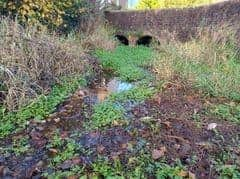
In many places, they say, the River Ems has run dry or been reduced to a trickle following the summer drought and populations of key species have crashed alarmingly.
Campaigners say they want the Environment Agency (EA), set up to protect and improve the environment, to do its job but it continues to allow Portsmouth Water to pump unsustainable amounts of water from the river’s underground sources.
Local citizen scientists who monitor the river’s wildlife say the agency has failed to respond to their findings.

An Environment Agency spokesperson said: “The River Ems is a valuable chalk river, and we are monitoring the impact that abstraction for public water supply has, particularly during periods of prolonged dry weather.
“We are calling on everyone to continue to take simple steps to reduce their water use. Regardless of the weather conditions, we should always use water wisely to protect this precious resource and the environment.”
A spokesperson for Portsmouth Water said: “The River Ems is a precious chalk stream, and we fully understand the concerns raised about the health of the river. This has been an exceptionally dry summer which has left ground water levels and river flows much lower than normal.
“While we do not extract water directly from the river, we do have a licence issued by the Environment Agency which allows us to take water from boreholes in the chalk at the top of the Ems catchment.
“River flows naturally drop as groundwater levels fall in long periods of hot, dry weather. To support the river during these periods, we put groundwater from our chalk aquifer directly into the river to support it. This is known as augmentation. This year, as it has been so exceptionally dry, we began augmentation in July and we will continue this process for as long as it’s needed, until ground water levels are restored.
"We’re also looking for other ways we can help to protect the river and are supporting the Arun & Western Streams Partnership, funding surveys and a catchment improvement plan for the Ems.
"In addition, we are in the process of reviewing, through an environmental and scientific study, the long-term sustainable levels of abstraction from the Ems catchment to help protect the Ems. We will be working with the Environment Agency on how to achieve the best balance for the long-term future of the river once our studies are complete."
The Ems runs from the South Downs into Chichester Harbour at Emsworth, fed by springs coming from the underground chalk bedrock, or aquifer.
The campaign group Friends of the Ems (FOTE) says such chalk streams are as internationally rare and ecologically important as coral reefs or rainforests. Rare species including water voles and eels have been recorded in the Ems, and local people have been used to seeing kingfishers, brown trout and many species of bat.
The Friends have been pushing for a reduction in the amount of water abstracted from the river’s sources. The EA controls an abstraction licence, dating back to the 1960s, which allows Portsmouth Water to keep removing water from the underground aquifer. The amount removed has steadily increased, they say.
Founder-member John Barker, a freshwater ecologist, lives on a farm in Westbourne. The Ems runs through his land and he regularly samples the river for key species that indicate its health. Around the country, much of this work used to be done by the EA but is now picked up by local people, under a partly EA-sponsored scheme.
He says: “Because of the lack of flow in the river, its all-important gravel habitats are smothered with algae and silt. Populations of small creatures have been near-decimated. They are needed as food by fish.
“I usually see thousands of freshwater shrimp in the river. But in recent sampling I haven’t seen any. In the most recent sample only two weeks ago, key groups of organisms were simply missing. Where I would be normally counting dozens of individuals of each type, in this sample there were just three individuals of only one type. It was horrifying.
“We have gone beyond the EA’s ‘trigger’ levels for these species. But despite us reporting our findings the EA has failed to respond as agreed.
“Portsmouth Water’s licence is due to be reviewed in 2028. But we need the EA to step in right now and reduce the amount of water the company can take.
“Already there isn’t enough flow in the river in the summer and autumn due to unsustainable levels of abstraction. Coupled with droughts like the one we’ve just had, the river is on its knees. Climate change and house building are making the situation worse.
“Portsmouth Water continuously abstracts almost 300 litres per second from the aquifer feeding the Ems, leaving the river flowing at about 20 litres per second in recent months.”
Friends of the Ems is part of local eco-group Greening Westbourne. To join the Friends, people can email [email protected]
To find out more, people can search Greening Westbourne Campaign to see the group’s website, or find its page on Facebook.
The Environment Agency said abstraction licences are currently under review as part of its objective to achieve sustainable abstraction and Portsmouth Water’s commitments within their Water Resource Management Plan.
“Any future changes we may make to abstraction licences in the catchment will be evidence based and planned, so the needs of people, through public water supply, and the environment can be met sustainably,” it said.
Chichester councils recently debated whether legal action could be taken about the abstraction licence – see the video above.