
Chichester Harbour sewage concerns raised after Channel 4 airs Dirty Business programme

Environmental campaigners have warned of worsening sewage pollution in Chichester Harbour, following one of the wettest winters on record in southern England.
The Chichester Harbour Conservancy drew the public’s attention to the situation, in a post on social media.
This followed a recent broadcast of Dirty Business on Channel 4, which examines sewage pollution in UK rivers and seas.
“Following the recent drama on Channel 4, water quality is rightly getting a lot of attention,” the organisation stated.
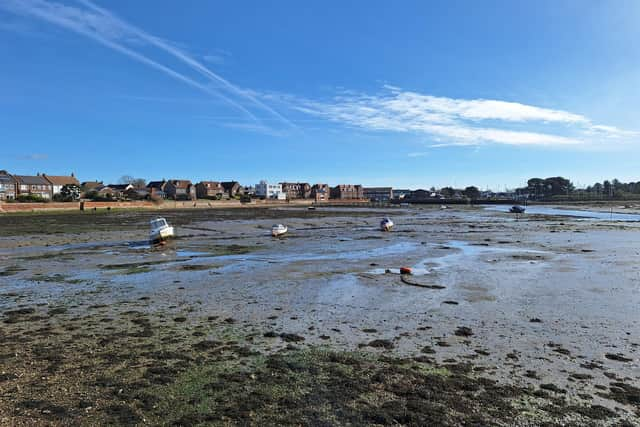

"Every month during the winter, and every two weeks in the summer we test the waters of Chichester Harbour against EU bathing standards. Unsurprisingly following recent heavy rain, the last results failed in several locations, with high concentrations of E.Coli and Enterococci.
"It is well known that during periods of heavy rainfall, the sewerage system becomes overwhelmed and untreated sewage is released into the harbour through storm overflows.
"It should be noted, that our test results are only ever at a single point in time. Harbour users should make their own informed judgements about their use of the water based on real time data.
"We recommend using the Surfers Against Sewage live map, and signing up to the Rivers and Seas Watch which provides live information about storm overflow releases.”
Meanwhile, the Chichester Harbour Trust says monitoring across the harbour shows several sites failing bathing water standards and has renewed calls for water companies to reduce storm discharges.
According to the Met Office, the winter from December 2025 to February 2026 ranked among the wettest since records began in 1836, with southern England experiencing its fourth wettest winter and its wettest in more than a decade.
The harbour trust said the conditions had put pressure on wastewater infrastructure serving the harbour area.
“While we welcome the endeavours recently announced by Southern Water to address the problem of high groundwater levels – by tankering and by lining pipes throughout the district – the works to date present a small drop in the ocean, given the scale of the problem we are now witnessing,” the trust stated.
Water quality in the harbour is monitored by Chichester Harbour Conservancy and Chichester District Council at 12 sites. In February, the trust said five of those locations failed to meet EU bathing water standards.
The trust also said the Chichester Wastewater Treatment Works had been discharging continuously since March 1.
“The situation is ongoing,” the statement read. “This is despite not having had any significant rainfall in this time – so the effects of high groundwater levels continue to be felt.”
The group warned that infrastructure pressures could affect future housing in the area, pointing to the Highgrove Farm development of around 300 homes. It said the wastewater network lacked capacity and that tankers were being used to remove waste from the site.
In response, Southern Water said recent rainfall had created significant pressure on the sewer system.
A spokesperson said: “Torrential rain – more than double the average in both January and February has caused challenges across the region such as floods. In heavy rain, our system is inundated with run off from roads and roofs. To protect homes, schools and businesses from internal flooding the storm release system acts as a pressure valve.
"Through our Clean Rivers and Seas Watch service we put near time information on releases from every single storm release site in the region. With ever improving modelling the service provides more and more information about whether a release might impact water quality. We’re investing £1.5 billion over the next five years to slash storm releases.”
Real-time information on sewage discharges is available through the company’s Clean Rivers and Seas Watch website.
Nick Backhouse, chairman of the Chichester Harbour Trust, criticised national housing policy.
He said: “The government’s campaign to ‘Build Baby Build’ is completely nonsensical on the coastal plain given the challenges we face with water treatment and flooding – we need ministers to wake up and smell the sewage.”
Mr Backhouse was referring to comments from Housing Secretary Steve Reed, from September 2025.
Mr Reed said: “I want us to build, baby, build, so we can put the key to a decent home into the hands of every single family that needs it.
“We are doubling down on our plans to unleash one of the biggest eras of building in our country’s history and we are backing the builders all the way.
“Through major planning reform and investment, we will break down the barriers to development and build the 1.5 million homes this country needs as part of our Plan for Change.”
Meanwhile, Southern Water said teams are making good progress on two major storm overflow reduction schemes, on the Hampshire and West Sussex border.
The projects, covering the communities of Bosham, Emsworth, Nutbourne, and Southbourne, are utilising a mix of innovative engineering solutions to reduce the amount of rainwater entering sewers.
It is hoped this will help cut storm overflow releases and improve water quality in Chichester Harbour.