
COP 31: From ambition to implementation as climate action steps up a gear in South Downs
As COP31 swings into action, the South Downs National Park Authority says national adaptation is now needed to face the huge challenges of the climate emergency.
Parts of the South Downs National Park have looked unrecognisable this summer – a stark reminder of a rapidly-changing climate and the profound need for collective action.
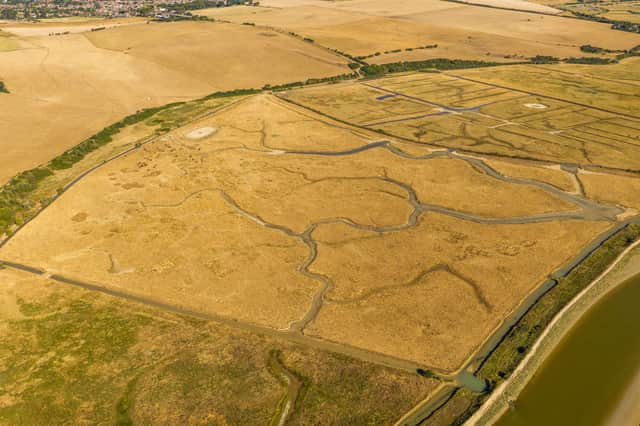

Rather than the famous green hills that have inspired so many writers and poets, some areas were more savannah-like at first glance, with dried-out dew ponds, golden grasslands and heat-stressed trees.
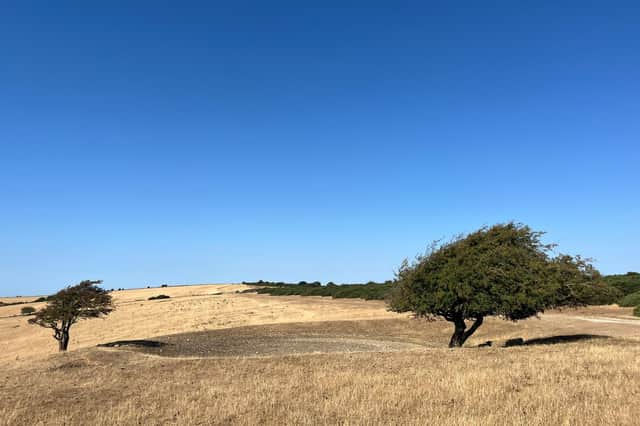
A record summer for heat and drought has further galvanised the South Downs National Park’s strong commitment to mitigating and adapting to the impacts of climate change.
The National Parks family are at the forefront of climate action in the UK, tackling the challenges we all face by finding answers and implementing innovative solutions alongside partners and local communities.
As outlined in our Partnership Management Plan earlier this year, climate change is already having a fundamental effect on the South Downs National Park – on the landscape, habitats, species diversity, forestry, agriculture, food production, water resources, the rural economy and our local communities.
These effects are expected to intensify over time. It could include more extreme weather events, increased risk of wildfire and drought, more flooding, declining soil fertility, reduced food security, and damage to infrastructure and archaeological features. It could also mean the loss of nature – critical and beloved habitats and species will disappear.
The answer? We need to build long-lasting resilience in our landscape, biodiversity and communities. It means nurturing a natural and built environment that is better able to cope – and bounce back if required – when there are adverse weather patterns.
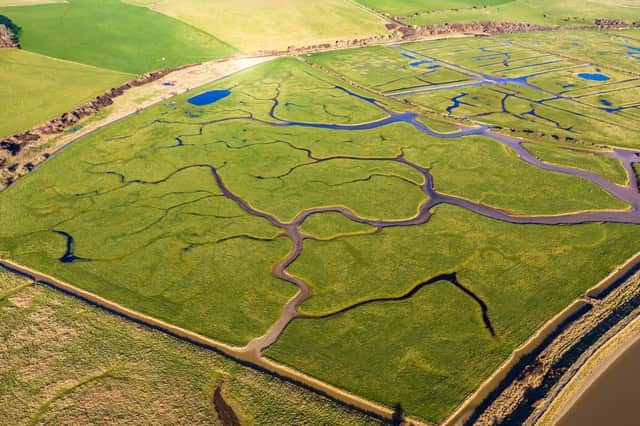
It also means playing our part in reducing carbon, for instance, by creating new woodlands with healthier soils to lock away CO2. The National Park Authority is also supporting communities seeking to be more resilient and energy-efficient.
This important work is well under way, working alongside partners, landowners, businesses and local communities.
As the COP 31 Climate Summit swings into gear, Vanessa Rowlands, Chair of the South Downs National Park Authority, says: “One of the key themes of this year’s COP31 is moving from commitment to on-the-ground implementation. In the South Downs, we are already seeing it happen. National Parks were created 75 years ago in a period of national renewal. This summer’s parched hills at Seven Sisters show what needs to come next: national adaptation.

“Landscapes like ours are strategic national infrastructure. At Halnaker Hill Farm, 131 hectares of intensive farmland is now full of life, with more than 5,000 butterflies recorded this summer. Across the Park, more than 100,000 trees are in the ground, and we are aiming for at least a million more by 2035. Farmers, land managers and communities are working in partnership with us as we move towards a low-carbon, nature-rich future.”
Siôn McGeever, Chief Executive of the South Downs National Park Authority, says: “Climate change is happening right now before our eyes and I think we’ve seen a clear shift in people’s attitudes after the hottest summer on record.
“The UK’s National Parks are uniquely placed to deliver positive and innovative climate action, as recently recognised in the ‘Well Adapted UK’ report by the Climate Change Committee.
“One of our biggest strengths in the South Downs National Park is our amazing natural environment – resilience through nature recovery offers real, pragmatic solutions to a changing climate. While we’ve achieved a lot in a short time, there’s still so much more we can do.
“The climate crisis is a problem for all of us to face with determination and urgency, but also with hope and positivity of what can be achieved if we work together, internationally, nationally and locally to make this world a better place for both people and nature.”
Putting the action into climate in the South Downs
Here are five real-world ways that a changing climate is being tackled head-on in the South Downs National Park:
1. Nature-based solutions - From planting hundreds of thousands of new trees, creating networks of new wetlands, and renaturing vast swathes of land, the National Park is at the forefront of building more resilient, wildlife-rich landscapes that lock up carbon. Halnaker Hill Farm, near Chichester, is now England’s largest Biodiversity Net Gain scheme, transitioning 131 hectares of intensive farmland to nature. A recent wildlife survey there was nothing short of incredible and showed how quickly partnership working can create a nature-rich landscape. As part of our ReNature campaign more than 12,400 football pitches of land are being transformed into habitat for wildlife. The work, delivered in partnership over the past five years, has included planting more than 100,000 trees, adding over 4,000 tennis courts of wildflowers and planting 35km of hedges.
2. Pioneering work in the Ouse Valley - A wave of inspiring climate action has been kickstarted thanks to the groundbreaking lottery-backed Ouse Valley Climate Action (OVCA). From scores of children learning to ride bikes, to new community vegetable gardens, climate hubs, river tours, volunteer training and energy-saving initiatives, people across the Lewes, Seaford, Peacehaven and Newhaven areas have been busy doing their bit to help their local environment. This project is an example of what can be achieved when a community comes together.
3. Locally-generated renewable energy - The National Park Authority has supported communities to understand more about their local energy needs and what impact different forms of renewable energy might have on the landscape. The Future Energy Landscapes workshop puts communities at the centre of the conversation about how renewable technologies can support us all to decarbonise our energy system.
4. Thriving community-based action - Since launching in late 2024, the South Downs Climate Action Network has grown from strength to strength and earlier this year welcomed its 100th member. Hosted on Knowledge Hub, it allows local communities to share useful tips and stories around climate action. Grassroots community action is growing across the National Park. As one example, the National Park Authority supported WeCAN to help parishes in Winchester develop climate action plans. Numerous projects have since sprung into action, including eight repair cafés, local “energy champions”, and energy-efficiency improvements at community buildings. The National Park Authority also supported a pilot with Giki Actions which helped eight SMEs develop climate action plans, with actions saving CO2 and money.
5. Investing in young people and the future - The National Park has been supporting PeCAN – Petersfield’s climate action network – to deliver workshops and school assemblies to ensure young people know what we can do to protect the environment. The National Park’s education team help to deliver dozens of Youth Action Days every year, where people aged 16 to 25 can get involved in hands-on climate and conservation work. Our team also do lots to help young people think about green careers.
To find out more about our climate work and get involved visit www.southdowns.gov.uk/climate-action-hub