
Graffham and East Lavington parish councils join forces to ask how National Park is being protected from wild fires
Two parish councils have joined forces to ask the South Downs National Park Authority (SDNPA) how it is planning to protect the landscape from the risk of wild fires as the scorching summer turns the countryside into a tinderbox.
Gillian Charlesworth, chairman of Graffham Parish Council, and Simon Longman, chairman of East Lavington Parish Council, have sent a joint letter to the SDNPA’s chief executive Siôn McGeever and chairman Vanessa Rowlands, outlining their worries.

“As this very hot weather continues and the countryside around us becomes ever drier, both parish councils are concerned to know how SDNP is planning to protect our wonderful landscape from the risk of wild fires,” it said.
"We have already had one fire service call out recently to a wooded area in Graffham village.”
As well as the general risk they had two specific areas of concern to raise.
“The first is the risk posed by the flares at Singleton oil well,” they said. “We understand that there are various contingency plans in place, but the fact remains that the fire break around the site is only minimal with large mature conifer plantations overlapping and breaching the area.
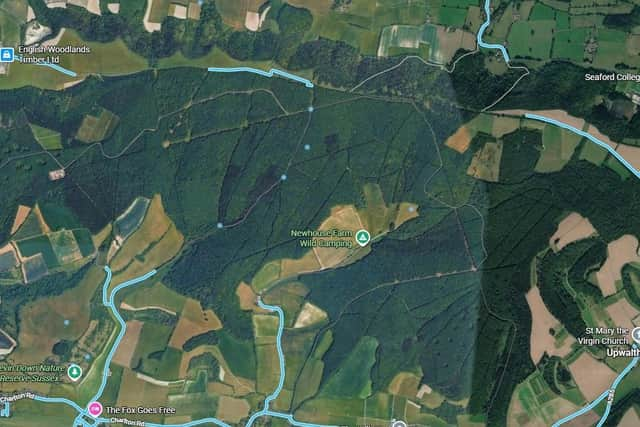
"As nearby parishes, we see an uncontrollable wild fire threat in Singleton and Charlton Forests – miles of mature conifer plantation – including up to the fence of the Singleton oil extraction site…
"One spark is all it would take to ignite this vast area with a potential fire right across the area, devasting the South Downs.”
A spokesman for Star Energy Group plc, which operates the oilfield, said: “The safety of our staff, our neighbours and the surrounding environment is our highest priority, and we maintain a very close working relationship with our regulators and the local community via the parish council.
"Singleton Oilfield is a Lower Tier COMAH (Control of Major Accident Hazards) site and is regulated by both the Health and Safety Executive (HSE) and the Environment Agency. As a result, the site is subject to stringent regulatory requirements, regular inspections and rigorous standards for the prevention of major accidents and the protection of people and the environment. We have consistently demonstrated compliance with these requirements and have a strong record of meeting our regulatory obligations.
“In addition to this regulatory oversight, Singleton has comprehensive fire prevention and emergency response arrangements in place. These plans are regularly reviewed, tested and exercised with the relevant emergency services and regulatory authorities.
“The site itself is designed and managed to minimise fire risk. Potential ignition sources are tightly controlled, vegetation is actively managed within the site boundary, and fire detection and firefighting equipment is maintained to a high standard. We continually assess risks, particularly during periods of prolonged hot and dry weather, and implement additional precautions where appropriate.
“Singleton also utilises gas produced from the field to generate electricity, reducing the need to flare gas and improving the site's overall environmental performance. This forms part of our ongoing investment in modernising the facility while maintaining the highest standards of safety and environmental protection.
“We are proud to have operated in the local area for many years and remain committed to being a responsible neighbour. Across the company, we have contributed more than £1 million to local communities through community benefit funding, supporting a wide range of local projects and initiatives.”
Their second concern was a large quantity of dead rhododendron branches left in woods following clearance last year.
"In the dry conditions this practice of leaving the branches to rot does not seem to us sensible and we would appreciate you as the authority raising this with the Leconfield Estate.” they said.
“This risk of wild fire caused by these and other fire hazards is only going to grow and we would like to know what you are doing as the authority – and what we can do as parishes in the area.”
The Leconfield Estate said it takes the risk of wildfire extremely seriously, particularly given the prolonged period of hot, dry weather and the safety of the public, neighbouring communities and the protection of the South Downs landscape are of ‘paramount importance’.
“With regard to the rhododendron clearance, the material referred to is the arisings from the Estate's programme of invasive rhododendron control,” it said.
"Leaving branches following clearance is a widely adopted woodland management practice and is generally undertaken for various environmental reasons. Over time, the material breaks down naturally, returning nutrients to the soil, providing habitat for wildlife and avoiding the environmental impacts associated with burning or removing large quantities of vegetation.
“That said, we of course recognise that during prolonged periods of exceptional heat and drought, any woodland fuel load warrants careful consideration. With that particular woodland and soil structure there was already an identified fire risk, which the rhododendron clearance has not increased.
"We continually monitor conditions across the Estate and review our management practices in light of seasonal fire risk. Where necessary, we will assess whether any additional measures are appropriate in higher-risk locations.
“We appreciate the parish councils bringing their concerns to our attention and remain committed to managing our woodlands responsibly, balancing public safety with good environmental stewardship.”
The SDNPA had not responded by the time of publication. It’s website states: “If you see a fire in the countryside, please do not try to tackle it yourself as they can spread very quickly and can be unpredictable.
“Call 999 immediately and retreat to a safe distance. If you can, try and capture a location, nearby landmark or reference, or use what3words to help direct the crew.
“Barbeques are not permitted on heathlands or in any open countryside in the national park. Have a picnic instead.
“Take litter home with you and clear away bottles and glasses, including broken glass to avoid it magnifying the sun.
“Do not discard cigarettes in the countryside, dispose of any smoking material properly and make sure they are completely extinguished.”