
Success stories along the south coast strait includes the resurgence of Sandwich terns, which have seen breeding pairs grow from zero to 756 in just three years, according to the organisation.
The birds completely abandoned their colony at RSPB Pagham Harbour, West Sussex in 2022 following a major onslaught of bird flu – or highly pathogenic avian influenza (HPAI).
The disease also hit other species, including black-headed gulls and Mediterranean gulls.
The RSPB took action alongside the Solent Seascape Project to carry out conservation work over the next few years.
This helped to restore populations, with Sandwich tern breeding pairs flourishing and 570 fledglings recorded this year.
The number of breeding black-headed gulls, little terns, ringed plovers and oystercatchers have also increased along the same coastline, the RSPB said, while there has also been notable breeding success of avocets.
Black-headed gulls especially prospered at RSPB Pagham Harbour in 2026, with an increase in fledglings from 51 in 2025 to 504 in 2026, the charity said.
And little tern numbers jumped from 21 fledglings last year to 34 in 2026.
Wez Smith, RSPB senior project manager, said: “In 2022, Sandwich terns, black-headed gulls and Mediterranean gulls were hit severely by HPAI/bird flu, leading to the abandonment of their breeding colony at Pagham Harbour.
“It’s taken several years of dedicated conservation action, but the situation began to ‘tern’ around last year, and the site is now thriving with record-breaking populations using it.”
Conservation work has included ensuring nesting habitats are in perfect condition for returning birds by removing selected vegetation.
Teams have also been monitoring the presence of rats and preventing other mammalian predators of ground-nesting birds using predator-exclusion fencing.
They continue to use in-person patrols and remote cameras to carry out ongoing monitoring and protection.
Elsewhere, avocets benefited from wetland enhancement and restoration work as part of the ‘Downs to the Sea’ project.
As part of the funded works, new islands were created within the saline lagoon at Ferry Pool at RSPB Pagham Harbour to provide nesting areas for birds, including avocet and little ringed plover.
As a result, 18 pairs of avocets nested on newly created islands in the Ferry Pool area, where they had rarely nested in previous years.
Only one pair each nested there in 2003 and 2010, and two pairs each in 2012 and 2018.
From these 18 pairs, 24 avocet fledglings were recorded in Ferry Pool this year, the RSPB said.
Ongoing management of the islands at RSPB Pagham Harbour is required to ensure they are in peak condition for breeding seabirds, the RSPB said.
Throughout the year, the harbour is also protected, with RSPB rangers and volunteer rangers taking part in patrols to raise awareness with local people and visitors throughout the nesting season, helping to minimise disturbance.
The RSPB said works have improved vital wetland havens for birds, mammals, and invertebrates, while new pathways, viewing platforms and benches have enhanced the visitor experience.
The Solent Seascape Project is a multi-partner partnership working to recover habitats and species across the strait on England’s south coast.
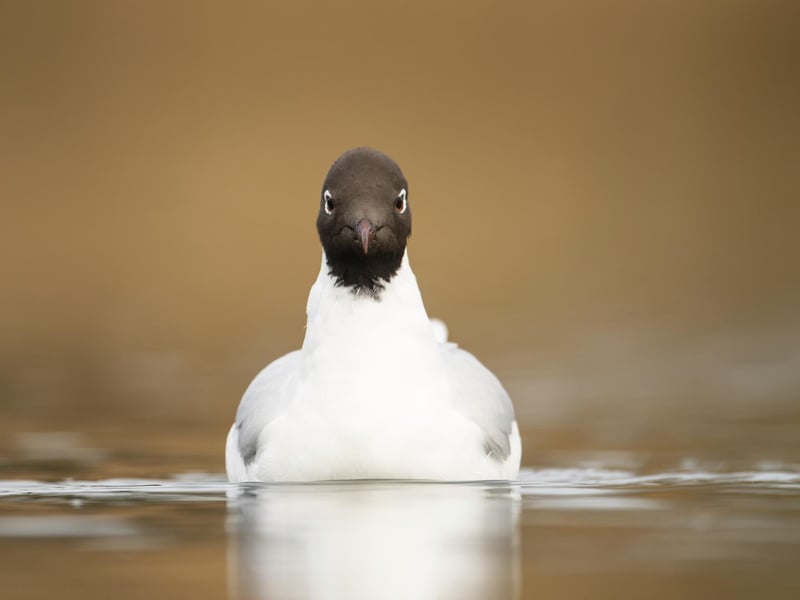
1. EMBARGOED TO 0001 MONDAY OCTOBER 19 Undated handout photo issued by RSPB of a Black headed gull. Seabird numbers in parts of the Solent have seen a record year of increases after conservation efforts by RSPB staff and volunteers, the charity has said. Success stories along the south coast strait includes the resurgence of Sandwich terns, which have seen breeding pairs grow from zero to 756 in just three years, according to the organisation. Issue date: Monday October 19, 2026. PA Photo. Photo credit should read: Ben Andrew/RSPB/the Press Association NOTE TO EDITORS: This handout photo may only be used for editorial reporting purposes for the contemporaneous illustration of events, things or the people in the image or facts mentioned in the caption. Reuse of the picture may require further permission from the copyright holder.
Black headed gull. Photo: Ben Andrew / RSPB / the Press Association Photo: Ben Andrew/RSPB
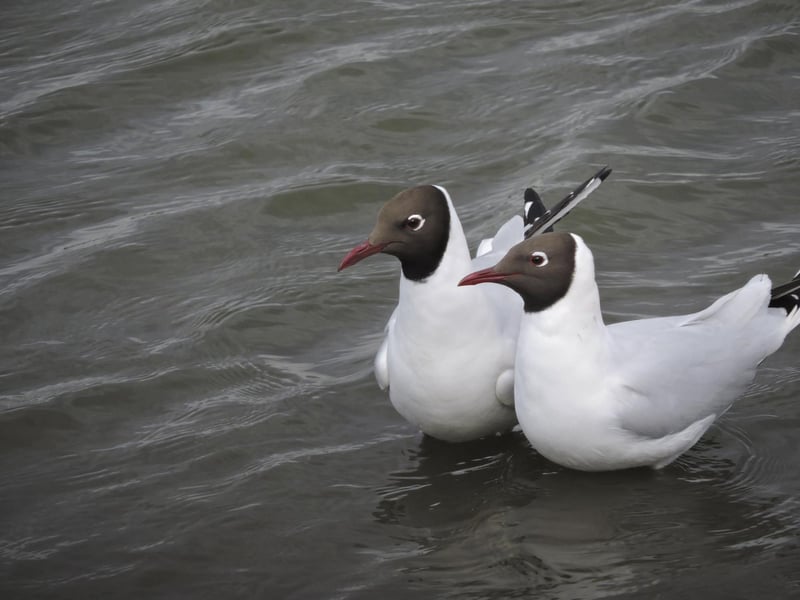
2. EMBARGOED TO 0001 MONDAY OCTOBER 19 Undated handout photo issued by RSPB of Black headed gulls. Seabird numbers in parts of the Solent have seen a record year of increases after conservation efforts by RSPB staff and volunteers, the charity has said. Success stories along the south coast strait includes the resurgence of Sandwich terns, which have seen breeding pairs grow from zero to 756 in just three years, according to the organisation. Issue date: Monday October 19, 2026. PA Photo. Photo credit should read: Tim Hughes/RSPB/the Press Association NOTE TO EDITORS: This handout photo may only be used for editorial reporting purposes for the contemporaneous illustration of events, things or the people in the image or facts mentioned in the caption. Reuse of the picture may require further permission from the copyright holder.
Black headed gulls. Photo: Tim Hughes / RSPB / the Press Association Photo: Tim Hughes/RSPB
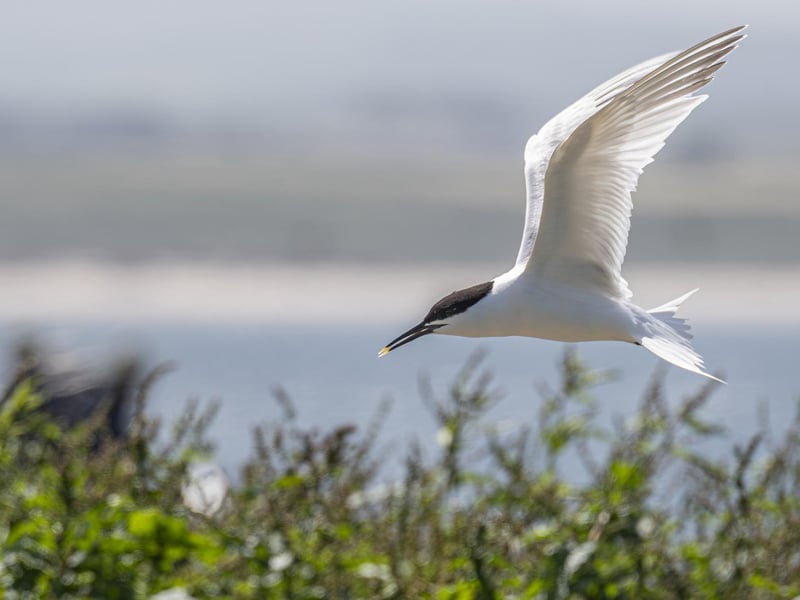
3. EMBARGOED TO 0001 MONDAY OCTOBER 19 Undated handout photo issued by RSPB of a Sandwich tern. Seabird numbers in parts of the Solent have seen a record year of increases after conservation efforts by RSPB staff and volunteers, the charity has said. Success stories along the south coast strait includes the resurgence of Sandwich terns, which have seen breeding pairs grow from zero to 756 in just three years, according to the organisation. Issue date: Monday October 19, 2026. PA Photo. Photo credit should read: Philip Croft/RSPB/the Press Association NOTE TO EDITORS: This handout photo may only be used for editorial reporting purposes for the contemporaneous illustration of events, things or the people in the image or facts mentioned in the caption. Reuse of the picture may require further permission from the copyright holder.
Sandwich tern. Photo: Philip Croft / RSPB / the Press Association Photo: Philip Croft/RSPB
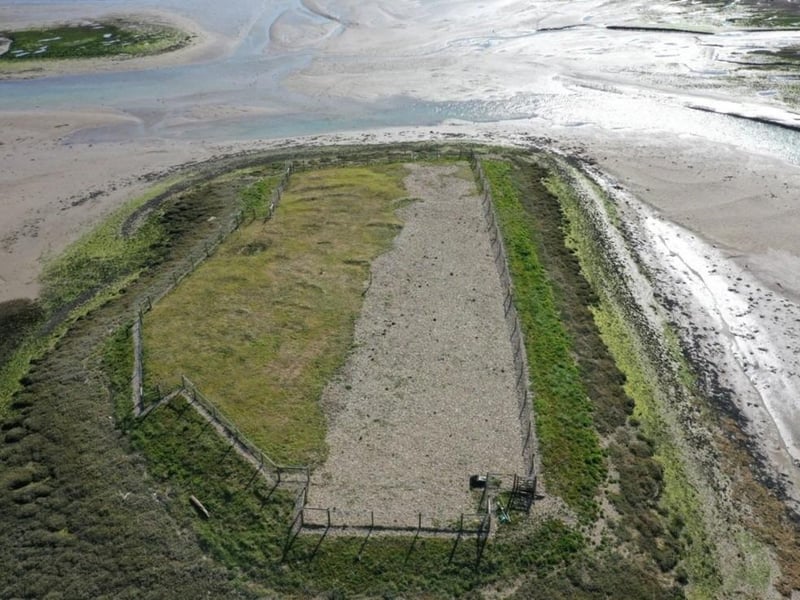
4. EMBARGOED TO 0001 MONDAY OCTOBER 19 Undated handout photo issued by RSPB of an island at low tide at RSPB Pagham Harbour. Seabird numbers in parts of the Solent have seen a record year of increases after conservation efforts by RSPB staff and volunteers, the charity has said. Success stories along the south coast strait includes the resurgence of Sandwich terns, which have seen breeding pairs grow from zero to 756 in just three years, according to the organisation. Issue date: Monday October 19, 2026. PA Photo. Photo credit should read: Mark Appleton/RSPB/the Press Association NOTE TO EDITORS: This handout photo may only be used for editorial reporting purposes for the contemporaneous illustration of events, things or the people in the image or facts mentioned in the caption. Reuse of the picture may require further permission from the copyright holder.
An island at low tide at RSPB Pagham Harbour. Photo: Mark Appleton / RSPB / the Press Association Photo: Mark Appleton/RSPB