
Southern Water launches £2.3m scheme to reduce flooding risk in West Sussex villages

A £2.3 million scheme aimed at reducing storm overflows and flooding is set to get underway in West Sussex, as Southern Water announces new work in Barnham and surrounding villages.
The company said the investment will focus on sealing sections of the sewer network to prevent groundwater entering the system during periods of heavy rain – an issue long linked to flooding and sewage discharges in the area south of Chichester.
Barnham and nearby communities have faced repeated concerns about drainage and overflows in recent years, with campaigners and residents highlighting the impact on local watercourses and infrastructure.
There have been ongoing problems across parts of West Sussex, where ageing sewer systems struggle to cope during wet weather, increasing the likelihood of storm releases.
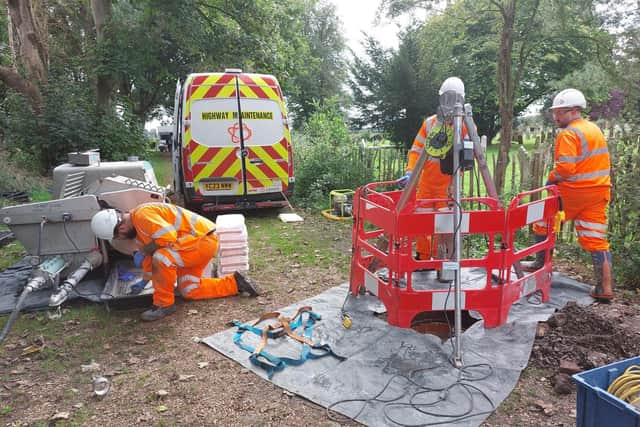

Southern Water said excess groundwater infiltration has been an ‘ongoing issue’ and ‘poses an increased risk of flooding and storm overflows’ locally.
"A number of West Sussex villages will soon become a hive of activity as Southern Water begins a major new scheme designed to improve the sewer network,” a statement from the company read, on Wednesday, April 29.
"Barnham and the surrounding areas south of Chichester will benefit from a £2.3 million investment, focused on sealing parts of the sewer network to limit the amount of groundwater entering the system during wet weather.”
The work forms part of a wider programme across the Chichester area. Similar projects are already underway or completed in villages including East Dean, Charlton and Singleton, where 16km of sewer is being sealed, with teams currently working in West Dean.
Alongside sealing pipes, engineers will carry out investigations to identify further improvements. This will include checking for incorrect domestic connections into surface water sewers and exploring opportunities for sustainable drainage solutions.
To explain the work to customers in the area, Southern Water is holding a drop-in event at Barnham Community Hall, in Yapton Road. This will take place on Tuesday, May 5 from 6.30pm to 8pm.
Southern Water added: “As part of the scheme, our teams will carry out a series of investigations across the area to identify any additional improvements that may be needed.
"This includes checking for incorrect domestic connections from properties into surface water sewers, identifying opportunities to introduce sustainable drainage solutions, and assessing parts of the network that could be improved.”
The company also said it is working with partner organisations to manage water more effectively across the wider catchment, acknowledging that the causes of flooding and overflows extend beyond the sewer network itself.
The project sits within the company’s £1.5 billion Clean Rivers and Seas Plan, which aims to reduce storm overflows across the region.
Glenn McCubbin, from Southern Water’s Clean Rivers and Seas Task Force, said: “This area has a long history of groundwater-related flooding, which puts real pressure on the sewer network during wet weather and beyond.
“By sealing sewers, investigating connections and working with our partners to manage water more sustainably, we can make a real difference for the community and help reduce the impact of storm overflows and help provide a resilient sewer system fit for the future.”
Flooding in Barnham and the surrounding low-lying areas south of Chichester is largely driven by the geography of the coastal plain, where poor natural drainage, a high water table, and a network of slow-moving streams known as rifes combine to create recurring flood risk.
Water draining off the South Downs funnels into these flat areas, meaning prolonged rainfall can quickly saturate the ground and overwhelm local drainage systems. West Sussex flood risk assessments have consistently identified this part of the coastal plain as vulnerable to surface water and drainage-related flooding, particularly during periods of sustained heavy rain.
The most significant historical example is the major flooding event in December 1993, when intense rainfall caused widespread inundation across Barnham and nearby settlements. Local accounts recorded flooding along key roads and residential areas such as Barnham Road, Lake Lane and Orchard Way, with floodwater in some locations contaminated by sewage due to overwhelmed infrastructure.
This event exposed long-standing weaknesses in the drainage network and led to subsequent improvements, including upgraded culverts, pumping capacity, and more structured maintenance of the rifes and associated watercourses.
Despite these improvements, flooding risk has not been eliminated. The Barnham and Aldingbourne rifes continue to generate flood alerts during periods of heavy rainfall, with low-lying roads, fields and some residential areas still affected when water levels rise.
While recent years have seen fewer severe incidents, local authorities continue to monitor the system closely, as the combination of saturated ground conditions and increasingly intense rainfall events linked to climate change means the area remains susceptible to episodic flooding.
The issue has come under increasing scrutiny across Sussex, with water companies facing pressure from regulators, environmental groups and the public over pollution incidents and infrastructure resilience.
Southern Water was told to carry out more than 400 improvements, after Environment Agency inspections uncovered a range of issues across its sites.