
Worthing beekeepers share their passion for pollinators

Across Worthing, thousands of bees will be busy collecting pollen from anywhere and everywhere they can this summer – and the town's unique environmental enterprise will be doing its best to help them.
Hidden away in two locations are apiaries run by We Are Pollinator Pioneers' Worthing Honey Collective, a community-supported beehive and pollination programme that was set up in 2018 in response to the growing pollinator crisis.
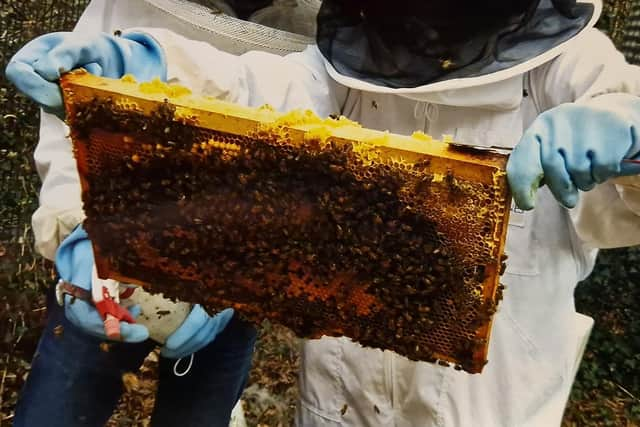
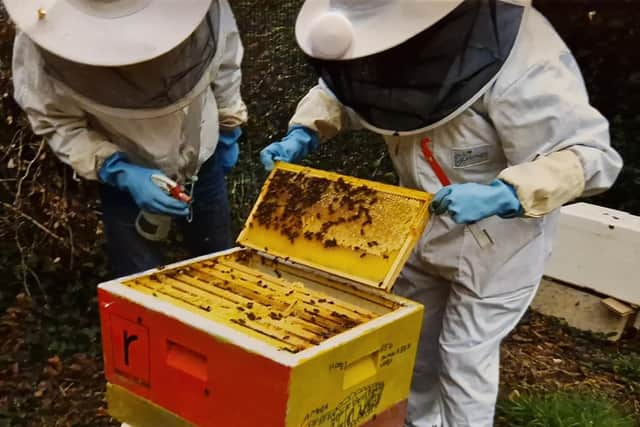
A team of ten volunteer beekeepers looks after the hives, visiting each week to ensure the bees are safe and well.
The community interest company was started in 2015 as We Are Food Pioneers and the first community bee hives were placed at Splashpoint in 2018.

Lisa Craik, director, said: "Unfortunately, they didn't do very well because it is too open to the elements, so they were moved to Worthing Leisure Centre. There are four or five hives. You won't be able to see them, because they are tucked away.
"Then the Brooklands Park pollinator hub got its first bees in 2021. We really wanted that apiary to be used for workshops and education. The leisure centre site is more for the volunteers.
"We decided as an organisation that we wanted to focus on the bees rather than the food, and that has been our focus since 2022. We have ten volunteer beekeepers who look after the hives."
Lisa and Francoise Lemire were both involved with Friends of Brooklands Park and they began to learn about the apiary and how to care for the bees.
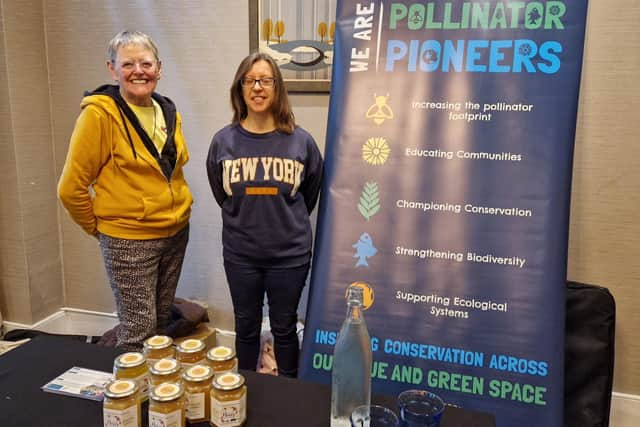
Lisa said: "Francoise and I knew nothing about bees but we started our beekeeping journey and what is good as that it is a group with varying experience. We really want to inspire people and we want to make it inclusive for everybody.
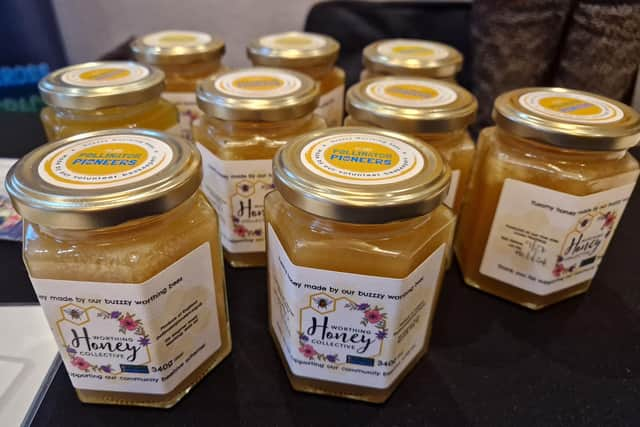
"Bees are not cheap, they cost a lot of money to keep each year. Selling the honey give us extra income. We only take the excess. These bees work so hard in the summer, we want to make sure they have enough food for the winter."
The honey bee is the only one of more than 250 types of bee in the UK to live in a colony all year round, explained Lisa. Each hive will house between 5,000 and 10,000 bees, and in summer that number will grow to around 60,000 bees.
The worker bees use their wings to keep the hive warm during winter, to about 32 degrees. They can flap their wings 250 times per second. In the summer, they use water to cool the hive down.
Lisa said: "It is very female dominated and they are the ones who do all the work. The queen is like a celebrity. Her main role is to lay eggs, and she can lay 1,500 to 2,500 a day.
"The fertilised eggs she lays become the female worker bees and the unfertilised eggs become the male bee, the drones.
"They are active from April to October. The summer bees live for only six weeks. For the first three weeks, they start by cleaning the hive, then feeding the brood of baby bees. They may look after the queen and then become the guard bees, stopping other bees who don't live there from coming into the hive. They then become foragers and they will be out all day, visiting 1,500 flowers over a three-mile radius.
"The main thing people can do is put a few more plants in their garden or have containers or window boxes. About 75 per cent of the food we eat is down to pollinator crops, so we need the bees."
Lisa and Francoise gave a talk at The Ardington Hotel on Wednesday, February 26, to explain how the collective runs, with Worthing honey on sale at £7.99 per jar. For more information about the collective, visit pollinatorpioneers.org.uk