
Fran & Flora are the latest guests in Sounds St Leonards series
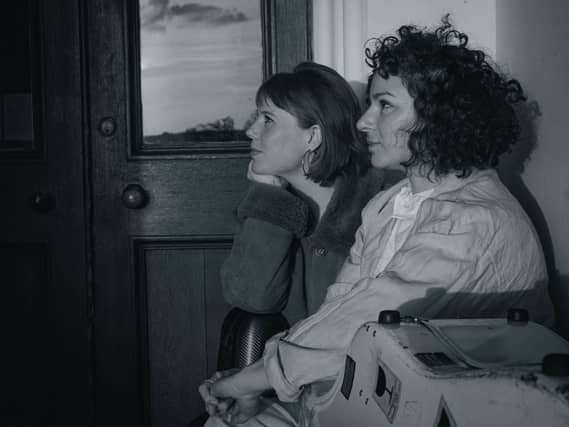

Following their debut album Unfurl, Fran & Flora released their second studio album Precious Collection on Hidden Notes Records last year to critical acclaim, presenting uniquely reworked Yiddish material and original compositions for cello, violin, electronics, voices and drums.
Now they join the Sounds St Leonards series for a date at The Crown House, St Leonards on February 27, bringing together cello and violin.
Flora said: “We met about 15 years ago working in other bands and we just hit it off. We discovered that we had the same very niche shared common interests and we just decided to go on some study trips together. We also had the experience of being in bands together and I think our friendship developed through those trips and through performing together.
“We visited Tcha Limberger because we wanted to play Romanian music and he is a specialist in Romanian and Transylvanian music. We went to him and he took us into the detail and we just decided that we should quit the other bands that we were with and make our own band. That was 2014. It was very informative to work with other people but for us it just felt like a really natural progression to do our own thing. We just found that it clicked and that we wanted to work together.”
As for cello and violin, as Fran says: “The instruments are very much part of the classical world. Both Flora and I grew up playing classical music but in many folk traditions the fiddle is a very prominent instrument and the cello is traditionally the bass in a lot of contexts. There is lots of evidence that the cello was in the old-world bands of Eastern Europe.
“And our mission is to try to hold all the different parts but with just two people so that we can give ourselves lots of freedom and so that we can have as much creative space as possible. The more people there are in a band, the more specific your role becomes but we wanted to do something else. There are lots of projects in the Celtic world but we hadn’t seen anything like this in the Eastern European folk world. We really wanted to connect to that creative space and work with that traditional music. And when we did our first recording, our peers and our mentors for years all really loved what we did and that was great. You want to hear that people that know those traditions deeply really encourage movement and progression.”
Flora added: “It was our priority to understand the music at a deep level and to study with people that really knew what they were talking about, the key revivalists delving into the old recordings. We really wanted to explore this music within multiple contexts which include Romanian music all the way down to Greece. We wanted to go into this particular style of music but also to bring ourselves to this music to create something that felt really fresh and alive as people that are existing in the world today. It's both things. It's the old music and it's also the contemporary influences. That's what Klezmer and Yiddish music has always been.”